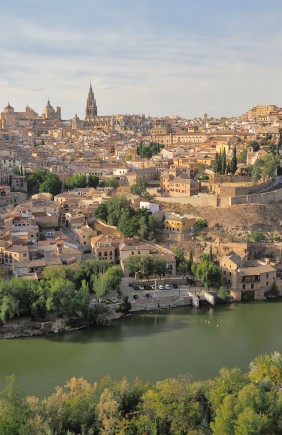
Granada has long been a land shaped by shifting borders and the clash of kingdoms across the centuries. One of the most compelling ways to understand this rich and turbulent history is through its fortresses – formidable structures that once guarded entire cities. While the Alhambra and its iconic citadel are undoubtedly the region’s most famous landmarks, there is much more to discover. Beyond the popular Alhambra and its citadel, we'll explore some of Granada's most remarkable castles, each with its own unique character.
La Calahorra Castle
Perched on a hill in the Marquesado del Zenete, the Castle of La Calahorra rises with an imposing silhouette against the dramatic backdrop of the Sierra Nevada mountains. Built at the beginning of the 16th century, it marks a fascinating transition between medieval military architecture and the Renaissance style arriving from Italy.
Yet its interior tells a different story. In contrast to its austere exterior, the castle reveals a refined central courtyard adorned with marble, showcasing a clear and direct influence of the Italian Renaissance – something quite unusual among fortresses on the Iberian Peninsula at that time. Today, the castle remains privately owned.

Alcazaba of Loja
In the westernmost part of the province stands the Alcazaba of Loja, a key element in the defensive network of the Nasrid Kingdom. Strategically located at the highest point of the municipality, the fortress controlled the natural routes leading into Granada from Castilian territories. Its origins date back to the Andalusian period, reflecting its long-standing military importance.
Today, visitors can still see sections of its walls, towers and a well-preserved cistern, offering a glimpse into life within the fortress. The keep remains the most distinctive and recognisable feature of the complex. The site has also been adapted to include a museum, adding further context to its historical significance.
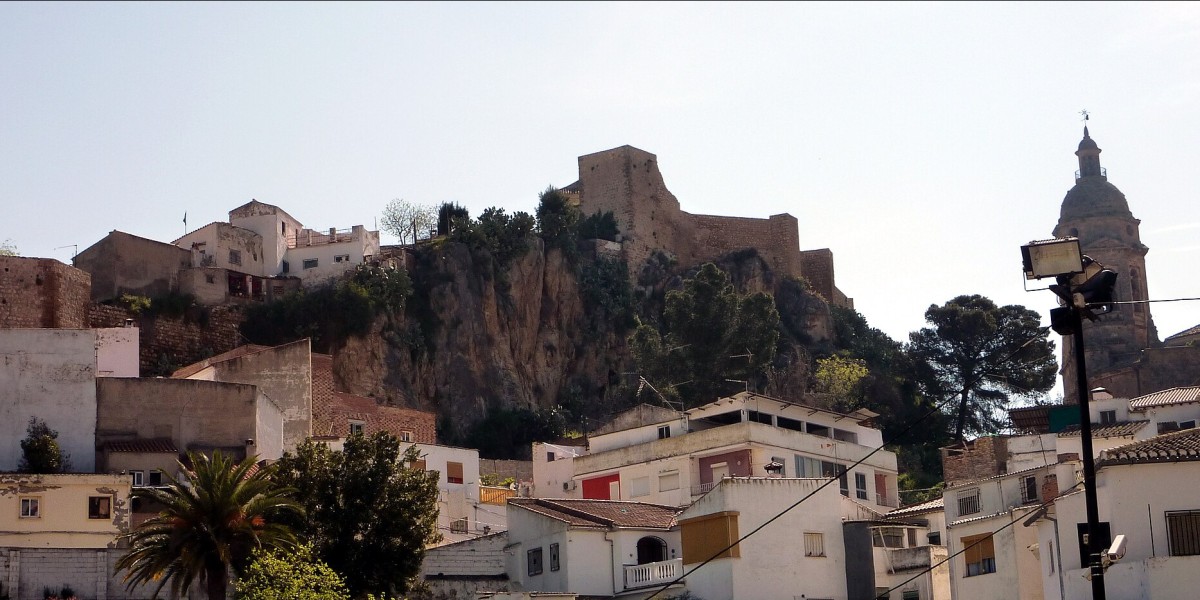
Salobreña Castle
Perched atop a rocky outcrop overlooking the Mediterranean, Salobreña Castle commands sweeping views of the coastline. Its strategic position was no coincidence: from this vantage point, both maritime routes and the surrounding fertile plains could be closely monitored. Much of its present form dates back to the Nasrid period.
The complex is arranged across different levels, carefully adapted to the rugged terrain, with walls and towers defining both defensive and residential spaces. Over the centuries, the castle also served as a royal residence and, later, a prison.
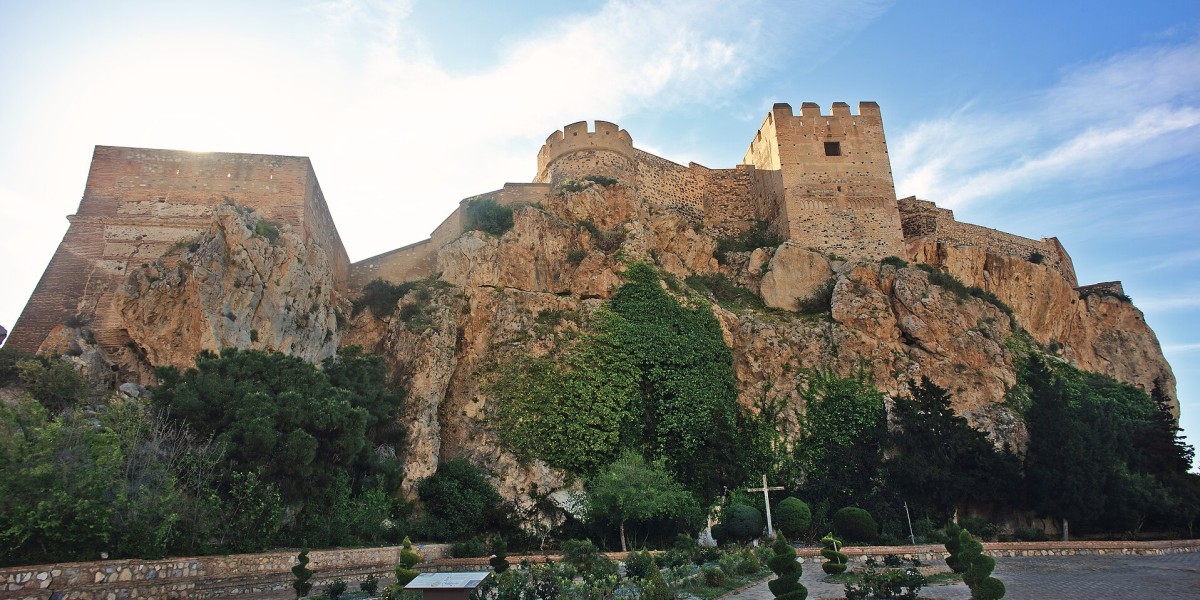
Láchar Castle-Palace
Láchar Castle departs from the traditional image of a medieval fortress. While its origins are linked to an earlier defensive tower, the building seen today is the result of a later transformation that gave it a distinctly palatial rather than military character. Its Neo-Moorish aesthetic was primarily developed in the 19th century, reflecting the romantic fascination with Islamic art and architecture.
During its prime, the castle became a gathering place for prominent figures in Spanish society. Its richly decorated interiors – featuring intricate plasterwork and ornamental details – highlight the period’s taste for the exotic and the revival of historic styles.

San Miguel Castle (Almuñécar)
On the tropical coast, San Miguel Castle stands atop a hill overlooking Almuñécar and its bay. The site has been occupied since antiquity by various civilisations, although the fortress took its definitive form during the Islamic period, with later modifications introduced under Christian rule.
Over the centuries, additional features such as a moat and new defensive structures were incorporated. After periods of neglect and damage caused by warfare, the castle was restored and now houses the City Museum.
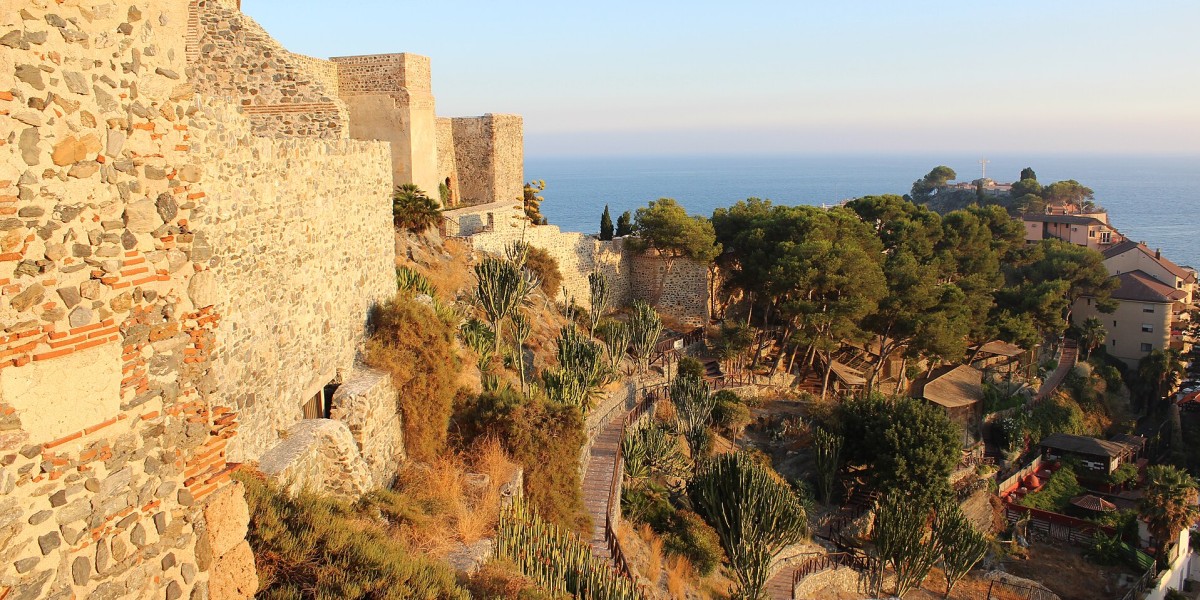
Alcazaba of Guadix
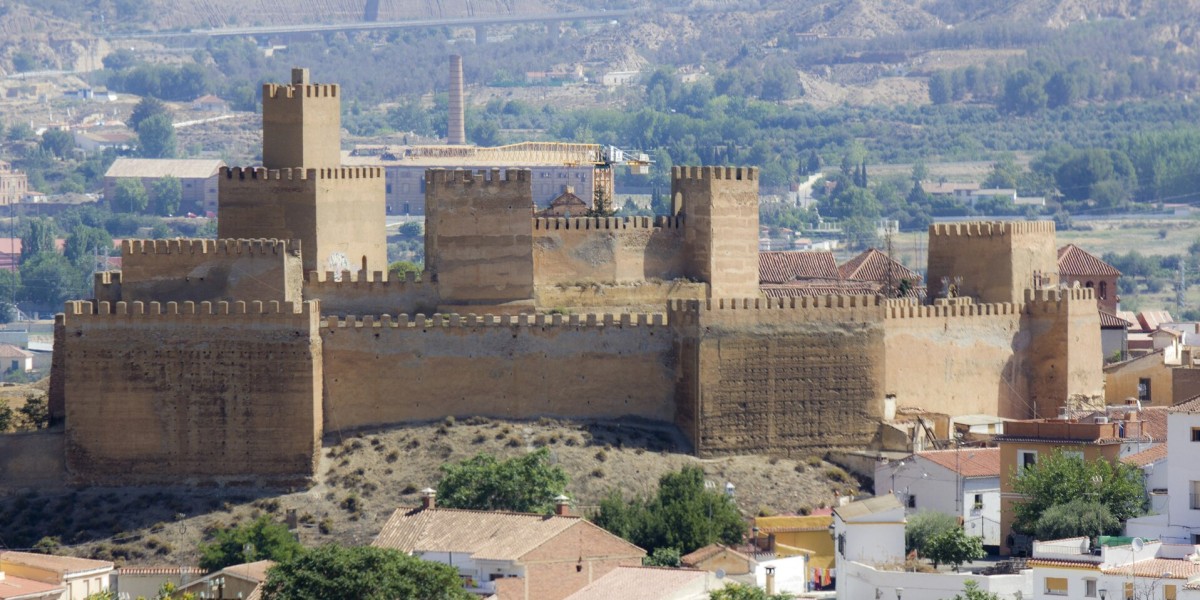
The reddish silhouette of the Alcazaba of Guadix stands out in the heart of the historic centre, thanks to the use of rammed earth in its construction. Built in the 11th century, it formed an essential part of the city’s defensive network during the Zirid period.
Following the Christian conquest, the fortress underwent several transformations and periods of neglect, although it was later restored. Today, it can be visited and offers a privileged view over the city and its famous cave dwellings.
Montefrío Castle
Montefrío, one of the most beautiful villages in Granada, is known for one of the most striking sights in the province – its fortress rising atop a rocky promontory. The castle was built in the 14th century as part of the Nasrid defensive belt, making full use of the natural elevation to strengthen its defences.
Following its incorporation into the Crown of Castile, the site was transformed, and the town's church was built over part of the former fortifications. Although only remnants of the original structure remain, the site retains a powerful visual presence.

Moclín Castle
Moclín is another town in Granada crowned by a striking castle. Perched at over a thousand metres above sea level, it is notable for the extensive length of its walls, which follow the contours of the mountain landscape. Its purpose was clear – to defend one of the most vulnerable access points to the Nasrid Kingdom against the advancing Castilian forces.
The site is divided into a walled outer enclosure and an inner citadel, where the principal buildings and the cistern were located. Despite the damage it has suffered over the centuries, the fortress still preserves much of its original layout.