Girona offers a diverse range of landscapes perfect for an autumn getaway. In this province, you can visit the volcanoes and beech forests of La Garrotxa, spend an afternoon in a medieval village in the Empordà region, or hike along the rivers of the Pyrenees. The milder temperatures and the slower pace of tourism in many towns make it ideal for strolling through historic centers and exploring nearby natural areas. Here are six towns in Girona to visit in autumn.
Saint Paul
The walls, stone houses, and arcaded squares define the old town of Santa Pau, one of the most comprehensive visits in La Garrotxa . Its medieval layout is preserved around the castle and the main square, where the town's historical structure is clearly visible.
The town is located within the Garrotxa Volcanic Zone Natural Park, an area encompassing dozens of volcanic cones and lava flows. From Santa Pau, you can reach places like the Santa Margarida volcano, known for the hermitage inside its crater, or the Croscat. Nearby is also the Fageda d'en Jordà , one of the most visited beech forests in Catalonia.

Beget
Nestled in a mountainous valley in the municipality of Camprodon , Beget is a charming stone hamlet bisected by the river of the same name. Its bridges, sloping streets, and traditional houses make it an easy place to explore on foot.
The Romanesque church of Sant Cristòfol is the village's main monument. Inside, it houses the Christ in Majesty of Beget, a Romanesque wooden carving. The relative isolation of this Ripollès village and the presence of forests make it a good choice among the villages to visit in autumn .

Monells
Jaume I Square is the main attraction in Monells. Surrounded by arcades and stone buildings, it recalls the commercial role the town played in the Middle Ages, especially linked to the market and the exchange of grain.
Beyond the main square, the village retains narrow streets, archways, and hidden corners that connect to the church of Sant Genís. Located in the Baix Empordà region, it's a great option to combine your visit with other nearby medieval villages, such as Peratallada or Palau-sator . A wonderful way to explore the interior of the Costa Brava in autumn .

Camprodon
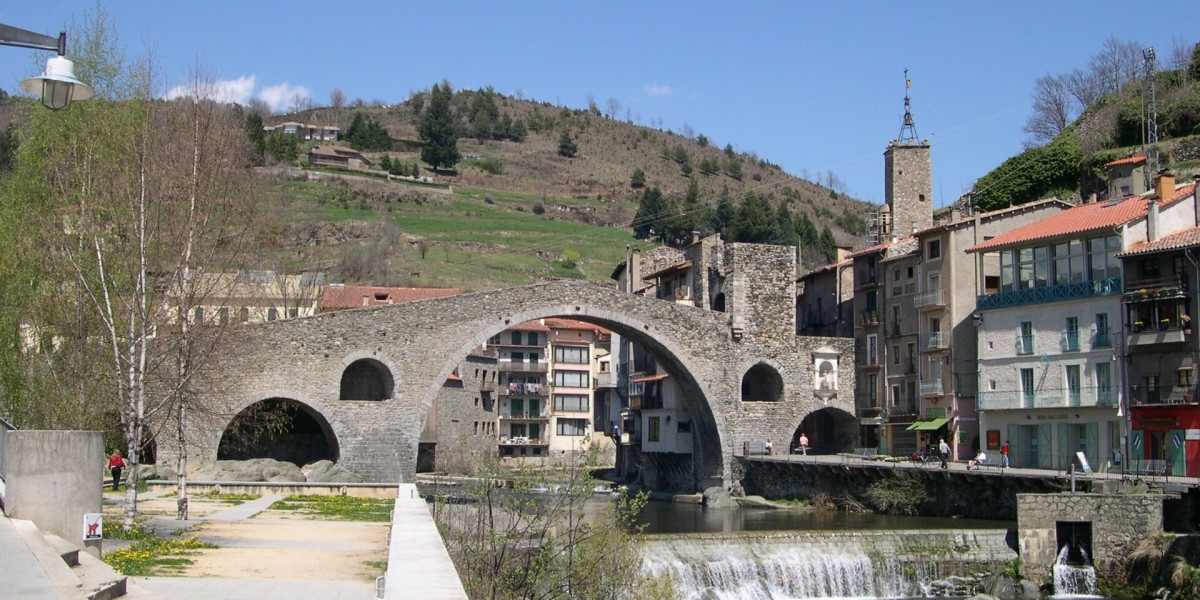
The Pont Nou (New Bridge) over the Ter River is the most recognizable image of Camprodon. Although its current appearance reflects various renovations, this stone bridge remains a symbol of the town and forms the heart of one of its most popular promenades.
The town center is located at the confluence of the Ter and Ritort rivers, within the Girona Pyrenees. Besides the bridge, it's worth visiting the Romanesque monastery of Sant Pere and strolling through the shopping streets of the town center. It's also a good starting point for exploring Beget, Setcases, or the landscapes of the Ter and Freser headwaters, which are particularly beautiful when the forest begins to lose its leaves.
Sant Llorenç de la Muga
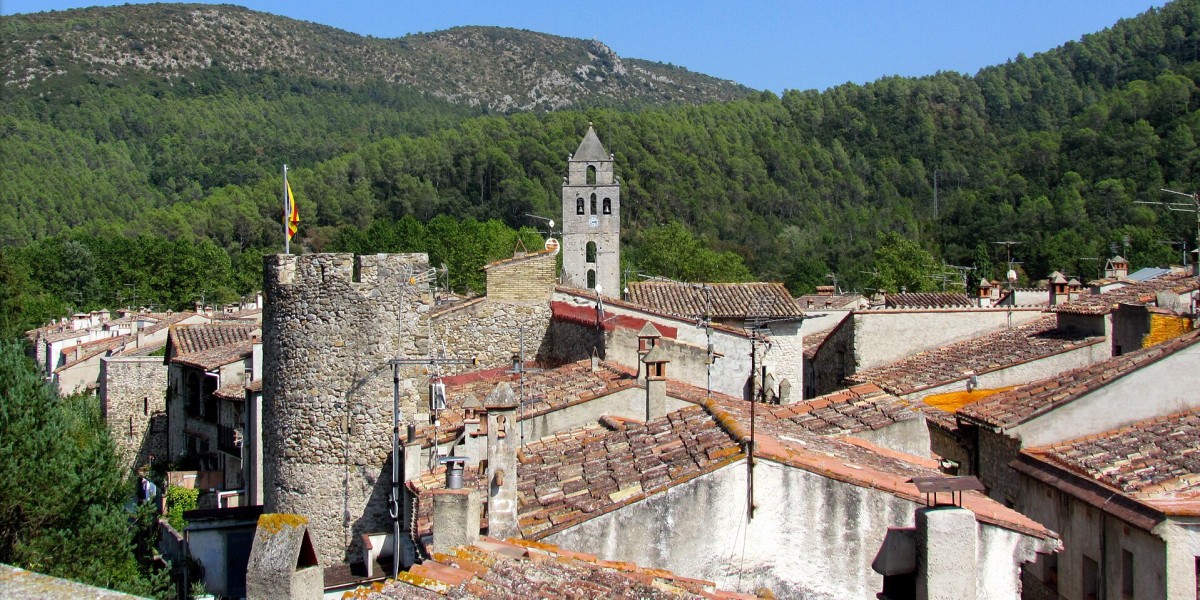
On the banks of the Muga River, in the heart of the Alt Empordà region , Sant Llorenç de la Muga preserves a walled enclosure that defines much of its identity. A stroll through its streets reveals towers, gates, and sections of the defenses erected between the 14th and 15th centuries.
Its location, near the Alta Garrotxa region, adds a natural attraction to the cultural visit, thanks to the forests and landscapes of the Muga Valley and the trails that crisscross the area. Among the nearby points of interest is the Torre dels Moros , an old watchtower with views over the valley.
Castellfollit de la Roca
Few towns in Girona have such a recognizable location as Castellfollit de la Roca. The old town rises on a basalt wall formed by ancient lava flows, situated between the Fluvià and Toronell rivers.
Wandering through its narrow streets allows you to appreciate the use of volcanic stone in many buildings and reach the Church of Sant Salvador, located at one end of the cliff. Furthermore, its proximity to Olot and the Garrotxa Volcanic Zone also makes it a highlight, considered by many to be the most beautiful medieval village in Girona.