Spain is home to countless colourful traditions, but few are as curious—and theatrical—as the Burial of the Sardine. This centuries-old Carnival ritual may look like a festive parade at first glance, but it carries a deeper symbolic meaning: a farewell to excess, a turning of the seasonal cycle, and a playful critique of society.
From Murcia’s world-famous parades to satirical processions in Madrid and the Canary Islands, the ceremony combines music, costumes, satire, and the dramatic burning of a sardine figure, marking the official end of Carnival. In 2026, the main celebrations take place on 18 February, although dates can vary across Spain.
Whether you’re an art lover familiar with Goya’s depiction or a traveller seeking a unique cultural experience, the Burial of the Sardine is a spectacle of humour, history, and fire that you won’t forget.
What is the Burial of the Sardine?
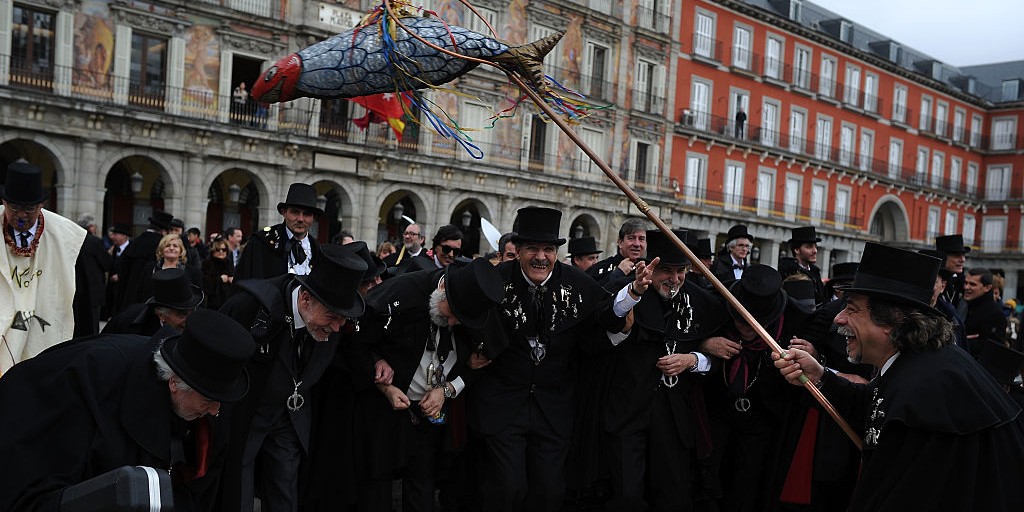
The Burial of the Sardine is a symbolic ceremony that enacts the funeral of Carnival. Participants often dress in exaggerated or caricatured mourning attire, accompanying the ‘deceased’ sardine in a lively procession that blends music, satire, and theatricality.
The event reaches its climax with the burning of the sardine figure, symbolising the end of the festive period and a farewell to indulgence. The ritual acts as a form of collective purification after several days of celebration, jokes, and social permissiveness.
Fire plays a central role, representing regeneration and the start of a new phase, traditionally linked to Lent in the Christian calendar.

Origins and history
This Carnival ritual has its roots in ancient European celebrations marking the change of seasons. Across the continent, it was common to bid farewell to winter with symbolic acts, including the burning of figures and satirical performances.
These customs eventually merged with the Christian calendar. Carnival, held immediately before Lent, became a period of indulgence and excess before the days of fasting and reflection.
In Spain, the tradition took firm root in the 19th century, with students and urban groups parodying funeral ceremonies to mark the end of Carnival. The sardine, a humble and popular food, became the ritual’s emblem.
Francisco de Goya and the Burial of the Sardine
The tradition also influenced art. Francisco de Goya’s early 19th-century painting, The Burial of the Sardine, captures a Carnival procession full of masks, theatricality, and social critique. The work stands as a testament to the cultural significance the ritual already held at that time.

When is the Burial of the Sardine in 2026?
In most Spanish cities, the Burial of the Sardine is celebrated on Ash Wednesday, immediately after the last day of Carnival. In 2026, this falls on 18 February.
However, it’s worth checking local schedules, as some cities adjust the date to fit their own festive calendar.
The Burial of the Sardine in Murcia
The Murcia Burial of the Sardine is arguably the most famous in Spain. Unlike other cities, it takes place after Holy Week as part of the Spring Festivals, rather than on Ash Wednesday.
The city comes alive with sardine clubs, themed floats, parades, and performers distributing thousands of toys and gifts. Recognised as a Fiesta of International Tourist Interest, Murcia’s celebration combines tradition, satire, spectacle, and strong local identity.
The grand Saturday parade concludes with the burning of the sardine, accompanied by fireworks, music, and an atmosphere of collective euphoria—a true spectacle for all ages.
Other popular Burials of the Sardine
While Murcia attracts most of the attention, the Burial of the Sardine is celebrated across Spain, each city with its own style:
- Madrid: Features a satirical procession through iconic city locations, organised by the Alegre Cofradía del Entierro de la Sardina in the Casa de Campo.
- Las Palmas de Gran Canaria: Integrates the ritual into its famous Carnival, often ending the parade by the sea in a festive, crowded atmosphere.
- Santa Cruz de Tenerife: Celebrated within one of the world’s largest Carnivals as a vibrant, theatrical spectacle full of colour.
- Águilas: Its Carnival, recognised as a Fiesta of International Tourist Interest, includes a large-scale Burial of the Sardine with strong community participation.