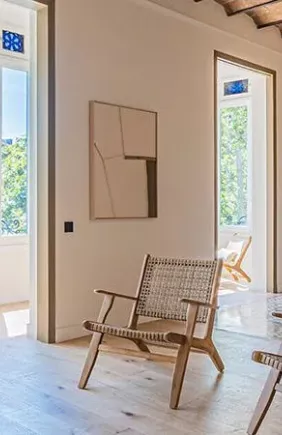
Moving to Spain often means bright light, tiled floors and street noise drifting in through balcony doors. For anyone with ADHD, those details aren’t minor.
Research in neuroarchitecture shows that lighting, colour, acoustics and layout directly affect focus and anxiety levels. When you’re also adjusting to a new language and culture, the way your home is set up carries more weight than you might expect.
Why Spanish flats can feel overstimulating
Many Spanish rentals are practical rather than cosy. You’ll often find ceramic or marble tile flooring that amplifies sound, compact layouts with little separation between work and rest areas, and fluorescent ceiling lights in older properties
Add in traffic noise, neighbours chatting on balconies, and the washing machine humming in a tiny kitchen, and the sensory load builds quickly.
Neuroarchitecture research suggests that uncontrolled background noise, harsh lighting and visual clutter all drain cognitive resources. For expats navigating Spanish bureaucracy or working remotely, that extra drain can make focusing on simple tasks harder than it should be.

Movement over stillness: rethinking your desk setup
For years, concentration was equated with sitting still. Research published in Child Neuropsychology found that higher levels of physical activity are linked to better cognitive control. In simple terms, movement supports thinking.
Chairs that move with you
Traditional rigid dining chairs aren’t ideal for long workdays. Alternatives that support subtle movement include:
- Meditation-style chairs with wide seats that allow cross-legged or kneeling positions
- Exercise ball chairs that provide gentle core engagement
- Ergonomic chairs with free-float recline, adjustable height and minimal arm restrictions
Sit-stand desks in Spanish rentals
The standard fixed-height desk can feel restrictive. Height-adjustable desks, also called sit-stand desks, are associated with reduced fatigue and improved focus.
In Spain, electric models typically start around €250, with more advanced versions reaching €600–€900. If that feels steep, desk converters that sit on top of an existing table usually cost €100–€200.
Small sensory tools that support daily focus
Once the main furniture is sorted, smaller adjustments help regulate attention and restlessness.

Fidget tools and footrests
Fidget tools are no longer just children’s toys. Items such as sensory cubes, interlinked metal rings and stress balls provide low-demand, repetitive stimulation. This keeps the hands busy and allows the prefrontal cortex to concentrate on the primary task.
Under-desk rocking footrests are another subtle addition. In flats where you’re trying not to disturb neighbours downstairs, they’re far more discreet than constant chair shifting.
Weighted blankets for decompression
Weighted blankets, typically between 3kg and 9kg, offer deep pressure stimulation that can calm sensory overload. After a day dealing with Spanish admin or intense social interaction in a second language, that grounding effect can be surprisingly helpful.
Lighting, colours and acoustics: the invisible trio
This is often the most overlooked area, yet it has a direct impact on concentration.

Lighting for focus and calm
Cold fluorescent lighting is associated with cognitive fatigue and inattention. In Spain, natural light is an advantage, though glare can be an issue in south-facing flats.
Practical adjustments include:
- Prioritising daylight but using sheer curtains to soften intensity
- Installing LED bulbs with adjustable colour temperature
- Using around 4000K for focused work and around 2700K for evening wind-down.
Colours that reduce visual overload
Highly saturated colours can increase sensory stimulation. For work areas, calmer tones tend to work better. Colours such as earthy beiges, sage greens and soft off-whites work well.
Bright reds or oranges are better kept for social spaces or small accents rather than your desk wall.
Managing noise in lively neighbourhoods
Spanish street life is part of the charm, but it isn’t always compatible with deep focus. Helpful adjustments include thick rugs over tiled floors, heavy curtains to dampen sound, or open bookshelves filled with books, which absorb noise.
Decorative acoustic panels and quality noise-cancelling headphones can help too.
Visible storage: reducing cognitive load
For many people with ADHD, closed drawers become black holes. If something isn’t visible, it’s easily forgotten.

A hybrid storage system works well:
- Hooks by the entrance for keys and bags
- Transparent jars for pantry items
- Open shelving for daily-use objects
- Pegboards in work areas for tools and cables
Only use closed cupboards for rarely used or purely decorative items. The goal is to reduce the mental effort spent searching for essentials. In smaller Spanish flats, vertical storage and wall-mounted solutions are particularly useful.
Creating a sensory reset corner at home

Living abroad can be exhilarating and exhausting in equal measure. A small, dedicated decompression space helps your nervous system slow down. This doesn’t require a spare room. A corner with a low armchair or floor cushion, soft, indirect lighting, and no visible screens can become a reliable place to recalibrate.
In a country where social life often stretches late into the evening, and neighbours are rarely silent, having one calm corner that feels distinctly yours can make daily life far smoother.
Stay in the know about living in Spain as a foreigner—get our weekly newsletter for the latest travel, legal, and lifestyle news.