The province of Huesca is one of the most fascinating regions in Aragón for those interested in culture and history. Nestled between the Pyrenees and surrounding mountain ranges are numerous fortresses that played a key role during the Reconquista and in the consolidation of the former Kingdom of Aragón.
Today, exploring the castles of Huesca is like travelling through well‑preserved medieval settings, all framed by spectacular natural landscapes.
Loarre Castle
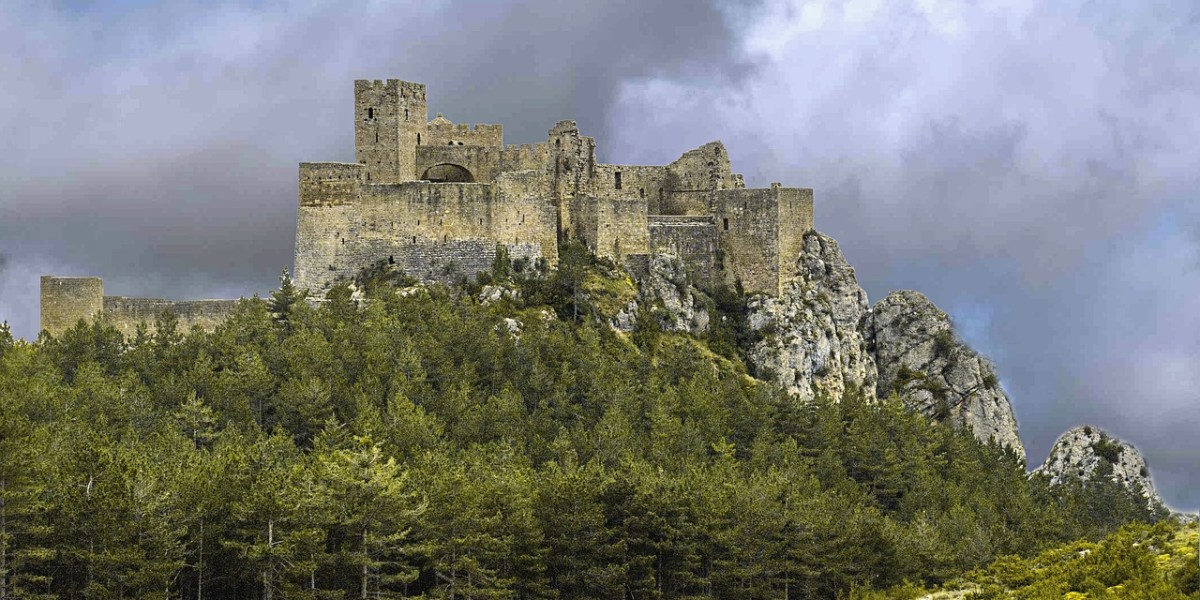
If you're looking for the best‑preserved castle in Huesca, the answer is Loarre Castle – one of the great treasures of European Romanesque architecture. Dominating the Hoya de Huesca from a rocky outcrop, it was built in the 11th century as a base for advancing into territories still under Muslim control.
Today, it is one of the most visited and best‑known castles in the province. Its double‑walled enclosure, defensive towers and Romanesque church within make it an essential stop.
Montearagón Castle
A few kilometres from the city of Huesca lie the ruins of Montearagón Castle – a key fortress in the Christian conquest of the city. Commissioned by Sancho Ramírez in the 11th century, it was built with a clear objective: to establish a strategic position from which to besiege Huesca.
Although now partially in ruins, its historical importance remains undeniable. It later became an abbey and held influence over numerous churches and territories. Today, this castle near Huesca offers privileged panoramic views over the surrounding plains and the Sierra de Guara mountain range.

Benabarre Castle
Located in the Ribagorza region, Benabarre Castle is a fortification of Muslim origin that later passed into Christian hands. Its elevated position allowed for visual communication with other defensive sites across the surrounding territory.
Of the original complex, remains from later expansions are mainly preserved, particularly from the 14th century, when the town gained prominence as the capital of the county. The site includes sections of the walls, a church and various defensive structures.

Aínsa Castle
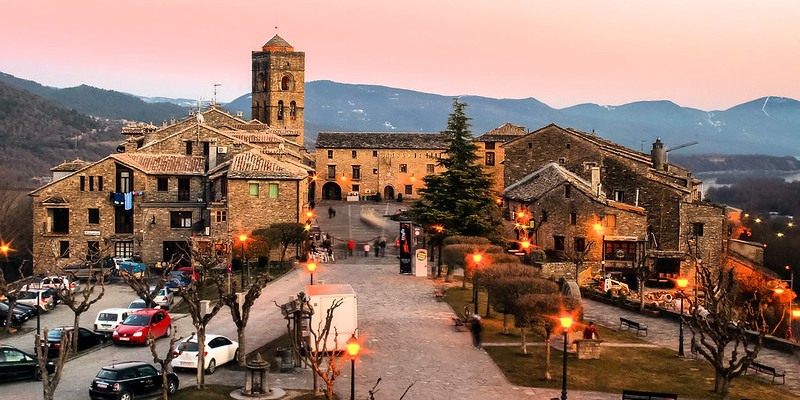
In the heart of the historic centre of one of the most beautiful medieval villages in Huesca stands the Castle of Aínsa. Integrated into the Plaza Mayor, it forms part of a monumental complex that transports visitors back to the Middle Ages.
Its original construction dates back to the 11th century, although it was later expanded to strengthen its defences against new threats. Today, the site houses cultural spaces, an ecomuseum and music festivals. In addition to its historical value, it also stands out for the views it offers over the Ara and Cinca rivers.
Alquézar Castle
Alquézar, one of the most spectacular villages in Aragón, is home to a remarkable monumental complex dominated by its former Islamic fortress. What is now known as the Collegiate Church of Santa María la Mayor originated in the 11th century as a defensive castle.
Following the Reconquista, the complex was transformed first into a Christian fortress and later into a religious centre. Today, walls, towers and monastic buildings coexist in a site that combines military and religious architecture.
It is located next to the Sierra y Cañones de Guara National Park – enhancing its appeal as both a cultural and natural destination.

Monzón Castle
Monzón Castle is one of the sites most closely linked to the history of the Knights Templar in Aragón. Of Muslim origin and set on a steep hill, it was granted to the Order of the Temple in the 12th century.
Over the centuries, it underwent numerous attacks and subsequent modifications, which explains its complex architectural layout. Today, it is one of the most historically significant castles in Huesca, and a visit offers valuable insight into episodes connected to the Crown of Aragón and key figures of the Middle Ages.

Citadel of Jaca
Although not strictly a medieval castle, the Citadel of Jaca deserves a prominent place on any route through the fortresses of Huesca. Built in the 16th century by order of Philip II, it follows the Italianate defensive model, with a distinctive star‑shaped layout.
Its purpose was to protect the Pyrenean border against potential French incursions. In an excellent state of preservation, it retains its moat, bastions and parade ground. Today, it houses the Museum of Military Miniatures and hosts a range of cultural activities.

Abizanda Castle
In the Sobrarbe region stands Abizanda Castle, recognisable for its imposing defensive tower that dominates the town’s skyline. It was built in the 11th century as part of a strategic line designed to secure the border against Muslim expansion.
Over time, it lost its military function and underwent various architectural transformations. Today, it is a Site of Cultural Interest and hosts temporary exhibitions linked to the popular religious traditions of the Pyrenees. Undoubtedly, another castle worth visiting in Huesca.