The conquest of Mallorca in 1229 by King James I of Aragon marked a change in sovereignty and triggered a profound transformation of the island's urban landscape and identity. At the centre of this transformation stands the Cathedral of Santa Maria, universally known as La Seu. More than a place of worship, it is a monumental sandstone structure conceived as a powerful statement of political and military ambition.
Follow idealista/news in Spanish on the WhatsApp channel
The Crown of Aragon sought to consolidate its dominance across the western Mediterranean and projected its authority through monumental architecture that pushed the limits of medieval engineering.

The construction challenge facing the sea
Strategically positioned atop Palma's ancient walls, on the site once occupied by the main mosque of Madina Mayurqa, the cathedral was designed with a clear purpose: to be seen from the sea. For medieval sailors, the imposing silhouette of the building rising above the Balearic coastline conveyed an unmistakable geopolitical message, symbolising both the Christian faith and the power of the Aragonese monarchs who controlled the island's maritime routes.
From an architectural perspective, La Seu breaks with many conventions of traditional European Gothic design through its remarkable sense of scale and spatial openness. Built with three naves, its central nave rises to 44 metres, making it one of the tallest Gothic vaults in the world, surpassed only by those of Beauvais Cathedral and Milan Cathedral.
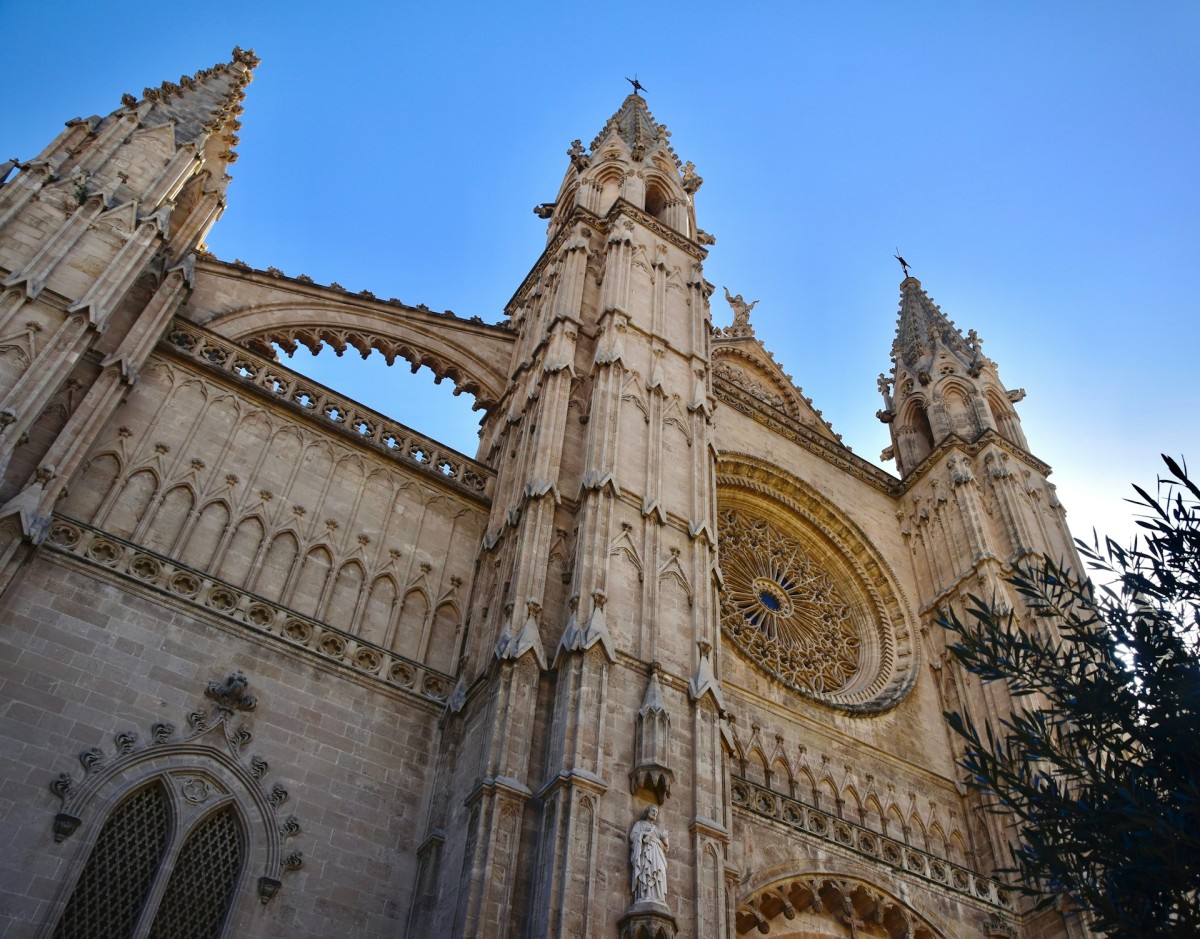
What continues to fascinate architects and structural engineers is the boldness with which the medieval master builders supported such immense weight. To achieve this, they developed extraordinarily slender octagonal columns, creating an almost miraculous sensation of lightness within the vast interior.
Outside, the buttresses and system of double flying buttresses served not only a vital structural role in counteracting the thrust of the vaults, but also gave the cathedral a rhythmic and imposing appearance. The result is a building that resembles a spiritual fortress as much as a religious monument.
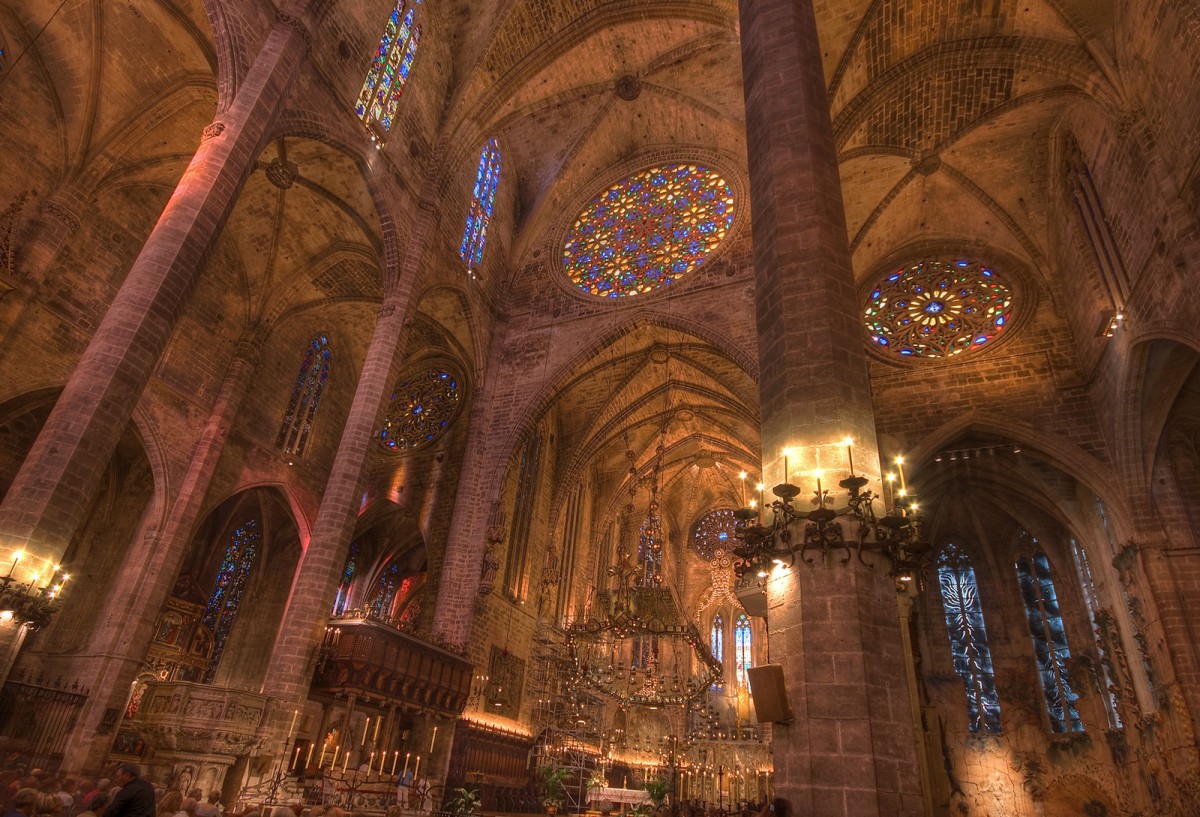
"The Cathedral of Light"
Mediterranean Gothic architecture is distinguished by its masterful use of light in a sun-drenched environment. The Cathedral of Santa Maria is rightly known as the Cathedral of Light, thanks to its 59 windows and, above all, its spectacular main rose window, the Oculus Maior.
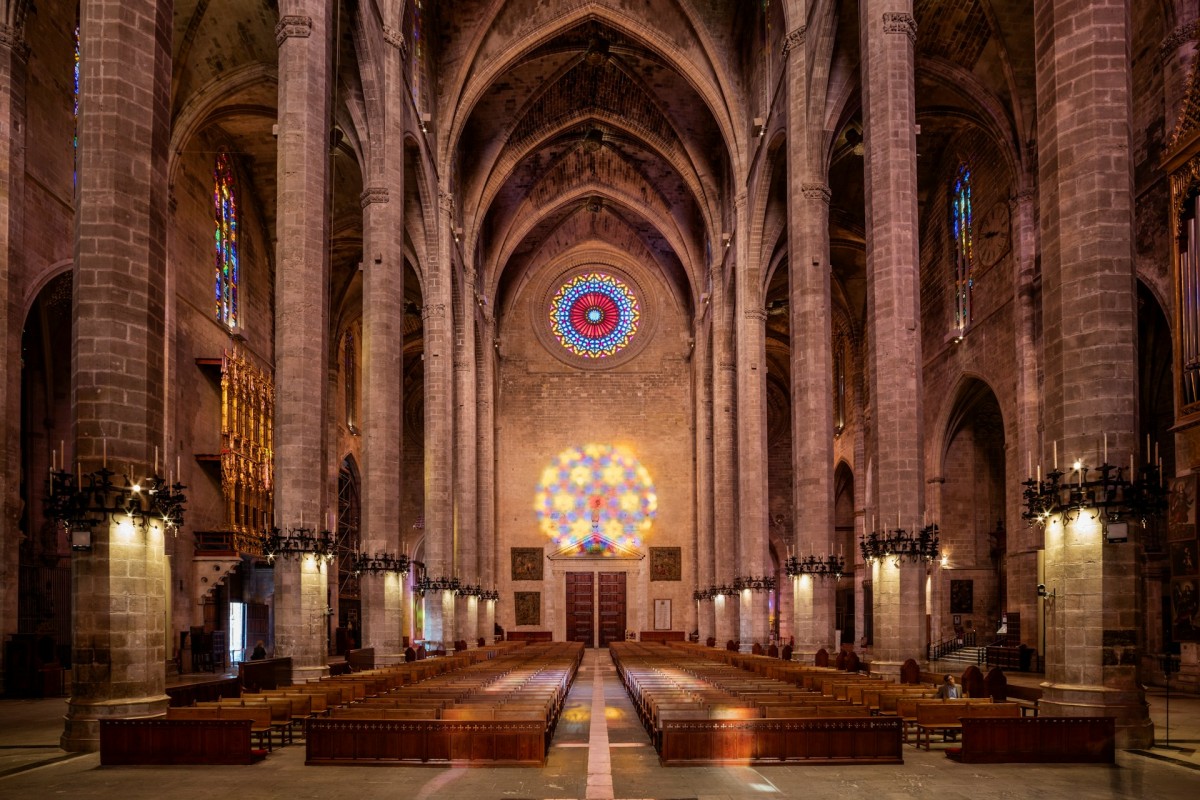
Measuring more than 12 metres in diameter and composed of over a thousand pieces of coloured glass, it is considered the largest Gothic rose window in the world. Its position at the eastern end of the cathedral was precisely calculated so that, twice a year, sunlight passes through the stained glass and projects a reflection beneath the rose window on the opposite façade, creating a perfect figure-eight of light known as the “eight of light”.
Every year, on 2 February (Candlemas) and 11 November (St Martin’s Day), hundreds of visitors gather inside the cathedral shortly after 8 a.m. to witness this remarkable phenomenon, which lasts for just a few minutes.
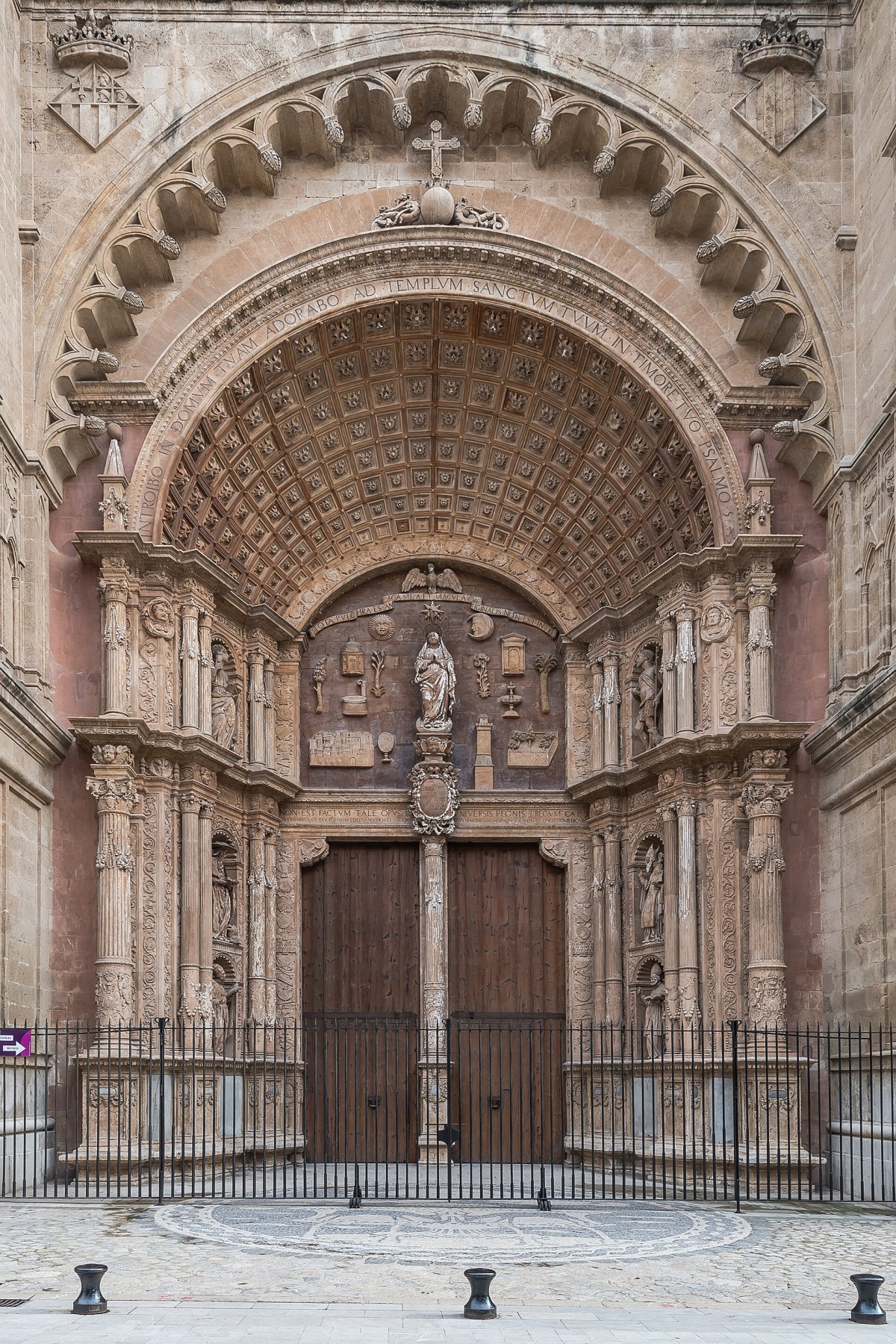
Over the centuries, this symbol of religious and political power has continued to evolve while preserving its monumental character. At the beginning of the 20th century, the renowned architect Antoni Gaudí oversaw an important interior refurbishment that removed the Gothic choir stalls that once divided the central nave.
This intervention restored the building closer to its original conception as a vast, open basilica, enhancing the visibility of its impressive forest of columns and the sense of spatial grandeur. Palma Cathedral ultimately reminds us that great architecture goes beyond the construction of buildings. It creates timeless spaces and experiences, capable of defying gravity and inspiring visitors centuries after their creation.