Known as the "Spanish Taj Mahal", Colomares Castle in Benalmádena is a monument dedicated to Christopher Columbus that appears medieval, despite construction only beginning in 1987 at the initiative of a local doctor.
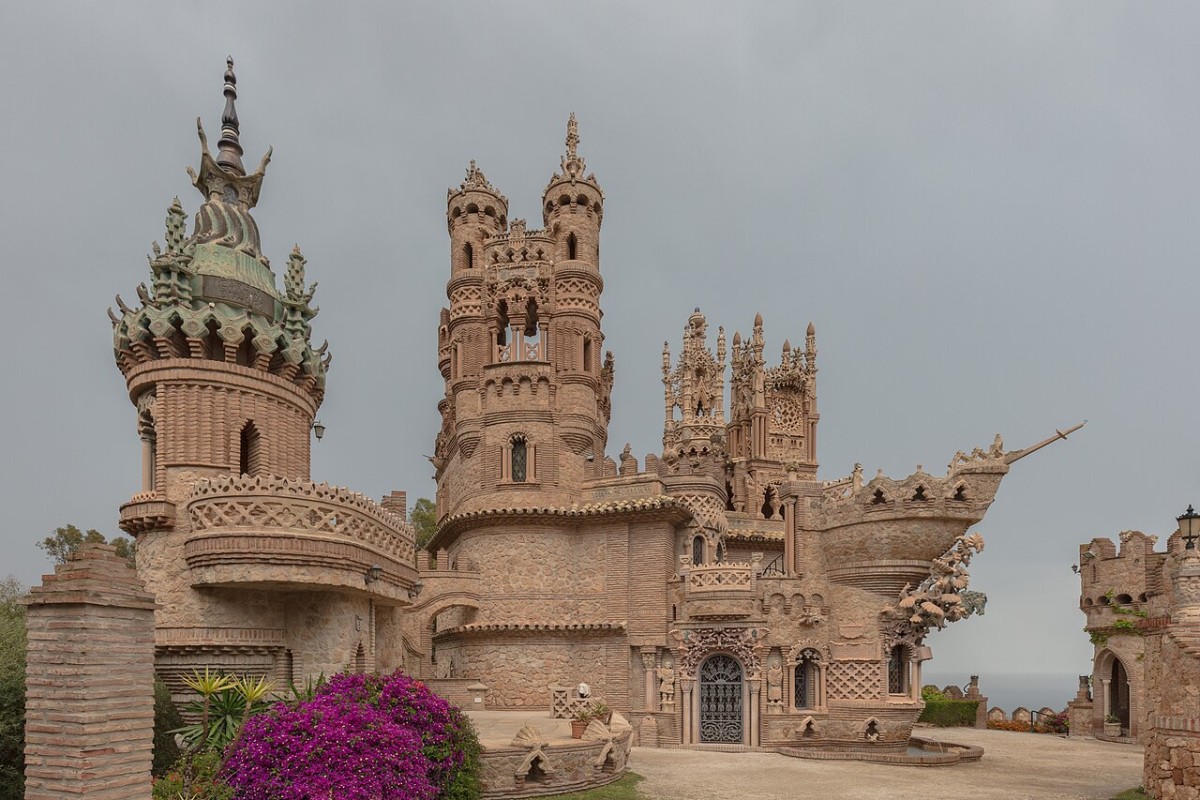
Although it looks like something out of a fairy tale at first glance, closer inspection reveals ships nestled between its towers, bronze coats of arms and a story that turns the entire complex into a vast open-air book carved in stone.
A castle that hides a story within its walls
The monument makes reference to Christopher Columbus's 1492 voyage in its towers, façades and architectural details. Among the most notable are:
- The three caravels: La Niña stands at the top beneath the Arch of La Rábida; La Pinta appears on the main façade; and Santa María stands apart, symbolising its shipwreck on Christmas Eve 1492.
- The bronze coats of arms: These include the arms of Castile and symbols associated with Queen Isabella, acknowledging her role in supporting the expedition.
- The Oratory of the Saviour: A small chapel featuring a sailor's bell that recalls the island of San Salvador.
- The towers and arches: These combine elements inspired by Gothic, Romanesque, Byzantine and Mudéjar architecture.
The complex also pays tribute to the three religions present in Spain in 1492. Rather than recreating a specific castle, it brings together elements from different architectural traditions, creating a unique monument.
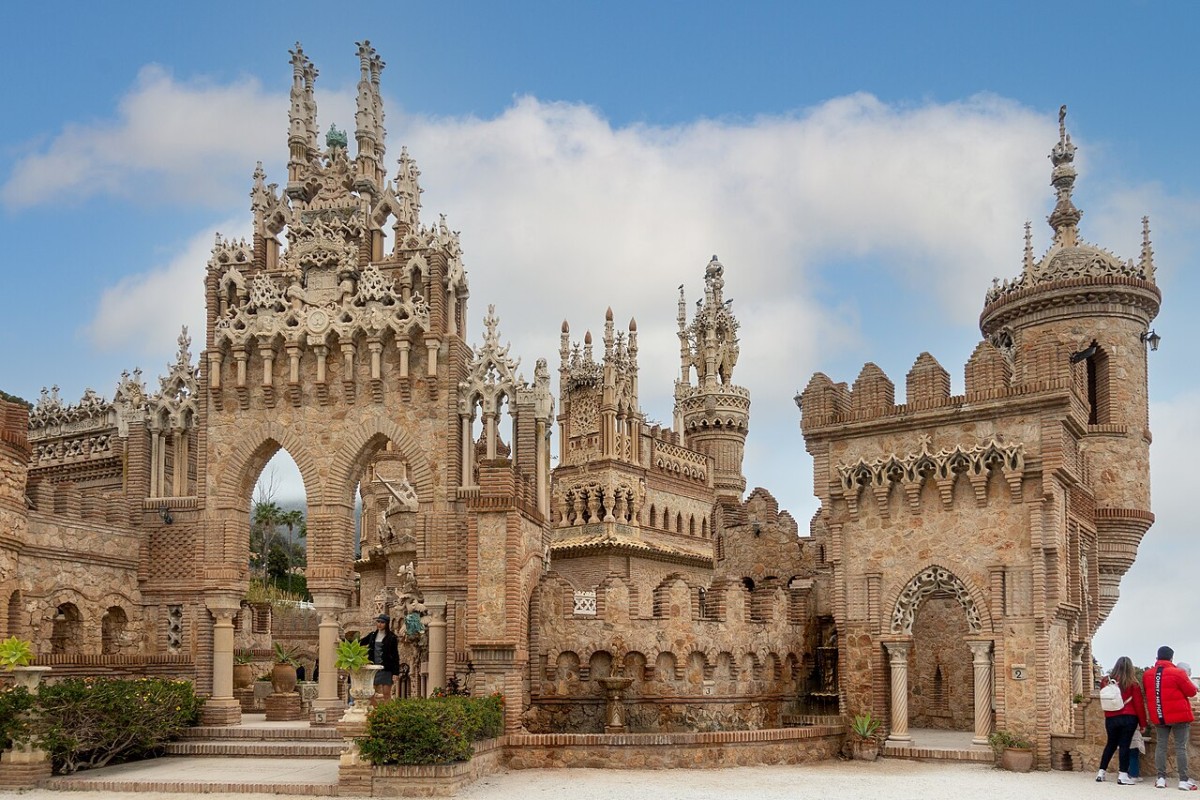
The big surprise: it looks old, but construction started in 1987
Its towers, arches and façades may seem centuries old, yet construction began in 1987 and was completed in 1994.
The project was the brainchild of Dr Esteban Martín Martín, born in 1926 in Granollers. After practising medicine in the United States, he returned to Spain and launched the project on land he owned.
To bring his vision to life, he worked alongside just two bricklayers. For seven years, the trio built the castle by hand using brick, stone and cement until the monument was completed.
Martín died in 2001, but his legacy lives on through this contemporary creation, designed to evoke the charm of a much earlier era.
A bronze horse inspired by Pegasus
Among the monument's most distinctive features is a bronze horse's head representing Martín Alonso Pinzón, the sailor from Palos de la Frontera who persuaded several experienced navigators to join Columbus's expedition.
The figure is depicted as Pegasus, the mythical winged horse, and symbolically carries La Pinta, the vessel commanded by the Pinzón brothers.
The mausoleum that never became a tomb
The site also includes a Gothic-inspired mausoleum accompanied by a large rose window. It symbolises Columbus's fifth and final journey: his passage into eternity.
Conceived as a representation of that journey to heaven, it was never intended to serve as an actual burial place.
Instead, the mausoleum became one of the monument's most important symbolic features.
A tiny church measuring just 1.96 square metres
The complex contains a chapel dedicated to Saint Elizabeth of Hungary measuring just 1.96 square metres.
Listed in the Guinness World Records, it houses sculptures created by Martín himself. Its tiny dimensions contrast sharply with the towers and monumental structures that dominate the site.
How to visit Colomares Castle?
Colomares Castle stands on the La Carraca estate, beside the Costa del Sol road, around five minutes from the historic centre of Benalmádena and approximately 20 kilometres from Málaga.
To plan your visit, keep the following in mind:
- Opening hours: Closed on Mondays. From Tuesday to Sunday, it opens from 10:00 to 18:00 in autumn and winter, from 10:00 to 20:00 in spring, and from 10:00 to 14:00 and 17:00 to 21:00 in summer.
- Groups: Visits of 25 people or more qualify for reduced admission prices and can include a guided talk with advance booking.
- Best time to visit: Arriving early allows you to explore the monument with fewer visitors.