Calle Larios is one of Málaga's most iconic landmarks. It connects Plaza de la Constitución with Alameda Principal and is a hub of commercial, tourist and cultural activity in the historic centre. But behind its name lies a story linked to the urban transformation of 19th-century Málaga. Discover why Calle Larios is called that and the history of one of Málaga's most famous areas.
What is the history of Calle Larios in Málaga?
The current Calle Marqués de Larios was created at a time when Málaga was seeking to modernise its historic centre. At the end of the 19th century, this area still had a medieval layout, with narrow, irregular streets and problems with ventilation and sanitation. The project proposed opening up a major thoroughfare connecting Plaza de la Constitución with Alameda Principal and the port area.
The project required replacing several narrow streets in the old town with a wide, straight thoroughfare. Construction began in May 1887, and the street was officially opened on 27 August 1891. The final town planning design was attributed to the municipal architect, Joaquín de Rucoba, while Eduardo Strachan was responsible for the buildings.
From its early years, the street established itself as a commercial and residential hub for Málaga's bourgeoisie. Its original paving consisted of wooden planks. After the flood of 1907, these were replaced with granite. During the Second Republic, it was renamed Calle 14 de Abril (14 April Street), although it later reverted to its current name. It became pedestrianised in 2002.
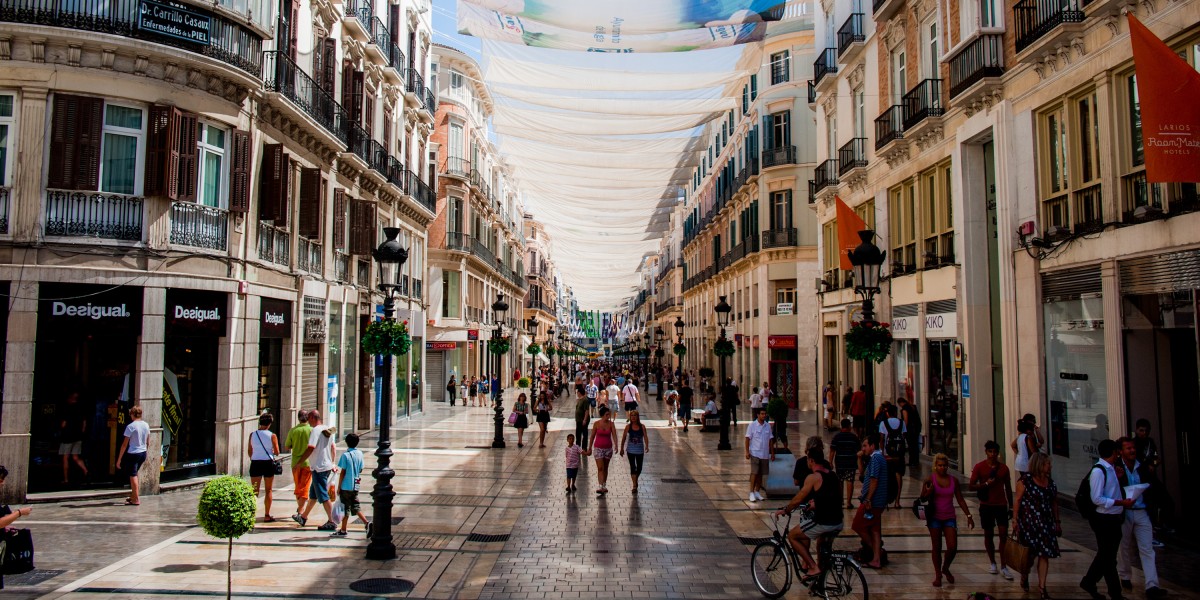
The explanation behind the name Calle Larios
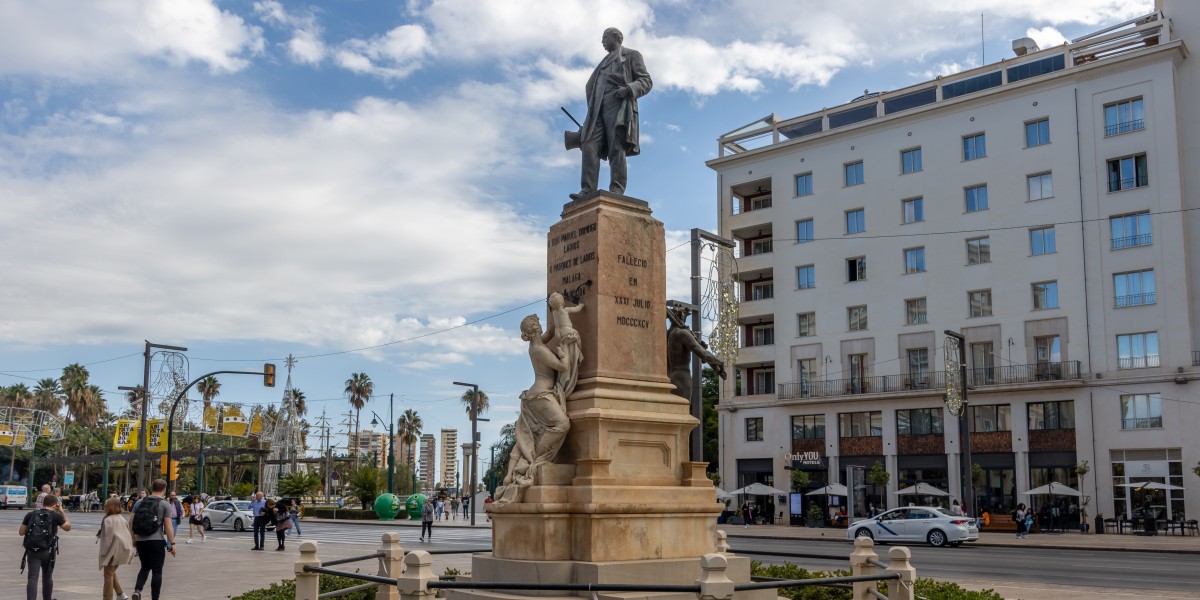
Although popularly known as Calle Larios, its official name is Calle Marqués de Larios. The name pays tribute to Manuel Domingo Larios y Larios, the 2nd Marquis of Larios, a figure associated with the economic and industrial development of 19th-century Málaga.
The connection with the new avenue was direct. When the City Council established a limited company in 1880 to make the opening of the street financially viable, the planned capital amounted to one million pesetas. The Larios family acquired the majority of the shares, thus playing a decisive role in financing the project.
This recognition was reflected not only in the street's name but also in the monument located next to Alameda Principal. Mariano Benlliure unveiled the sculpture in 1899.
What did the Marquis of Larios do for Málaga?
Manuel Domingo Larios belonged to a business family that had a significant influence on Málaga's economic development during the 19th century. Their activities were linked to several sectors, including the textile industry, commerce and property investment.
Their contribution to the creation of the street was particularly significant due to their financial support for the project. The opening of this new avenue improved the connection between the historic centre and Alameda Principal.
How to get to Calle Larios
Larios Street is located in the heart of Málaga's historic centre, between Plaza de la Constitución to the north and Alameda Principal to the south. Its location makes it easy to reach on foot from nearby attractions such as the Cathedral, the Picasso Museum, the Roman Theatre, the Alcazaba and Muelle Uno.
The area is well served by public transport, with city bus routes stopping at Alameda Principal and Paseo del Parque. The Atarazanas metro station is just a few minutes' walk away, while Málaga Centro-Alameda station, which offers commuter rail connections, is also nearby.
Living in Málaga city centre
Living in the heart of Málaga means having a wide range of shops, restaurants, museums, theatres and other services close at hand. The area around Calle Larios enjoys a vibrant urban atmosphere all year round and offers excellent pedestrian and public transport connections to other parts of the city.
In return, it is one of the most sought-after residential and tourist areas in Málaga. For those looking to be at the heart of the city's cultural and commercial activity, the centre offers a location that's hard to beat.
- Property for sale in Málaga's Historic Centre
- Long-term rentals in Málaga's Historic Centre
- Holiday homes in the Historic Centre of Malaga