This small Catalan town, with barely 70 inhabitants, preserves stone streets, a fortress over a thousand years old and legends that remain alive underground.
Follow idealista/news on the WhatsApp channel (in Spanish)
Some places still retain the essence of the past. Corners where the pace is slow, and history is part of the everyday landscape.
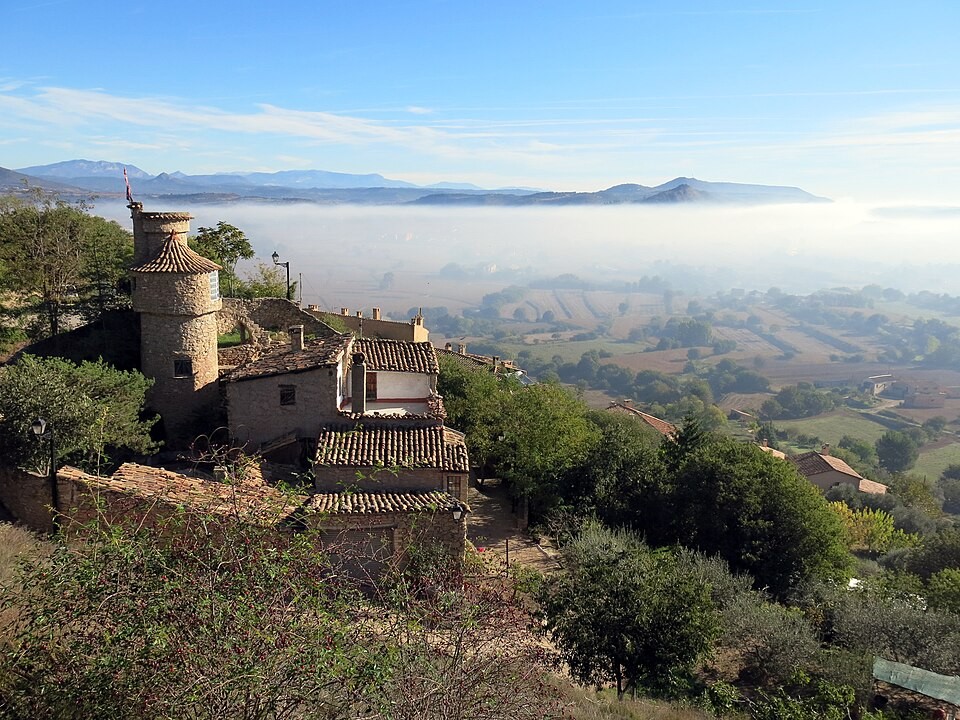
That is what happens in Montsonís, a medieval enclave in the interior of Catalonia that houses one of the most unique castles in Spain.
Beneath its fortress, moreover, tradition speaks of ancient passageways that for centuries fuelled the legends of the place.
A medieval enclave built to watch over the territory
Montsonís stands on a hill on the eastern slope of the Montsec range, in the heart of the Catalan Pre‑Pyrenees, at an altitude of around 400 metres.
In the Middle Ages, this area marked the border between Christian territories and Al‑Andalus, making it a strategic location. Fortifications were built to control natural passages through the territory, thereby dominating the region for centuries.
From the centre, you can see the Artesa de Segre valley and the Salgar gorge, two important natural corridors in the region.
Today, access is from Artesa de Segre via an ascending road, where the landscape gradually transforms until you reach the small historic centre.
The most unique inhabited castle in the area
The great symbol of the town is the Castle of Montsonís, a fortress built in 1024 in the midst of a medieval border region.
What makes it unique is that the family of the Barons of Albi still live there. Its silhouette dominates the town, and it retains numerous original features: towers, walls, historic rooms, cellars and spaces furnished with period pieces.
Among its most outstanding areas are the keep and the old medieval prison, as well as private rooms that reflect the building’s evolution over the centuries.
It now houses the Fundació Castells Culturals de Catalunya, which promotes its conservation through guided tours, theatrical visits and cultural experiences.
The tunnel and the legends of the castle
The castle holds one of Montsonís’ most fascinating stories. In its cellar, there is an underground passageway that, for generations, was considered a legend.
Local tradition spoke of a tunnel connecting the fortress with the Sanctuary of Salgar, carved into the rock of the mountain next to the Segre River.
What seemed like a myth turned out to be real: the passageway was rediscovered during the Civil War. It had been sealed more than a century earlier, after the phylloxera plague devastated the area’s vineyards and caused it to be forgotten.
The connection with the sanctuary was not accidental. Both sites share a history dating back to the Middle Ages, when the lord of Montsonís ordered its construction as a refuge for pilgrims on the Camino de Santiago.
What else to see in Montsonís
Beyond the fortress, the surrounding area offers other points of interest:
- Church of Sant Urbà, attached to the castle
- Panoramic views over the Segre valley
- Natural environment of the Salgar gorge
- Route to Foradada and its rock formations
- Sanctuary of Santa Maria de Salgar, next to the Segre River
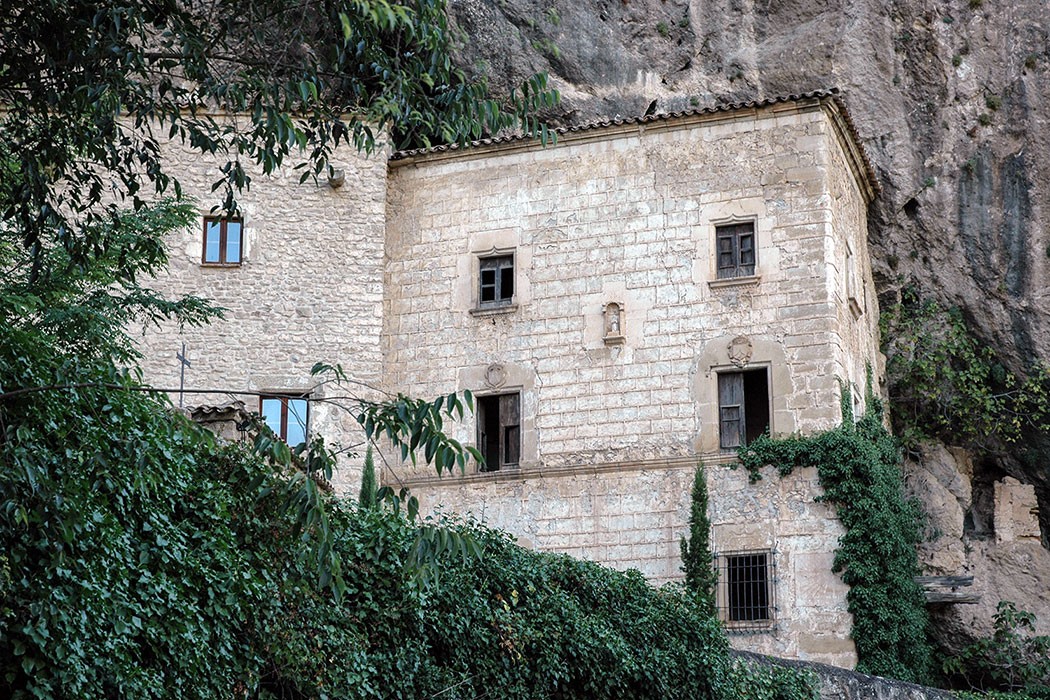
Other activities to do in Montsonís
Montsonís combines heritage and nature. In its surroundings, you can enjoy hiking and cycling routes that explore the Segre Valley and follow traditional paths.
One of the best‑known options is the Land Art Natura route, integrated into the natural landscape.
Furthermore, the municipality has been declared a Starlight Destination, making it particularly suitable for observing the night sky.
How to get to Montsonís
It is only accessible by road. The main routes are:
- From Barcelona, the usual route is along the A-2 towards Lleida, continuing then towards La Noguera on secondary roads to Foradada. The journey takes about two hours.
- From Lleida, the connection is made via the C-12 and local roads to Foradada and Montsonís, in a journey of between 45 minutes and one hour, depending on the starting point.
A different kind of getaway in the heart of Catalonia
Montsonís is small, peaceful and uncrowded.
The town retains an atmosphere rarely found in other medieval villages. Here, history unfolds among walls, towers and stone streets, in an environment where the past remains very much alive.
A unique destination for those seeking a different kind of getaway in the interior of Catalonia.