Barcelona is a city with centuries of history, and throughout that time its architecture has shaped a distinctive skyline. From the orderly layout of the Eixample district to the buildings that line the coast, the city is home to landmarks from very different periods and architectural styles. Yet among them all, one structure stands above the rest. The title of Barcelona's tallest building only changed recently.
The tallest building in Barcelona
The tallest building in Barcelona is the Sagrada Família, which reaches 172.5 metres following the completion of the Tower of Jesus, the central tower of the complex designed by Antoni Gaudí. The basilica now stands higher than any other building in the city.
The completion of the central tower marks one of the most significant recent milestones in a project that began in 1882. Gaudí designed a temple composed of 18 towers: twelve dedicated to the apostles, four to the evangelists, one to the Virgin Mary and the Tower of Jesus, the tallest of them all.
Its height is no coincidence. Gaudí designed the tower to reach 172.5 metres so that it would remain below the approximately 177 metres of Montjuïc. It was his way of expressing the idea that human creations should never surpass nature. Although the basilica is still in its final stages of construction, it will not exceed that height.
However, despite being the tallest building in Barcelona, the Sagrada Família is not the tallest structure in the city and cannot strictly be classified as a skyscraper.

The tallest skyscraper in the city
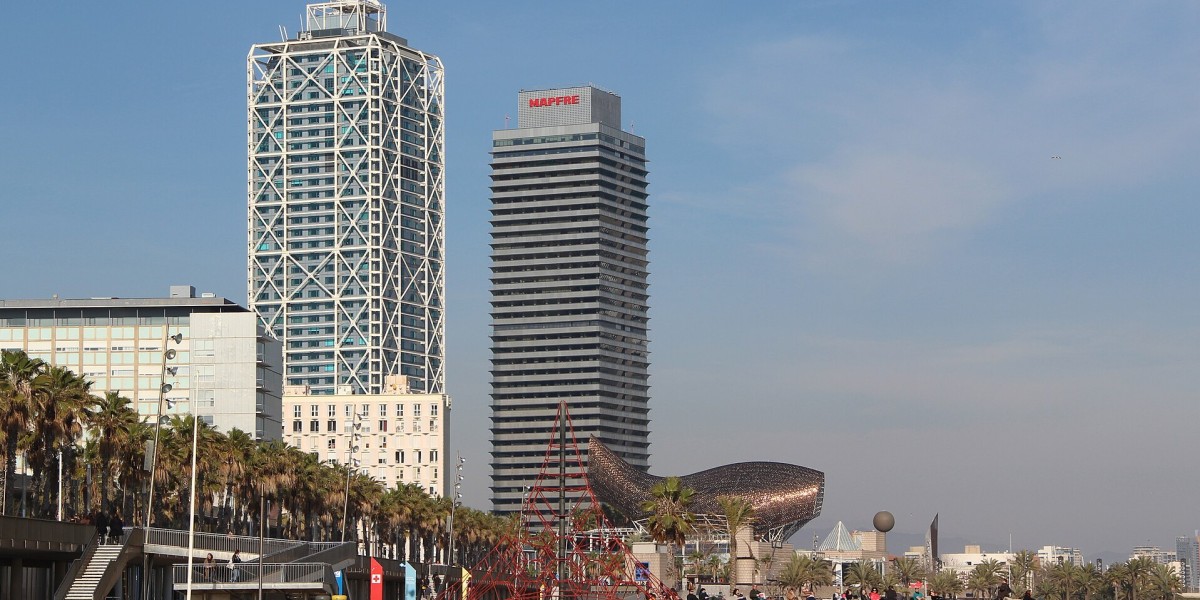
When considering skyscrapers, first place is shared by two buildings. The Torre Mapfre and Hotel Arts both stand 154 metres tall and dominate the seafront of the Olympic Village. Both were built as part of the urban transformation associated with the 1992 Olympic Games.
Torre Mapfre houses offices, while Hotel Arts Barcelona operates as a luxury hotel. Together, alongside Frank Gehry's Peix sculpture, they helped transform this stretch of coastline into one of Barcelona's most recognisable urban landscapes.
The tallest structure in Barcelona
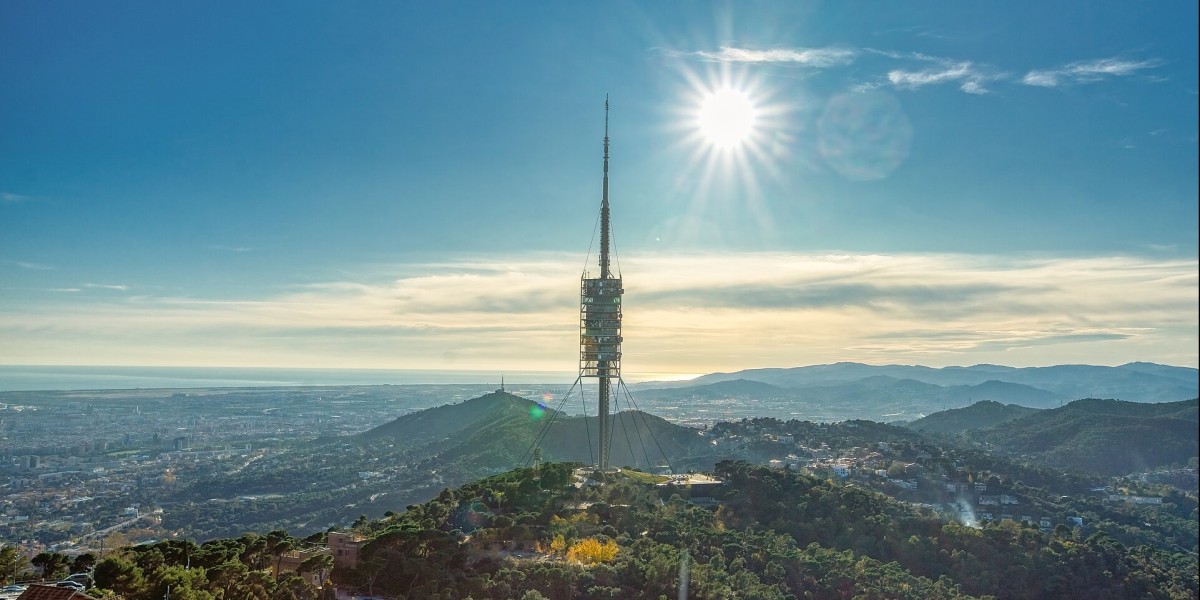
The tallest structure in Barcelona is the Collserola Tower, designed by Norman Foster and inaugurated in 1992. It rises to approximately 288 metres and serves primarily as a telecommunications tower. For this reason, it is considered a structure rather than a building.
Outside Barcelona's municipal boundaries, the Tres Xemeneies (Three Chimneys) of the former Sant Adrià de Besòs power station are also notable, reaching a height of 200 metres.
What is the highest point in Barcelona?
The highest point in Barcelona is Tibidabo, located in the Collserola mountain range. Its summit reaches approximately 512 metres above sea level and offers sweeping views across the city, the coastline and, on clear days, much of the surrounding metropolitan area.
At the summit are the Tibidabo Amusement Park and the Expiatory Temple of the Sacred Heart, crowned by its iconic statue of Christ. The viewpoint provides one of the most expansive panoramas in Barcelona.
The tallest buildings in Barcelona
Excluding communications towers, antennae, industrial infrastructure and other technical structures, these are the five tallest buildings in Barcelona:
- Sagrada Familia – 172.5 metres: Antoni Gaudí's basilica tops the list thanks to the recently completed Tower of Jesus.
- Mapfre Tower – 154 metres: Located in the Olympic Village, it is one of the two landmark skyscrapers on Barcelona's waterfront.
- Hotel Arts Barcelona – 154 metres: Equal in height to Torre Mapfre, it forms one of the city's most recognisable skyline silhouettes.
- Torre Glòries – 144 metres: Designed by Jean Nouvel and inaugurated in 2005, it has become a symbol of contemporary Barcelona architecture thanks to its distinctive shape and illuminated façade.
- Habitat Sky – 115 metres: Located in the Sant Martí district, this residential tower is part of the vertical growth of the Diagonal Mar and waterfront area.
Living in Barcelona
Living in Barcelona means enjoying a city with a rich cultural scene, an extensive public transport network and neighbourhoods with very different personalities. The lifestyle in Eixample, Gràcia, Poblenou, Sants or Sant Andreu varies considerably in terms of atmosphere, services and housing.
The city's proximity to the sea, its urban parks and the Collserola mountain range also provide abundant opportunities for outdoor activities. These advantages are complemented by universities, healthcare facilities, local commerce and a dynamic economy.