A Grand Canyon in Galicia? Yes, and in autumn it is a sweep of ochre, red, and gold. Between Lugo and Ourense, the Ribeira Sacra, recognised by UNESCO as a Biosphere Reserve, unfolds through deep river canyons, vineyards clinging to seemingly impossible terraces and a collection of medieval monasteries hidden among chestnut trees. The Sil, Miño, and Cabe rivers have shaped a landscape that impresses from the first viewpoint. When the first morning mists settle over the valleys, the scenery becomes even more photogenic. Best of all, it can be enjoyed at a leisurely pace, far from Spain's busiest tourist destinations.
Where is it and why visit now?
The Ribeira Sacra lies in the heart of Galicia, stretching across the provinces of Lugo and Ourense. Here, the Sil, Miño and Cabe rivers have carved deep gorges and steep slopes that define the character of the region.
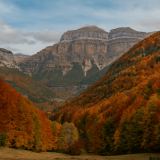
At this time of year, the vineyards change colour and the first morning mists drift across the valleys, creating scenes only visible for a few months each year. It's a destination for anyone seeking nature, history and tranquillity, with the added attraction of spectacular autumn scenery. This contrast between rock, water and vineyards is what makes the Ribeira Sacra such an irresistible escape.
Breathtaking viewpoints
Exploring the Ribeira Sacra through its viewpoints is the best way to appreciate the scale of its canyons. Natural balconies overlooking the Sil and Miño rivers offer 360-degree views, with cliffs plunging hundreds of metres and meanders carving dramatic curves through the landscape.
On clear days, visitors can make out terraced vineyards, chestnut forests and monasteries peeking through the trees. When fog rolls in, the scenery becomes even more dramatic, as the rivers disappear and reappear beneath low clouds and the canyon walls seem to multiply before your eyes.
Balcones de Madrid: 500 metres above the Sil River and a farewell to the past
The Balcones de Madrid rise more than 500 metres above the Sil River and are linked to one of the area's most poignant traditions. According to local custom, this was where families bid farewell to knife sharpeners and wafer sellers leaving in search of work elsewhere.
Today, the viewpoint offers one of the most iconic panoramas in the Ribeira Sacra, with near-vertical canyon walls and the Sil winding through the landscape below. Its position and composition make it one of the best places to watch an autumn sunset. The contrast between the granite cliffs and the warm tones of the vineyards is irresistible for photographers.
Caborco and Santiorxo: Amandi and its impossible slopes
In the Amandi area, the Caborco and Santiorxo viewpoints provide a front-row view of the steep slopes that descend towards the river. Here, it becomes clear why the region's vineyards cling so tenaciously to the mountainsides and why the Sil dominates the landscape.
It's easy to spend several minutes simply standing in silence, listening to the river below and taking in the scale of the canyon. The soft morning light highlights the contours of the terrain and helps reveal the true dimensions of the valley.
Cabo do Mundo: the iconic meander of the Miño
The Cabo do Mundo viewpoint overlooks one of the most spectacular bends of the Miño River, which wraps around a peninsula covered with vegetation and vineyards.
The perfect curve of the river is particularly striking at sunset, when the lengthening shadows accentuate its shape. This viewpoint captures the essence of the Ribeira Sacra: water, steep slopes, vineyards and forest in delicate balance. A bend in the river, a burst of light and the postcard-perfect image is complete.
Terraced vineyards and heroic viticulture
The vineyards are one of the region's defining features. Vines are cultivated on terraces carved into steep hillsides, where every task requires extraordinary effort and precision.
These conditions give rise to what is known as heroic viticulture, a term used to describe the challenge of farming land in such demanding terrain. This work is inseparable from the Ribeira Sacra Designation of Origin wines, which draw much of their character from the canyon landscape and local climate.
At first glance, the terraces resemble giant green staircases descending towards the river, shaping the scenery like a natural amphitheatre.
Medieval monasteries among chestnut trees and rock
The Ribeira Sacra is much more than a natural landscape. Hidden among canyons and forests is an exceptional monastic heritage that speaks of centuries of spirituality, stone and silence.
At Santa Cristina de Ribas de Sil, tucked away among chestnut groves, a Romanesque complex seems almost to merge with the forest itself. In Esgos, San Pedro de Rocas is considered one of Galicia's oldest monastic sites, featuring chapels carved directly into the rock and a bell tower perched atop a natural stone outcrop.
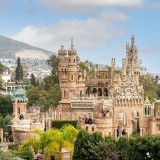
Meanwhile, Santo Estevo de Ribas de Sil, now a Parador hotel, contains three historic cloisters that showcase the solidity and elegance of monastic architecture. The monumental complex of San Vicente del Pino, in Monforte de Lemos, adds another chapter to this heritage route with its medieval castle, church and Count's Palace standing above the canyons.
The legend that explains the canyons
Local tradition preserves a Roman legend explaining the grandeur of this landscape. According to the story, Juno, jealous of Jupiter's love for these lands, opened a great wound in the earth, from which the canyons were born.
The myth does not compete with geology, but it adds another layer to the traveller's experience. After hearing the story, looking out over the Sil River takes on a different meaning, as each cliff appears even more like a permanent scar etched into the landscape.
It's one of those stories that lingers in the memory long after the journey has ended.