What better way to enjoy autumn than by immersing yourself in a landscape of ochre, yellow and red hues? Surrounded by nature, fresh mountain air and the soothing sound of flowing water, Ordesa y Monte Perdido National Park is the perfect setting to experience the season at its finest.
Follow idealista/news in Spanish on the WhatsApp channel
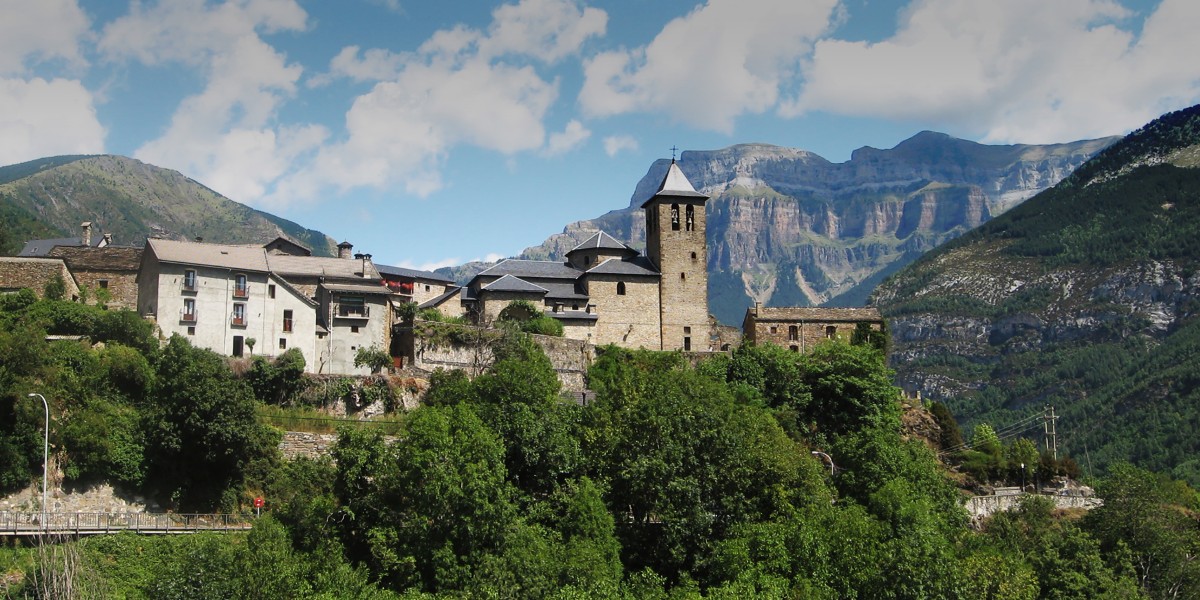
Torla is the gateway to this spectacular environment. From its cobbled streets, hiking trails lead to some of the most breathtaking landscapes in the Pyrenees.
The starting point for visiting Ordesa y Monte Perdido National Park
Located at the entrance to Ordesa y Monte Perdido National Park, Torla has become an ideal base for visitors exploring this protected natural area.
Here you'll find the park's main visitor centre, where you can:
- Learn more about the park through its exhibitions.
- Request information about routes and facilities.
- Purchase the bus tickets required to visit certain areas of the park.
Next to the visitor centre is a large public car park that is free of charge and open 24 hours a day. It serves as the main parking area and departure point for the shuttle buses to the National Park. This service takes visitors to the Pradera de Ordesa, the starting point for some of the area's best hikes.
How do you visit Ordesa y Monte Perdido National Park?
Accessing the National Park via Torla is the easiest and most practical option:
- Head to the Visitor Centre on Avenida de Ordesa, located at the entrance to the village. You can walk there from your accommodation or leave your vehicle in the nearby car park.
- From the outdoor parking area, take the shuttle bus to the Ordesa Meadow, the final stop on the route. The area offers public toilets, a picnic area, an information point and a restaurant.
- Please note that between late September and late October or early November, vehicle access to Ordesa y Monte Perdido National Park is restricted, making the shuttle bus compulsory. The return ticket costs €6, with reduced fares available.
- Bus schedules and frequency vary throughout the season, so it is advisable to check the operating dates in advance. Arriving before 8:30 a.m. is also recommended to avoid queues and begin walking before the busiest part of the day.
- Once the shuttle service ends for the season, visitors can access the National Park by car until the car park reaches its capacity of 410 vehicles. When full, access is closed by the Civil Guard or park rangers, usually at the Puente de los Navarros checkpoint or on the A-135 road.
What can you see in this natural paradise?
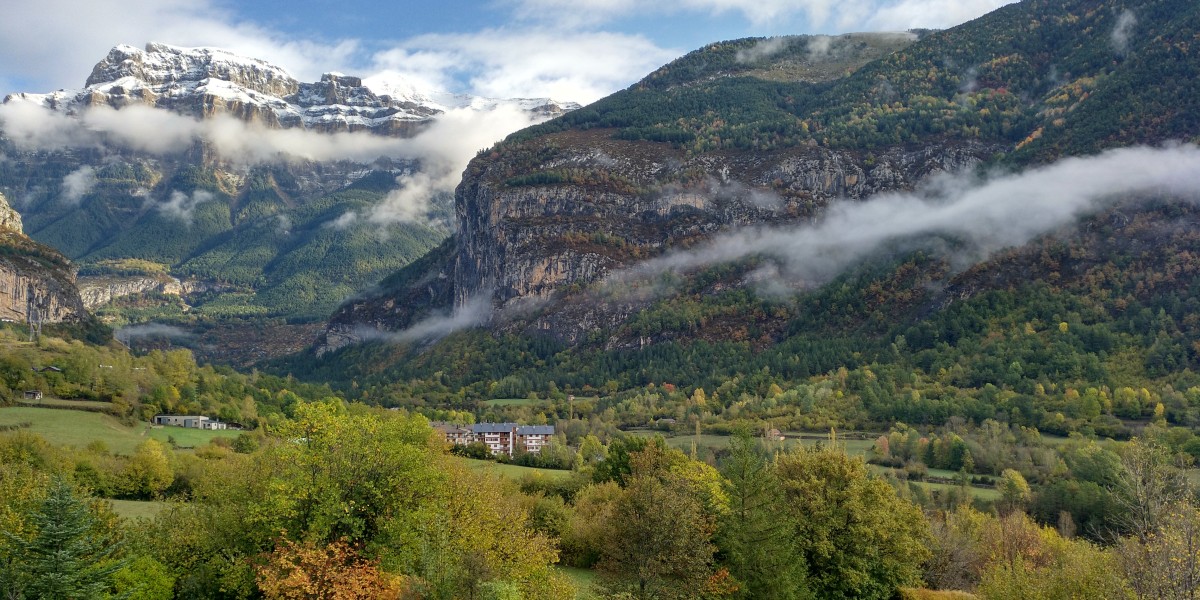
The Ordesa Valley is the best-known and most visited area of Ordesa y Monte Perdido National Park and is also one of Europe's earliest protected natural areas.
If you have time to explore beyond the valley, the park's more than 15,000 hectares include must-see locations such as:
- Añisclo Canyon.
- Escuaín Gorge.
- Pineta Valley.
- The Monte Perdido massif.
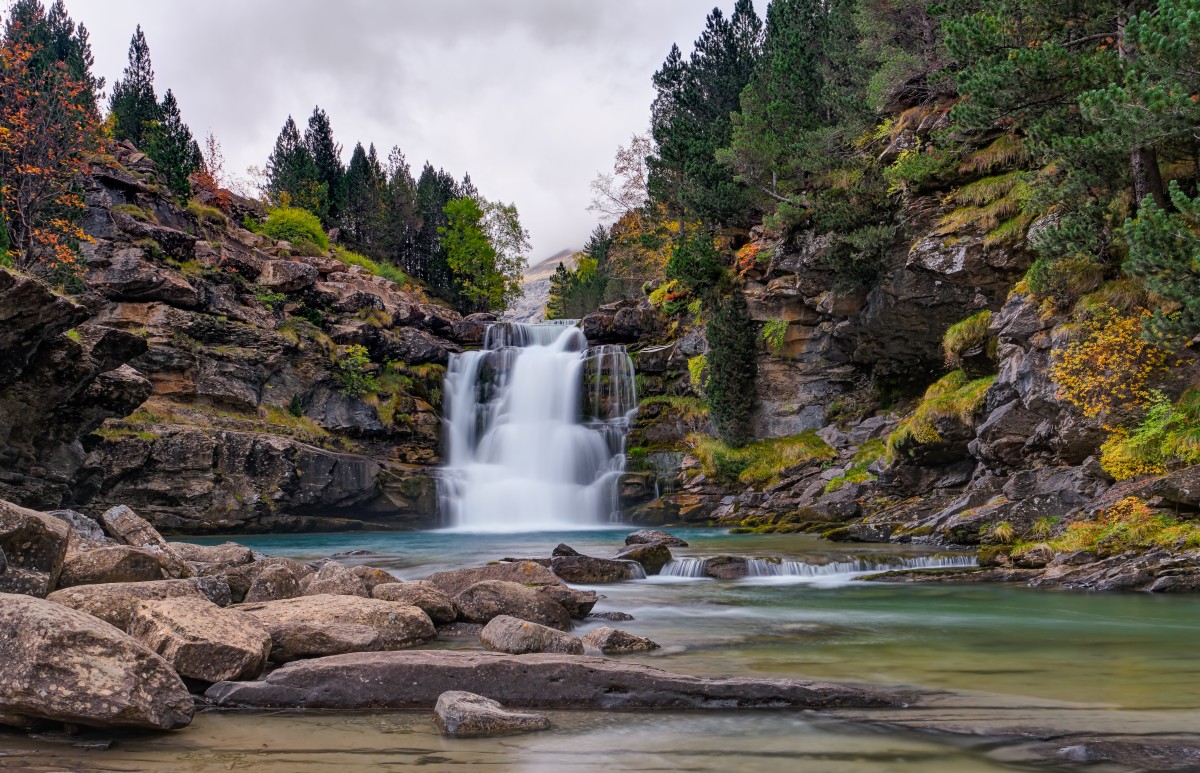
As a first introduction to the park, two highly recommended routes begin in the Torla and Ordesa Valley area.
Route to the Cola de Caballo waterfall
This trail offers one of Spain's most iconic autumn landscapes and leads to the famous waterfall at the end of the Ordesa Valley.
- The route passes through meadows coloured in shades of red, orange and ochre, as well as forests and river landscapes.
- It is suitable for all levels of experience.
- The walk takes around two and a half hours to reach Cola de Caballo and slightly less on the return journey.
- Along the way, you'll pass several waterfalls fed by the Arazas River, including the Arripas Waterfall and the Soaso Cascades.
- The peaks of Cilindro de Marboré, Monte Perdido and Pico Añisclo dominate the skyline above the glacial cirque.
Route from Torla to the Ordesa Meadow via Turieto Bajo
This route follows the former road linking Torla with Ordesa.
- It is an easy walk suitable for all ages, following a path parallel to the Ara River.
- Before reaching Ordesa Meadow, the trail passes through forests of beech, pine and fir trees.
- Along the way, you'll cross the Glera Bridge and enjoy views of the Ara River's pools, as well as the Molinieto, Tamborreta and Los Abetos waterfalls.
- The route takes approximately two and a half hours each way (around 7 km) and involves very little elevation gain, with the Ara River accompanying you for much of the walk.
A medieval past, Pyrenean architecture and a rich gastronomy
Although Torla is best known as the gateway to Ordesa y Monte Perdido National Park, the village itself is well worth exploring.
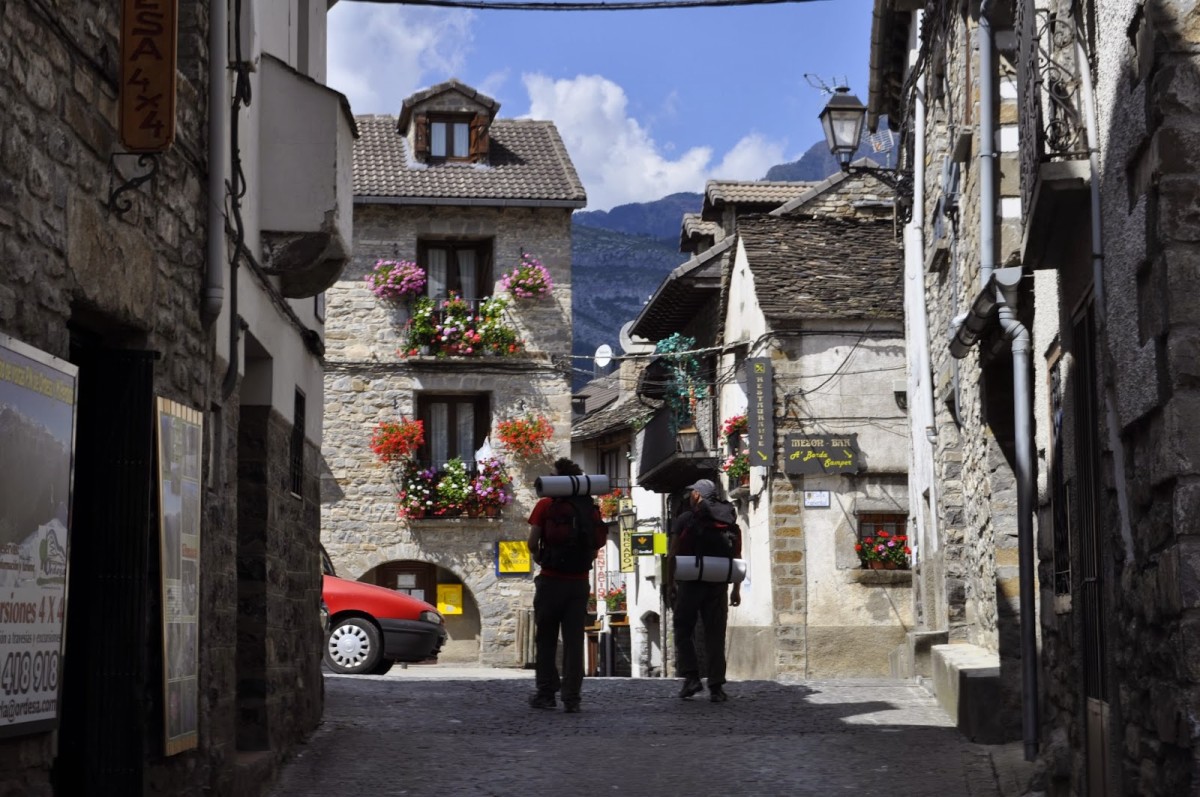
- In autumn, its streets take on a special charm, as the ochre and red tones of the surrounding mountains enhance the beauty of its stone houses and slate roofs.
- Just 344 people live in this small medieval village in Huesca, which can be crossed on foot in around ten minutes.
- The local architecture is characterised by narrow, cobbled streets and traditional Pyrenean buildings.
- Notable examples include Casa Oliván and Casa Vic.
- It's also worth visiting San Salvador church, dating back to the 16th century, as well as the remains of an older defensive complex located on the highest part of the village.
- This area is also home to the Torla Ethnological Museum, an excellent place to learn about traditional village life.
- Many of Torla's houses were rebuilt after the Spanish Civil War, although the War of the Spanish Succession and the Peninsular War had also previously affected the settlement.
- Another distinctive feature is the presence of traditional witch-scarer chimneys, crowned with cone-shaped stones believed to prevent witches from entering homes.
More specifically, the village's name means "tower", referring to a former defensive structure that once protected the settlement from attacks. Indeed, Torla's history has been shaped by its position near the French border, a location that brought periods of conflict but also supported a thriving smuggling trade that proved highly profitable for the village.