How is Christmas celebrated in Spain? Spain’s festive season runs well beyond 25 December, with family meals, local Nativity scenes, the Christmas lottery and the Three Kings’ parades carrying celebrations through to Epiphany on 6 January 2027.
Spanish Christmas traditions vary by region and household, but the broad calendar is familiar across the country. Nochebuena brings families together on Christmas Eve, while many children still receive their main presents from the Reyes Magos rather than Father Christmas.
These are 10 Spanish Christmas traditions worth knowing before spending the season in Spain.
- What is Christmas called in Spain?
- The Three Wise Men parade: Cabalgata de Reyes
- Spain’s famous Christmas lottery: El Gordo
- New Year traditions: eating 12 grapes
- Traditional Spanish Christmas food
- Spanish Christmas decorations
- Día de los Santos Inocentes: Spain’s April Fools’ Day
- Midnight Mass: Misa del Gallo
- Christmas in Spain: key dates for 2026–27
What is Christmas called in Spain?
Christmas is Navidad in Spanish. The main festive period usually begins in early December and continues until 6 January, the Feast of the Epiphany, known as Día de Reyes.
Spain has several co-official languages, so Christmas greetings change by region:
- Catalonia and the Balearic Islands: Bon Nadal
- Galicia: Bo Nadal
- Basque Country: Eguberri on
Father Christmas, or Papá Noel, has become increasingly common, particularly for gifts on 25 December. Even so, the Reyes Magos remain the traditional gift-givers for many families, with presents arriving on 6 January.
The Three Wise Men parade: Cabalgata de Reyes
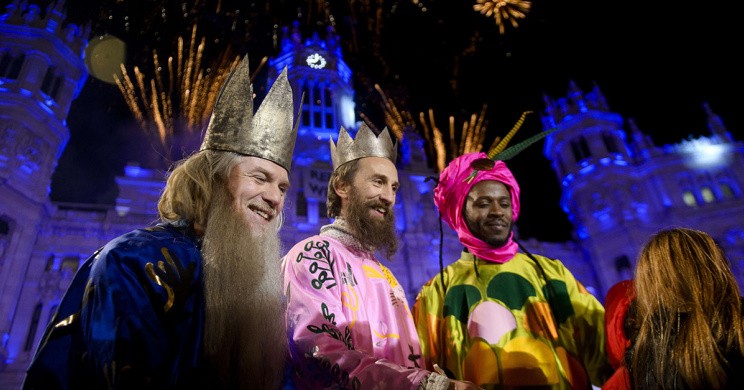
On 5 January, towns and cities across Spain will hold their Cabalgata de Reyes. The Three Wise Men travel through the streets on floats, usually throwing sweets to the crowds before children leave out shoes and letters for the night ahead.
The event leads into Epiphany on 6 January, a national public holiday in Spain. Shops, schools, banks and many public services close, while transport may run to a reduced timetable.
Spain’s famous Christmas lottery: El Gordo

Spain’s Christmas lottery, El Gordo — literally “the fat one” — is drawn on 22 December each year. It is one of the country’s biggest shared seasonal rituals, with people buying whole tickets or décimos, one-tenth shares, with relatives, colleagues, local bars and neighbourhood groups.
The draw is broadcast live, and pupils from Madrid’s San Ildefonso school traditionally sing out the winning numbers and prizes. The prize structure spreads money across many winning tickets, which helps explain why the draw is followed so closely beyond the headline jackpot.
New Year traditions: eating 12 grapes
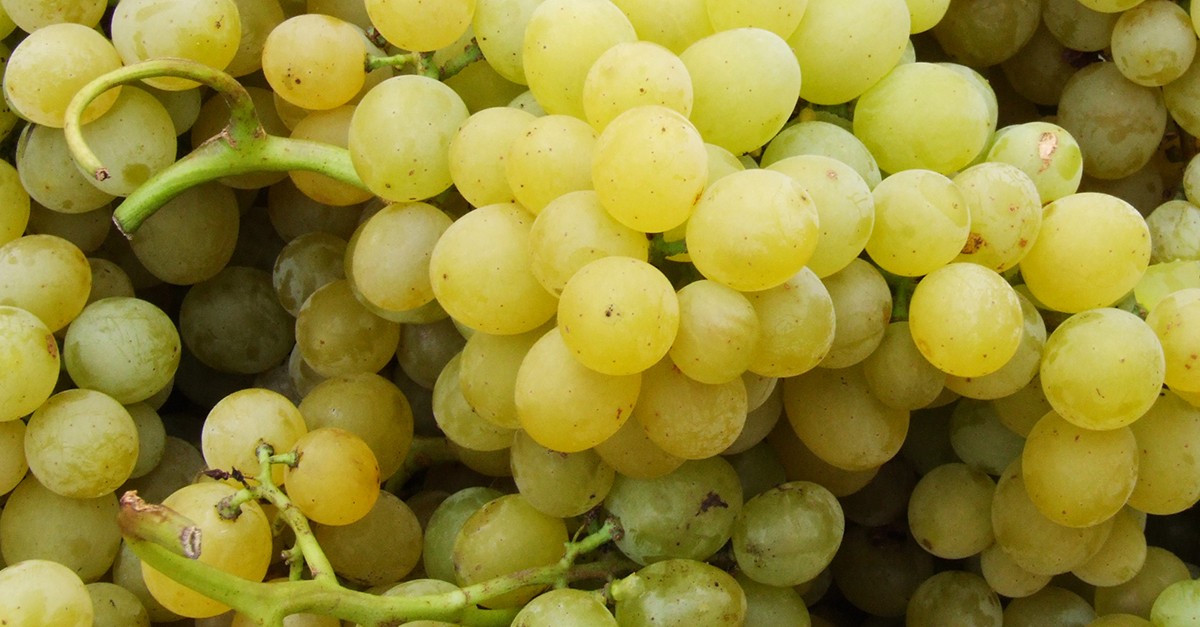
On Nochevieja, New Year's Eve, it is customary to eat 12 grapes at midnight, one with each chime of the clock. Each grape represents a month of the coming year and is associated with good fortune.
The best-known public celebration in Spain is at Puerta del Sol in Madrid, where crowds gather beneath the clock tower. It becomes exceptionally busy, and access controls are common. Plenty of households follow the tradition at home, watching the chimes on television with grapes carefully prepared in advance.
Traditional Spanish Christmas food

Food sits at the centre of Christmas in Spain, especially on Christmas Eve. A typical Nochebuena meal depends heavily on regional and family traditions, though it often includes:
- Cured ham, including jamón serrano or jamón ibérico
- Seafood and fish, particularly prawns, langoustines, clams or salt cod
- Roast meat, such as lamb, turkey or suckling pig in some areas
- Turrón, an almond confection sold in soft and hard varieties
- Polvorones and mantecados, crumbly festive biscuits
- Roscón de Reyes, a ring-shaped sweet bread traditionally eaten on 6 January
A roscón often contains a small figurine and a dried bean. The person who finds the figurine is traditionally crowned for the day, while finding the bean commonly means paying for the next roscón.
Spanish Christmas decorations

Portal de Belén
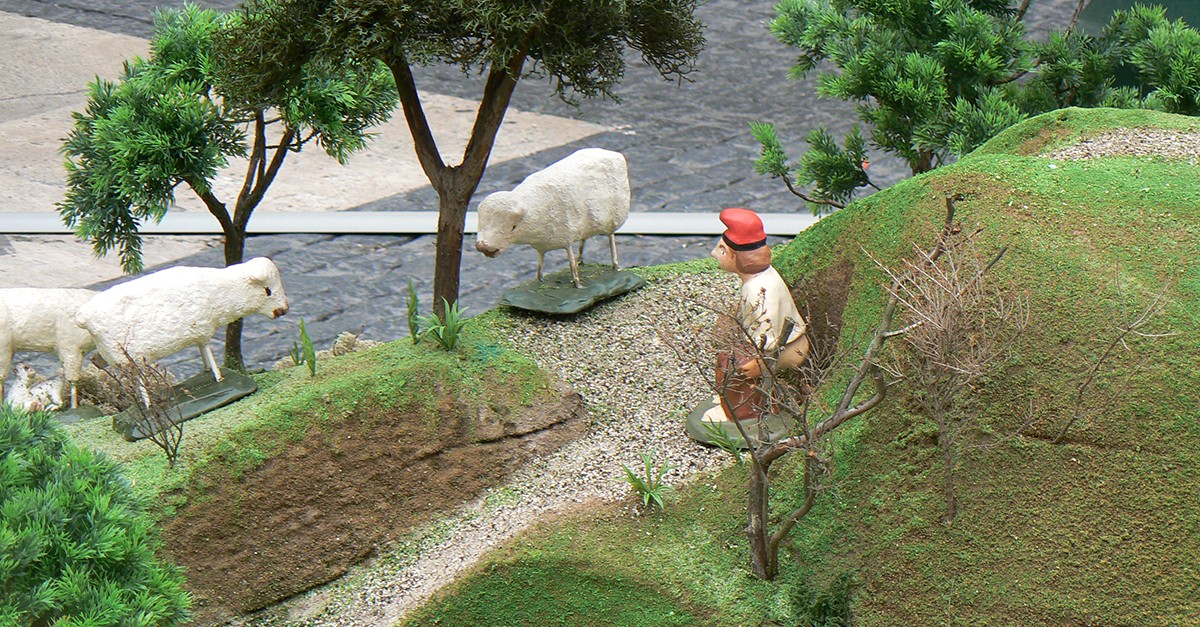
A portal de Belén, also called a belén, is a Nativity scene depicting the birth of Jesus. Displays can be modest household arrangements or detailed installations filling civic buildings, churches and shop windows.
Many include the Three Wise Men, shepherds, market stalls, miniature villages and local references.
In Catalonia and parts of Valencia, a caganer may also appear: a small figurine depicted defecating, traditionally placed discreetly within the scene. It is a longstanding folk element rather than a joke at the expense of religious belief.
Caga Tió in Catalonia
In Catalonia, children prepare the Caga Tió, a small log with a painted face, stick legs and a traditional red barretina hat. It is “fed” during Advent and covered with a blanket.
On Christmas Eve or Christmas Day, depending on the family, children sing traditional songs and tap the log with sticks. Sweets and small gifts are then revealed beneath the blanket.
Olentzero in the Basque Country
In the Basque Country and Navarre, Olentzero is a folk figure associated with Christmas gift-giving. He is commonly portrayed as a charcoal burner or rural worker, and local parades often take place before Christmas Eve.
Día de los Santos Inocentes: Spain’s April Fools’ Day
Spain marks Día de los Santos Inocentes on 28 December. The day has religious origins but now functions much like April Fools’ Day, with practical jokes, false stories and playful inocentadas in newspapers, television programmes and among friends.
Midnight Mass: Misa del Gallo
For Catholics and many others who take part as a family tradition, Misa del Gallo is midnight Mass on Christmas Eve. The name translates as “the Rooster’s Mass” and refers to the traditional belief that a rooster announced Christ’s birth.
Christmas in Spain: key dates for 2026–27
- 8 December 2026: Inmaculada Concepción, a national public holiday
- 22 December 2026: El Gordo Christmas lottery draw
- 24 December 2026: Nochebuena, Christmas Eve
- 25 December 2026: Christmas Day
- 28 December 2026: Día de los Santos Inocentes
- 31 December 2026: Nochevieja and the 12 grapes at midnight
- 5 January 2027: Cabalgata de Reyes parades
- 6 January 2027: Epiphany, Día de Reyes, a national public holiday
Where to spend Christmas in Spain: For the ultimate experience, visit Madrid, Barcelona, Seville, or Catalonia to immerse yourself in Spanish Christmas traditions.
¡Feliz Navidad!
Stay in the know about living in Spain as a foreigner—get our weekly newsletter for the latest travel, legal, and lifestyle news.