An indefinite air traffic control strike began this April in Spain, affecting nine airports and creating disruption risks for both residents and visitors. The walkout started at midnight on Friday, 17th April and currently has no end date.
Air traffic control strike in Spain: where, when and why
The indefinite strike started on Friday, 17th April at midnight. The strike applies to controllers working for Saerco, a private air navigation services provider operating at several Spanish airports.
Saerco manages air traffic control at nine Spanish airports, and these are the Spanish airports affected by the strike:
- Jerez de la Frontera
- A Coruña
- Madrid-Cuatro Vientos
- Sevilla
- Vigo
- El Hierro
- Fuerteventura
- Lanzarote
- La Palma
Why Spain’s Saerco controllers are striking
USCA and CCOO say the strike is intended to highlight staff shortages, deterioration of working conditions, and the impact of both issues on operational safety. They point to specific problems such as:
- Cancellation of already-approved holidays
- Heavy or “abusive” use of on‑call availability
- Shift changes notified at very short notice
Union representatives argue that aviation safety cannot be guaranteed with a workforce exposed to ongoing fatigue, stress and uncertainty. Negotiations between the unions and Saerco took place shortly before the strike but ended without agreement, so the action is going ahead as planned.
Overlapping strikes at some Spanish airports
The air traffic control strike is taking place at the same time as separate, ongoing handling strikes at Groundforce and Azul Handling.
These ground staff disputes already have their own minimum service orders set by the Spanish authorities, and the overlap with the Saerco controllers’ walkout increases the overall risk of flight disruption at these airports.
How the Spanish strike could affect your flight
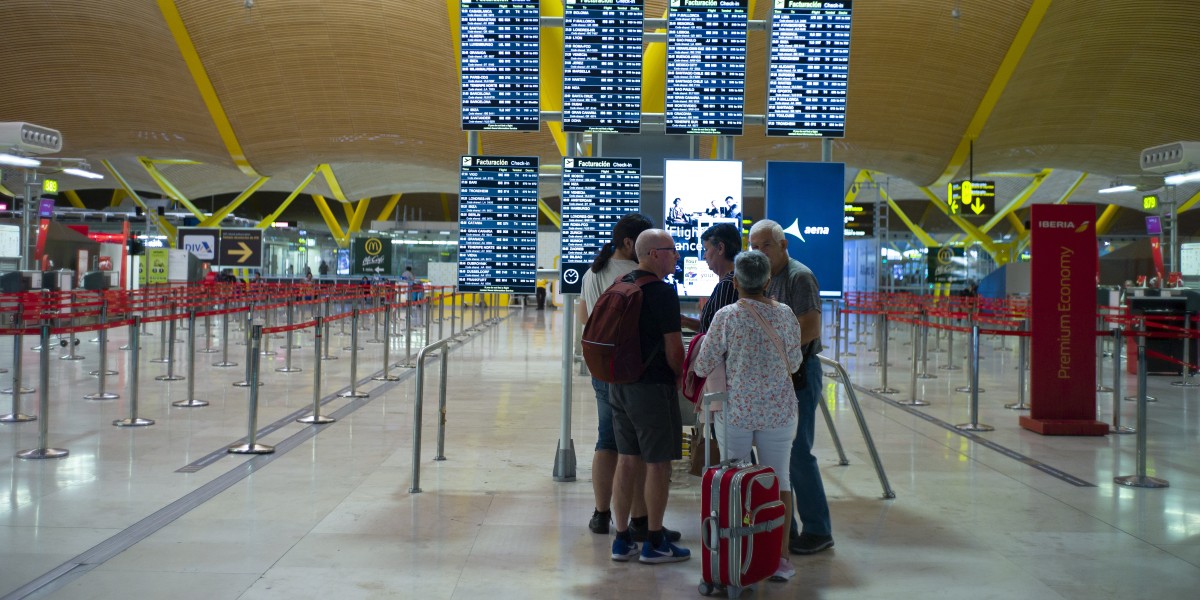
The strike is predicted to affect around 20,000 scheduled flight movements and 2.6 million passengers in the first month.
Seville at the centre of attention
The strike is particularly significant at Seville Airport for two reasons:
- The city is hosting the Copa del Rey final between Atlético de Madrid and Real Sociedad this weekend.
- The Feria de Abril, or the Seville Fair (a major annual fair with casetas, or private and public marquees, and daily events), starts on Monday, traditionally bringing large numbers of domestic and international visitors.
This combination means Seville is likely to feel the pressure of any strike-related disruption more than most other affected airports.
Minimum services during the air traffic control strike in Spain
Spain’s Ministry of Transport and Sustainable Mobility has set legally binding minimum service levels for the strike. These range from full protection for emergency and state flights to reduced coverage for domestic, international and mainland routes.
These minimums mean that not all flights will be cancelled, but a proportion of services may be reduced or rescheduled, particularly on mainland routes with strong rail or road alternatives.
The air traffic control strike is taking place at the same time as separate, ongoing handling strikes at Groundforce and Azul Handling. These ground staff disputes already have their own minimum service orders set by the Spanish authorities, and the overlap with the Saerco controllers’ walkout increases the overall risk of flight disruption at these airports.
Passenger rights in Spain during the air traffic control strike
Consumer groups reminded travellers of their rights under EU air passenger regulations in the event of delays or cancellations linked to the strike.
If a flight is cancelled or heavily disrupted due to the strike, affected passengers are entitled to a full refund of the ticket price, or an alternative route to their final destination (rerouting). This applies to flights covered by EU rules, which include.
When a cancellation happens close to departure time, and the passenger chooses an alternative flight, airlines must provide basic support while travellers wait. This includes adequate food and drink, hotel accommodation if an overnight stay becomes necessary, and transport between the airport and the hotel.

Stay in the know about living in Spain as a foreigner—get our weekly newsletter for the latest travel, legal, and lifestyle news.