Many people dream of having a swimming pool at home – something that is becoming more accessible thanks to prefabricated pools. It is often believed that licences or permits are not required for them, but is that really the case?
Follow idealista/news on the WhatsApp channel (in Spanish)
In this article, we present a complete guide on installing prefabricated swimming pools in houses and on terraces.
- What is a prefabricated swimming pool?
- Regulations for installing prefabricated swimming pools with construction
- Regulations for installing prefabricated swimming pools without construction work
- Mandatory safety regulations
- Does installing a prefabricated swimming pool affect property tax (IBI)?
- Is it mandatory to declare a prefabricated swimming pool to the Land Registry?
- What to consider before installing a prefabricated swimming pool
What is a prefabricated swimming pool?
A prefabricated swimming pool is manufactured entirely in a factory and then transported to and installed on the land or property.
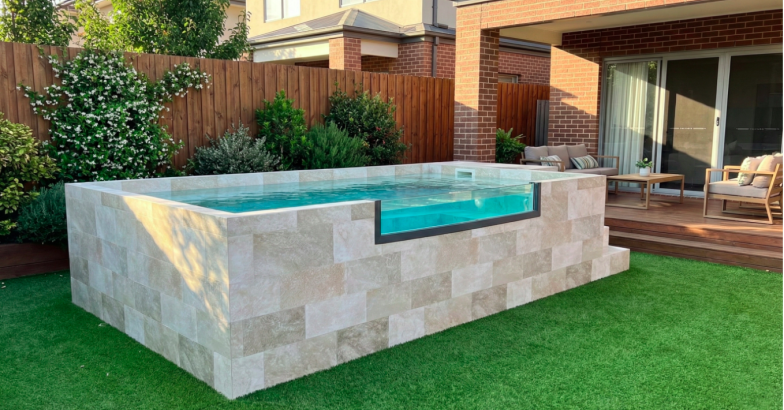
If the pool is above ground, it may not require any construction work for installation, although there are also in‑ground models.
The need for licences depends on whether the installation of the prefabricated pool involves construction work. However, if there is a homeowners’ association where you live, you must get permission before installing a swimming pool.
Regulations for installing prefabricated swimming pools with construction
When installing a prefabricated swimming pool requires construction work – either because it is buried in the ground or involves structural modifications – the regulations are more demanding.

Garden or land
In this case, the swimming pool is considered a structure and is subject to the urban planning regulations of the relevant municipality. Generally, a minor works permit will be required from the town hall, although a major works permit may be necessary depending on the size of the pool.
Furthermore, it is important to note that the swimming pool must comply with the minimum setback requirements established in the General Urban Development Plan (PGOU) of each municipality; that is, the minimum distance that must be maintained between the pool and the boundaries of the plot or adjacent buildings. This requirement varies depending on the location and should be checked before starting any installation.
Terrace, balcony or rooftop of a building
Installing a prefabricated pool that requires construction work on a terrace or rooftop is uncommon and often complex. Approval from the homeowners’ association is also required, as it involves a modification that may affect common elements of the building or its structure.
From a technical standpoint, a report from an architect or engineer will be required, certifying that the structure can support the weight of the pool when filled with water. In addition, the corresponding municipal permits must be obtained.
Regulations for installing prefabricated swimming pools without construction work
Prefabricated swimming pools that do not require construction work are the most in demand, although they are still subject to certain regulations.
Garden or land
An above‑ground pool that does not require excavation or modification of the terrain does not need a building permit. However, some municipalities require prior notification or a declaration of responsibility, so it is always advisable to consult the local council before installation.
Terrace, balcony or rooftop of a building
Even without construction work, installing a swimming pool on a private terrace within a homeowners’ association still requires approval from the association. In addition, the bylaws may expressly prohibit or restrict such installations.
It is also advisable to obtain a technical report certifying the structural capacity, as a pool filled with water can represent a considerable load that not all floors are designed to support.
Mandatory safety regulations
Regardless of the type of pool or its location, there are safety regulations that must be followed. For private pools, the following requirements apply:
- Purification system: The pool must have an approved water filtration and purification system.
- Electrical connection: All electrical installations associated with the pool must be carried out by an authorised electrician and comply with the Low Voltage Electrotechnical Regulation (REBT, by its acronym in Spanish), which establishes minimum safety distances between the pool and any electrical element.
- Drainage: Provision must be made for the evacuation of water from the pool to the sewage system or, failing that, to the ground if local regulations allow it.
Does installing a prefabricated swimming pool affect property tax (IBI)?
One detail that many homeowners overlook is property tax (IBI). When a swimming pool is installed, even if it is above ground and relocatable, some local councils may consider that it increases the property’s assessed value and, therefore, the IBI amount.
Is it mandatory to declare a prefabricated swimming pool to the Land Registry?
In some cases, yes. Fixed or in‑ground prefabricated swimming pools can be considered a permanent improvement to the property and must therefore be reported to the Land Registry. This may affect the property’s cadastral value and, consequently, the amount of property tax (IBI).
Conversely, inflatable pools that can be removed without construction work usually do not require registration. If you have any doubts, it is advisable to consult the Land Registry or the local council to avoid future irregularities or fines.
What to consider before installing a prefabricated swimming pool
In summary, here's everything you need to keep in mind:
- Consult the municipal urban planning regulations.
- Check if a building permit, a responsible declaration or prior notification is required.
- Review the community of owners' bylaws, if applicable.
- Request a technical report on load capacity when the pool is to be installed on a terrace or roof.
- Verify the minimum distances to property lines and neighbouring buildings.
- Find out about the possible tax and cadastral implications.