Pedralbes is one of Barcelona’s most expensive residential neighbourhoods, with spacious homes, leafy streets and a considerably quieter pace than the centre. It sits in the upper west side of the city and tends to suit families, senior professionals and international residents looking for privacy, green space and proximity to schools.
Where is Pedralbes in Barcelona?
Pedralbes sits in the Les Corts district, on Barcelona’s western side, and rises from Avinguda Diagonal towards Collserola. Its most residential pockets cluster around Avinguda de Pedralbes, Avinguda Pearson and carrer de Bosch i Gimpera.
Large detached homes, gated residential blocks and generous flats are more common here than in central neighbourhoods, while broad streets and mature trees give the area a noticeably lower-density feel.
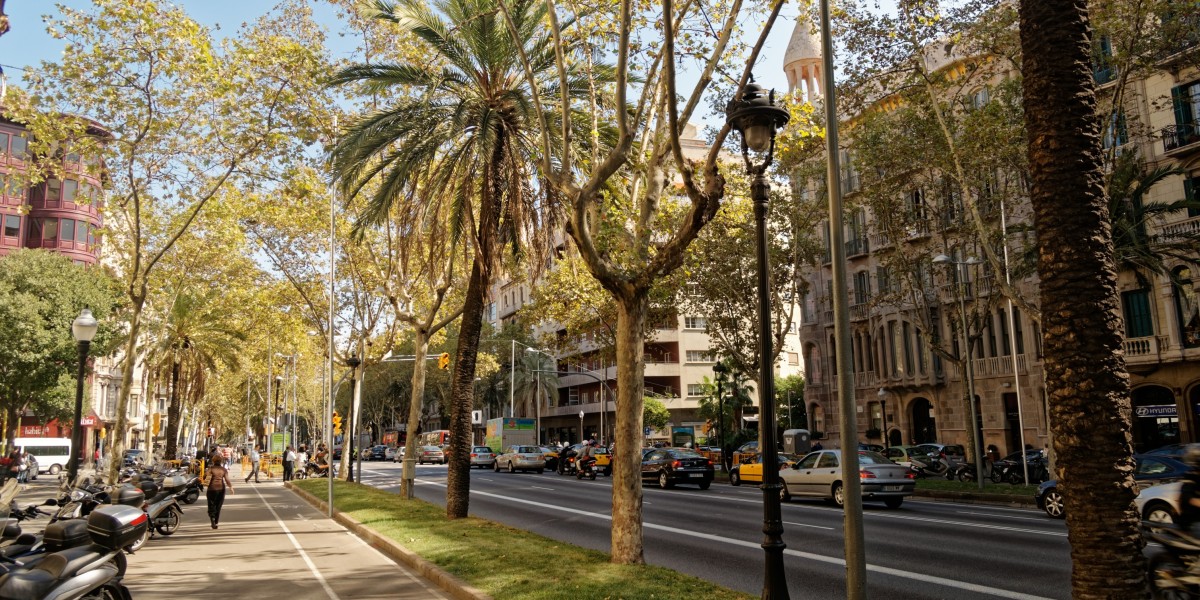
Pedralbes also has several useful green spaces nearby, including the gardens around Palau Reial de Pedralbes and Parc de Cervantes. Collserola is close enough to shape the feel of the neighbourhood, even if most everyday life happens along Diagonal and in the surrounding districts.
What it is like to live in Pedralbes
Pedralbes feels more suburban than much of Barcelona. Embassy residences, established family homes, private schools and university buildings shape a fairly discreet, settled atmosphere. People, some of whom are famous, tend to choose it for room to breathe, outdoor space and a more private setting, rather than street life or late nights.
Homes range from high-end flats in modern blocks to sizeable villas and older houses. The local mix includes long-standing Barcelona families, international executives, diplomats and students linked to the nearby university and business-school campuses.

Schools and universities near Pedralbes
Education is a major factor for families moving to Pedralbes. Lycée Français de Barcelone is in the area, while several private and international schools are within an easy commute.
The neighbourhood is also near campuses connected to the University of Barcelona, the Polytechnic University of Catalonia and ESADE, particularly around Zona Universitària. Admissions at popular international schools can be competitive, so proximity alone does not guarantee a place.
Things to do in Pedralbes
Pedralbes is better suited to gardens, architecture and a slower weekend afternoon than a packed programme of headline attractions.
Monestir de Pedralbes
The Monestir de Pedralbes is the neighbourhood’s main historic landmark. Queen Elisenda de Montcada founded this Gothic monastery in 1326, and its cloister is among the largest in Europe.
Palau Reial de Pedralbes and its gardens
The grounds of Palau Reial de Pedralbes sit close to Avinguda Diagonal. Mature trees, formal gardens and open paths make the site a welcome break from the traffic of the main avenue.

Parc de Cervantes
At the edge of Pedralbes, Parc de Cervantes is particularly lovely in spring, when its extensive rose garden is in flower. The park has more than 10,000 rose bushes and hosts Barcelona’s annual rose competition.
Sport and football nearby
Real Club de Tenis Barcelona-1899 is close to Pedralbes and hosts the Barcelona Open tennis tournament. It follows a private-club model, so regular access is mainly for members.
Spotify Camp Nou is in neighbouring Les Corts rather than Pedralbes. It's now the biggest stadium in Europe and the home of La Liga club FC Barcelona.
Pros and cons of living in Pedralbes
Advantages of Pedralbes
- More space and privacy: properties are often larger than those in central Barcelona, with terraces, gardens, parking or communal facilities more achievable.
- A quieter residential feel: wide streets, mature trees and lower building density provide a break from the city’s constant movement.
- Access to education: international schools, universities and business schools are close by.
- Green space: the monastery grounds, royal palace gardens and Parc de Cervantes make outdoor time easy to build into daily routines.
- Road connections: Pedralbes is well placed for the airport, the AP-7 and journeys outside Barcelona.

Downsides of living in Pedralbes
- High housing and daily costs: Pedralbes is one of the city’s priciest places to buy or rent, and services nearby tend to reflect that.
- Less convenient without a car: Metro stations are mainly along Diagonal, rather than deep inside the residential streets uphill.
- A quieter social scene: nightlife, independent shops and casual bar culture are thinner on the ground than in central districts.
- School-run traffic: drop-off and pick-up times can make certain streets busy.
- A more insulated atmosphere: it can suit people who value privacy, though newcomers hoping for a walkable social scene may find it harder to settle in.
Property prices in Pedralbes in 2026
As of June 2026, average property prices in Pedralbes stood at €8,473 per m², following annual growth of 12.7%.
This was substantially above the Les Corts district average of €6,729 per m² and Barcelona’s citywide average of €5,269 per m². At the neighbourhood average, a 100 m² home would be advertised at around €847,300, excluding purchase taxes, legal fees and renovation costs.
Only Diagonal Mar i el Front Marítim del Poblenou in Sant Martí had a higher average asking price in Barcelona, at €9,062 per m² in June 2026, after annual growth of 15.7%.
Stay in the know about living in Spain as a foreigner—get our weekly newsletter for the latest travel, legal, and lifestyle news.
For a taste of the high life, sign up for the monthly luxury market round-up.