Prefabricated homes are one of the most sought-after residential options today, even for luxury home buyers. The market offers countless options to suit all tastes and budgets.
Follow idealista/news on the WhatsApp channel (in Spanish)
In this article, we show you how much luxury prefabricated houses cost and what they are like inside.
How much does a luxury prefabricated house cost?
The concept of luxury is not universal, but there are exclusive and elegant models ranging from around €200,000 to well over €1 or 2 million. The price of a modular home depends mainly on:
- Design
- Size
- Location
- Project
- Manufacturer
- Finishes
- Equipment
The key question is: at what price point, or with what characteristics, is a property considered luxury? In the prefabricated housing sector, luxury can generally be said to start at around €400,000. Broadly speaking, properties above this threshold tend to include:
- Unique architecture
- Home automation
- Premium finishes and materials
- Designer interiors
- Turnkey projects
A guideline for prices
If you're wondering how much a fully equipped, luxury prefabricated home costs, this price range can help:
Quality | Approximate area | Estimated price |
Premium Basic Home | 100 m² | From €180,000 |
Luxury prefabricated concrete house | 150 m² | Between €300,000 and €500,000 |
High-end modular villa | 250 m² | Starting from €600,000 |
Prefabricated mansion | Over 250 m² | More than €1 million |
Luxury prefabricated house models
To give you an idea of how much a luxury prefabricated house might cost, we have put together a selection of models.
Dalí is a luxury prefabricated concrete house from Modular Home. It has 215 square metres of living space spread over two floors, with four bedrooms and three bathrooms. It also includes a laundry room, a storage area and a porch. Prices range from €150,000 to €352,000 (turnkey package).
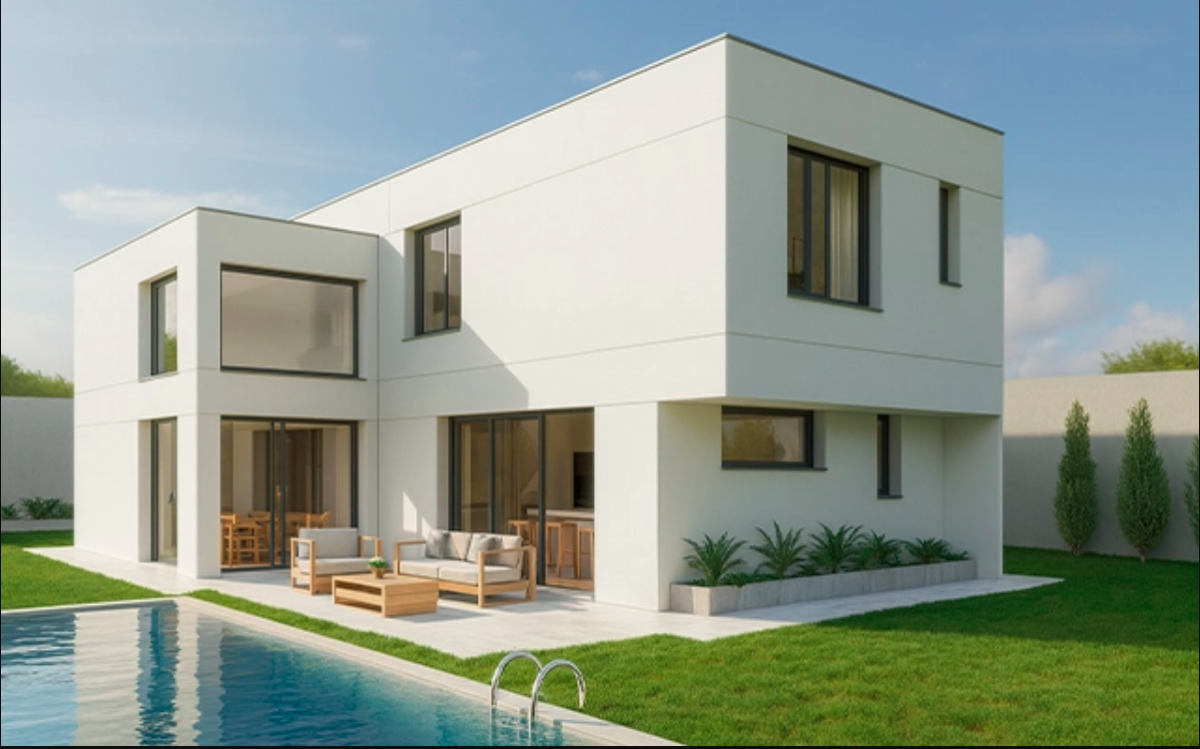
The Tiana model has two floors over 309 square metres. It features four bedrooms and three bathrooms, as well as a spacious open-plan living area that integrates the living room, dining room and kitchen with views of the garden. Prices start at €865,800.

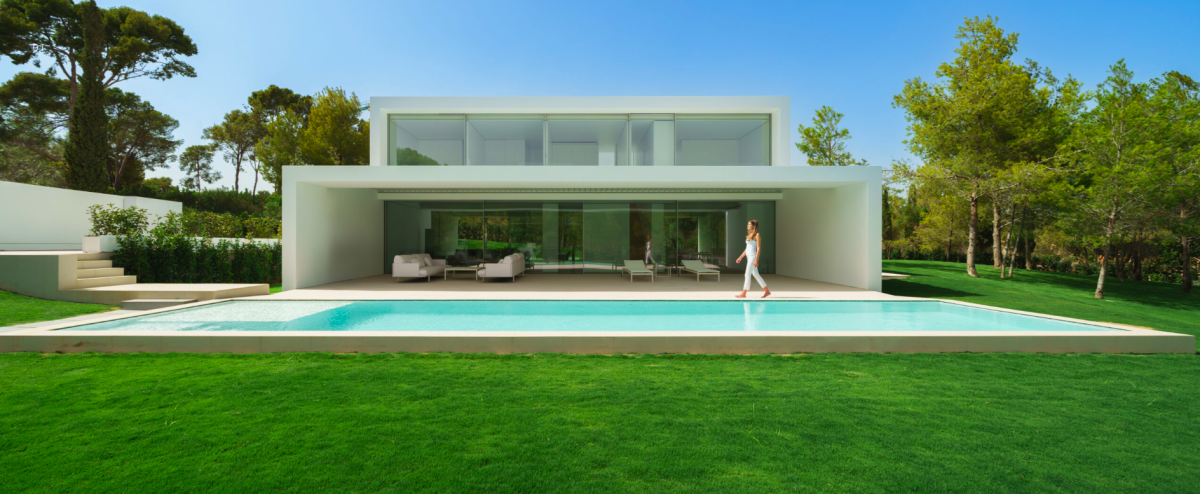
With a minimalist style, large windows and designed by Fran Silvestre Arquitectos, the N320 model comprises 321 square metres of living space spread over two floors and features four bedrooms and three bathrooms. Price upon request.
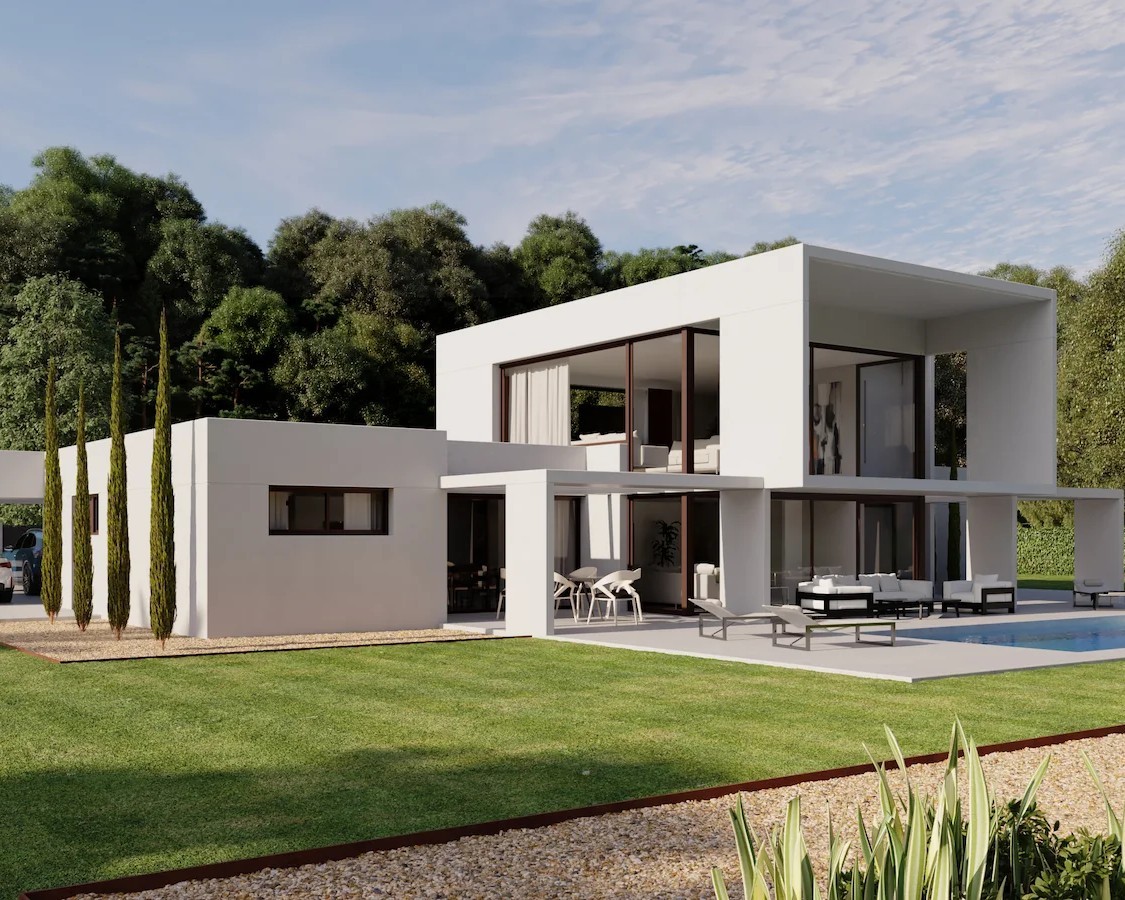
The Estepona model is a luxury prefabricated concrete home inspired by Mediterranean architecture. Its L-shaped design aims to convey tranquillity and a natural integration with the surroundings. The two-storey house is priced at €1,348,800 and features four bedrooms and two bathrooms.

The company KEU sells small luxury prefabricated houses, with areas ranging from 23 to 77 m2 and prices between €114,900 and €320,000.

The Montecarlo model from The Concrete Home is a luxury prefabricated concrete home. It has a surface area of 251 square metres across two floors, four bedrooms and three bathrooms. The price depends on the project.
What are luxury prefabricated homes like inside?
These are some of the interior features of luxury prefabricated homes:
Open spaces and architecture of light
The interior layout of a luxury modular home breaks away from traditional compartmentalisation. The daytime area – living room, dining room and kitchen – is typically integrated into a single open‑plan space, often enhanced by double‑height or high ceilings.
Large windows, often floor‑to‑ceiling, are one of the most distinctive features. They not only visually expand the space but also create a deliberate connection between the interior and the surrounding natural or urban environment.
Materials that make a difference
In the construction of luxury prefabricated homes, the choice of materials is one of the clearest differentiating factors:
- Ventilated façades with cladding in zinc, corten steel, heat‑treated wood or natural stone.
- Large‑format flooring in porcelain stoneware, marble or solid oak wood.
- Designer kitchens with worktops made from materials such as Dekton or Calacatta marble, integrated high‑end appliances and bespoke cabinetry.
- Designer bathrooms featuring walk‑in showers, premium fittings, continuous wall finishes and double integrated sinks.
- External joinery in high‑performance aluminium or wood, with thermal break and low‑emissivity glazing.
Home automation and smart systems
A premium prefabricated home in 2026 will almost by definition come equipped with home automation systems. Controlling lighting, climate control, blinds, security and multimedia from a smartphone or touch panel is already standard in this segment.
Energy efficiency
Another characteristic of luxury prefabricated homes is that they often feature systems, designs and equipment that make them more sustainable and efficient. Exclusive modular homes may include solar panels, aerothermal or geothermal heating, bioclimatic design, triple-glazed windows, mechanical ventilation and more.
Many models achieve a grade A energy rating or even the Passivhaus standard, with minimal consumption and cheap electricity bills.
Exclusive spaces
These types of properties, especially if they are high luxury, usually have multifunctional facilities and spaces, such as a heated pool, spa or "wellness" area, gym, etc.
What are the best prefab house brands?
It depends on the type of prefabricated home you're looking for. Some of the most prestigious companies in Spain are:
- inHAUS
- The Concrete Home
- Tini Living
- Atlantis Homes
- Modular Home
- ABS
- Ant dam.
Are luxury prefabricated homes as durable as traditionally built homes?
Yes, because they offer structural performance equivalent to or better than traditional construction. Furthermore, they are built in enclosed environments, eliminating the risk of damage from inclement weather.