Spain has approved a new package of housing measures affecting tenants, landlords and prospective buyers, following an unusual parliamentary vote on 12 November 2026.
The decision comes after weeks of political controversy, during which two emergency housing decrees introduced by Prime Minister Pedro Sánchez's government were initially rejected by Congress. Rather than abandon the proposals, Sánchez brought them back for a second vote through a smaller parliamentary body known as the Diputación Permanente.
The move has attracted criticism from opposition parties, particularly because the government secured approval for one of the measures by just a single vote.
For foreigners living in Spain, or anyone planning to buy or rent property in the country, the outcome is important. But to understand what has changed, it helps to look at the story behind the legislation and why Spain's housing crisis has become such a major political issue.
- Who was Maricarmen and why did her eviction cause such a reaction?
- Why did Congress initially reject the housing decrees?
- How did Pedro Sánchez get the housing measures back before Parliament?
- What happened in the November 12 vote?
- What housing measures have been approved in Spain?
- Protection against certain evictions until 2030
- Tenants can request a rental extension of up to two years
- Annual rent increases limited to 2%
- New rules for seasonal rentals and room lets
- Tax incentives for landlords and tenants
- New financing to help first-time buyers
- Changes affecting tourist rentals and vacant properties
- What housing measures were rejected?
- What does this mean for foreigners living in Spain?
Who was Maricarmen and why did her eviction cause such a reaction?
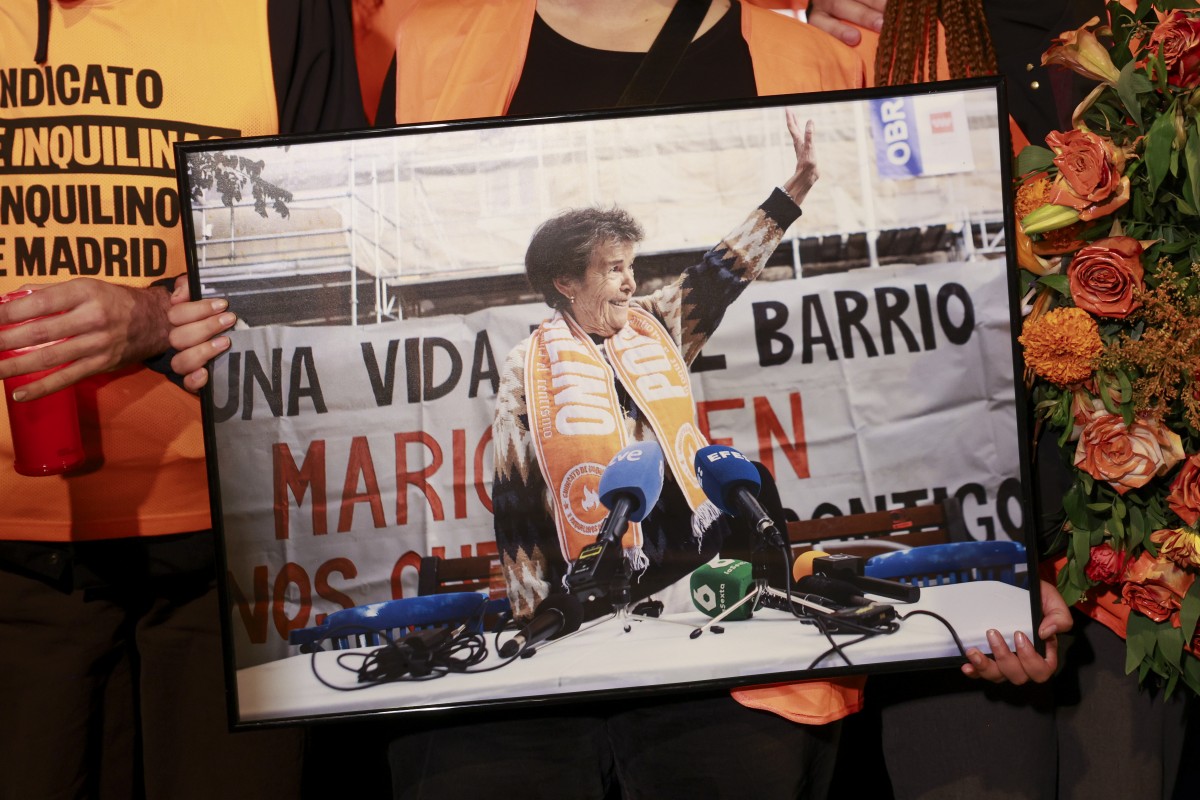
The story behind the latest housing legislation begins with María del Carmen Abascal, widely known as Maricarmen.
The 87-year-old woman was evicted from her Madrid home in September 2026, after living in the same flat for 71 years. Her eviction followed a rent increase she could no longer afford after an earlier rent cap expired.
Her case attracted widespread attention, with thousands taking to the streets of Madrid to protest against the eviction and demand stronger tenant protections. Hundreds also set up tents in Puerta del Sol, in an encampment that grew to more than 1,000 tents and inspired similar protests elsewhere in Spain. The campaign culminated in a nationwide general strike on 11 November, backed by major trade unions. Maricarmen was taken to hospital following her eviction and died on 7 October, just days before she was due to sign a new rental agreement that would have allowed her to return home.
The circumstances turned Maricarmen into a symbol of Spain's housing crisis, particularly the difficulties faced by older and vulnerable tenants struggling to remain in their homes.
Her eviction prompted renewed calls for stronger tenant protections and led the government to revive emergency housing measures, including a suspension of certain evictions and limits on rent increases.
Read more about Maricarmen's eviction and Spain's revived eviction freeze.
Why did Congress initially reject the housing decrees?
Following the public reaction to Maricarmen's eviction, Sánchez's government introduced two emergency housing decrees (reales decretos-ley) in September and October 2026.
The proposals covered a range of issues, including protection against evictions, limits on rent increases, restrictions on certain property purchases by investment funds and measures to make renting more affordable.
One decree focused on general housing protections and rental market regulation. The second proposed much stronger security for tenants, including automatic extensions of rental contracts and compensation payments in certain circumstances when landlords ended agreements.
However, on 2 October, both decrees were rejected by Congress. The People's Party (PP), Vox, Junts and UPN voted against the measures, while the PNV and Coalición Canaria also opposed the proposal concerning indefinite rental contracts.
The defeats exposed the difficulties facing Sánchez's minority government in securing parliamentary support for its housing policies.
Just three days later, on 5 October, the prime minister announced an early general election for 29 November 2026, bringing forward a vote that had originally been expected in 2027.
The decision came amid a wider political deadlock, with housing becoming one of the central issues in the debate over the government's future.
How did Pedro Sánchez get the housing measures back before Parliament?
Despite the initial defeats, the government decided to bring the proposals back for another vote.
On 6 October, the Council of Ministers approved revised versions of both housing decrees. However, by this point, Parliament had been dissolved ahead of the early general election.
This is where the Diputación Permanente, or Standing Committee, comes in.
The Diputación Permanente is a smaller parliamentary body that continues to operate when Spain's Congress of Deputies is dissolved or not in session. It is made up of MPs representing the different political groups and has specific constitutional powers to deal with urgent government legislation during these periods.
Under Spain's Constitution, the government can introduce urgent legislation through a real decreto-ley (royal decree-law). These measures take effect immediately but must be validated by Congress within 30 days.
With the full Congress dissolved, the Diputación Permanente was responsible for voting on whether the new housing decrees should remain in force.
Crucially, the committee has a different political composition from the full Congress. The governing parties and their allies had a more favourable balance of seats, giving Sánchez's government another opportunity to secure approval.
The decision to use this parliamentary route was controversial. Opposition parties argued that the government was effectively trying to get legislation through a smaller body after the full Congress had already rejected it. The government, however, proceeded with the votes, which took place on 12 November.
What happened in the November 12 vote?
The Diputación Permanente voted on both housing decrees, but only one was approved.
The first, Royal Decree-law 28/2026, which proposed stronger protections for tenants through automatic rental contract renewals and compensation for landlords ending agreements without justified reasons, was rejected by 35 votes to 34.
The second, Royal Decree-law 29/2026, containing a broader package of housing and rental market measures, was approved by 35 votes to 34.
The Basque Nationalist Party (PNV) proved decisive. It supported the broader housing decree alongside the PSOE, Sumar, ERC, Bildu and Podemos, but voted against the proposal for indefinite rental contracts alongside the PP, Vox and Junts.
This means that one package of housing reforms has now been validated and will remain in force, while the proposed changes to automatic long-term rental renewals will not go ahead.
The approved decree was subsequently published in Spain's Official State Gazette (BOE), confirming its validation.
What housing measures have been approved in Spain?
The approved Royal Decree-law 29/2026 introduces a series of changes affecting the Spanish property market. Some of the most relevant for foreign residents, tenants and property owners include:
Protection against certain evictions until 2030
The suspension of certain eviction proceedings involving vulnerable people without alternative accommodation has been extended until 31 December 2030.
The protection applies in specific circumstances and is not a blanket ban on evictions. There are also exceptions, including certain cases involving small landlords who can demonstrate that they are themselves vulnerable.
Tenants can request a rental extension of up to two years
Tenants with eligible rental contracts due to expire before 31 December 2028 can request an extraordinary extension of up to two additional years, in annual periods.
The existing contractual conditions, including the rent, must generally remain unchanged during the extension.
Tenants must also be up to date with their rental payments, including during the preceding eight months, and certain exceptions apply, such as when a landlord can demonstrate a genuine need to recover the property for themselves or close family members.
Annual rent increases limited to 2%
The decree introduces a temporary limit on annual rent updates until 31 December 2027.
If the rent already exceeds the applicable rental reference index, it cannot be increased through the annual update. If it is below the relevant limit, increases are capped at 2% unless the parties agree otherwise.
New rules for seasonal rentals and room lets
Landlords offering seasonal rental contracts must now provide a genuine justification for the temporary nature of the arrangement.
These contracts will generally have a minimum duration of 31 days and a maximum of 12 months. If more than two seasonal contracts are successively signed for the same accommodation, they will automatically be treated as residential rental agreements, with the protections provided under Spain's Urban Rental Law (LAU).
There are also new restrictions on renting individual rooms. In designated stressed rental market areas, the combined rent from all rooms cannot exceed the amount that could legally be charged for renting the entire property.
Tax incentives for landlords and tenants
The decree introduces new income tax deductions for eligible landlords who reduce rents, with reductions of up to 100% in certain circumstances.
Tenants with annual taxable income below €33,007.20 can also claim a new 10% deduction on rent paid for their main residence, subject to the applicable conditions.
New financing to help first-time buyers
The government has introduced a new scheme called TU CASA, designed to help people buying their first main residence.
The programme will have €10 billion in funding and offer interest-free loans of up to 20% of a property's value, capped at €50,000.
The loans will have a maximum repayment period of 10 years and are intended to help eligible buyers who can afford mortgage repayments but need additional support with the initial purchase costs.
Changes affecting tourist rentals and vacant properties
The decree also introduces new tax measures affecting holiday accommodation.
Furnished tourist accommodation will be subject to 10% VAT when the rental lasts no more than 30 nights or when the owner provides additional services typically associated with hotels, such as cleaning, laundry or catering.
Local councils will also be able to introduce higher property tax (IBI) surcharges on certain tourist properties and vacant homes, with the maximum depending on the number of properties owned and other conditions.

What housing measures were rejected?
While the broader housing decree was approved, the second proposal concerning indefinite rental contracts was rejected.
Had it passed, it would have introduced significantly stronger protections for tenants, including:
- Automatic rental contract extensions: Agreements would have been automatically extended in successive five-year periods, or seven years when the landlord was a company, unless there was a justified reason not to renew.
- Stricter rules for recovering properties: Landlords would have faced additional requirements when seeking to recover a property at the end of a rental agreement.
- Compensation for tenants: Landlords ending a rental contract without a justified reason would have been required to compensate the tenant.
As the decree was rejected, these proposals will not become part of Spain's new housing rules.
What does this mean for foreigners living in Spain?
For foreign residents, the latest developments are particularly relevant if you rent a home, own a property that you let out or are planning to buy in Spain.
Tenants may benefit from greater security through the new rental extension provisions and limits on annual rent increases. Landlords, meanwhile, will need to familiarise themselves with the new rules on seasonal accommodation, room rentals and taxation.
Prospective buyers may also be interested in the TU CASA financing scheme, although eligibility requirements will determine who can benefit.
It is important to remember that some housing regulations in Spain also depend on the autonomous community and municipality where a property is located. In particular, measures affecting designated stressed rental markets and local property taxes may not apply uniformly throughout the country.
The political debate over housing is far from over, either. With Spain's general election scheduled for 29 November 2026, housing policy is expected to remain a major issue during the campaign.
For anyone buying, selling or renting property in Spain, the latest changes are another reminder of how quickly the country's housing rules can evolve.