Madrid throws one of the biggest Pride celebrations in the world, and Madrid Orgullo (MADO) 2026 is set to fill the city with colour, music and political energy once again. What began as a small march in the late 1970s has grown into an international event.
Today, the LGBTQ+ celebration brings over two million people to Spain's capital city and is the largest event in Spain's Pride calendar.
When is Madrid Pride 2026?

Madrid Pride 2026 runs from 25 June to 5 July 2026.
The celebrations begin with Orgullo de Barrio (Neighbourhood Pride) in Chueca, taking place 25–30 June 2026. This early programme brings cultural activities, parties and community events directly into the streets and squares of the neighbourhood.
Where is Madrid Pride located?
The heart of Madrid Pride is Chueca, Madrid’s historic LGBTQ+ neighbourhood. It sits just north of Gran Vía and becomes the epicentre of street celebrations, bar terraces and open-air stages during Pride.
For 2026, the main stages are:
- Plaza de las Reinas Stage: 1–5 July 2026
- Pedro Zerolo Square Stage: 1–4 July 2026
- Puerta del Sol Stage: 1–4 July 2026
- Plaza de España Stage: 2–5 July 2026
Each square hosts concerts, DJs and cultural programming, with slightly different atmospheres.
Madrid Pride parade route
The Madrid Pride Parade takes place on 4 July 2026 and remains the central moment of the entire festival.
Organised by COGAM (Madrid Association of Lesbians, Gays, Transsexuals and Bisexuals) and FELGTB (National Federation of Lesbians, Gays, Transsexuals and Bisexuals), the march follows its traditional route:
- Starting at Glorieta del Emperador Carlos V (near Atocha station)
- Finishing at Plaza de Colón, where the manifesto is read
The parade blends political visibility with celebration. Floats from community groups, companies and associations move slowly through the Paseo del Prado, and the atmosphere shifts gradually from protest to party as the evening goes on.
What to do during Madrid Pride

Madrid Pride stretches well beyond the parade itself. During these ten days, the city hosts club nights, cultural programming, public debates and family events.
Orgullo de Barrio (25–30 June)
Chueca warms up early with local concerts, small-scale performances and neighbourhood gatherings. It feels more intimate than the main weekend and gives a sense of how Pride grew out of community activism.
Plumas y Patitas (28 June)
This pet-focused Pride event in Plaza Pedro Zerolo brings together animal adoption groups, rocal residents and visitors. It’s lively but surprisingly wholesome, with a clear solidarity message behind it.
Carrera de Tacones (2 July)
Held on Calle Pelayo, this is one of Madrid Pride’s most photographed traditions. Participants sprint down the narrow street in high heels, cheered on by packed balconies and crowds below.
Madrid Summit (3 July)
The Madrid Summit adds a serious dimension to the week. Hosted at the European Parliament and Commission offices, it focuses on international LGBTQIA+ human rights and underlines that Pride in Madrid remains politically engaged.
Families with Pride
Designed for children and parents, this morning programme in Plaza del Rey offers activities celebrating diverse family structures. It brings a different rhythm to Pride week and shows how broad the event has become.
A brief history of Madrid Pride
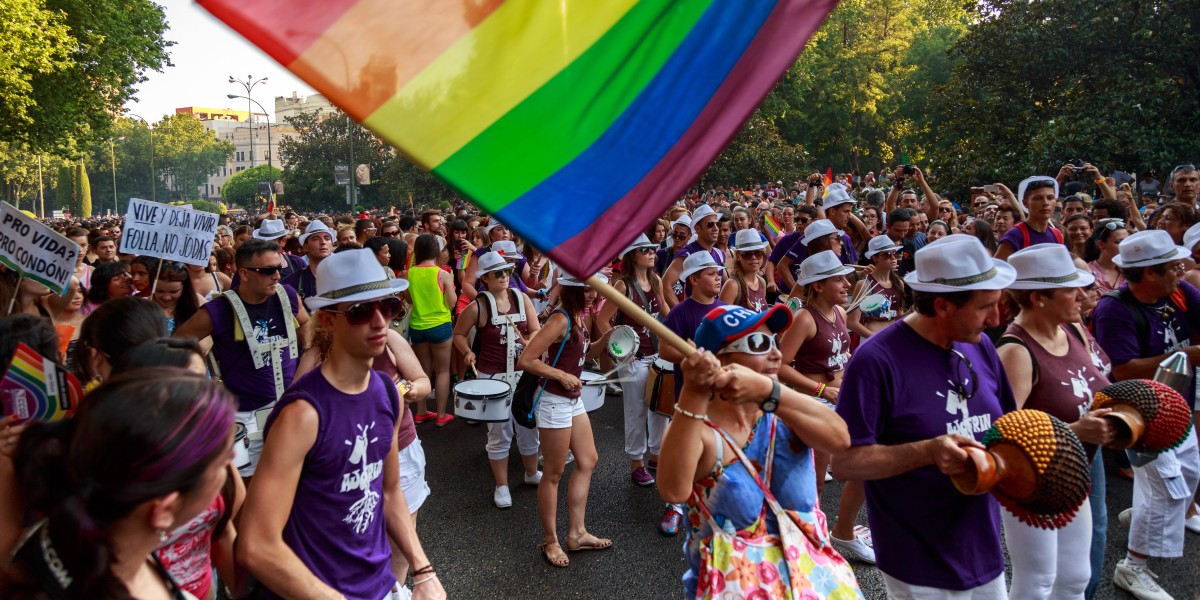
Madrid’s first Pride march took place in 1978, during Spain’s transition to democracy. It was small, tense and politically charged.
Over time, as Spain legalised same-sex marriage in 2005 and strengthened anti-discrimination laws, Madrid Pride evolved into a large-scale international gathering. Hosting EuroPride in 2007 was a turning point, drawing an estimated 2.5 million visitors and placing Madrid firmly on the global Pride map. Now, Madrid is proud to be one of Spain's most LGBTQ-friendly cities.
Where to stay in Madrid during Pride

If being in the middle of it all appeals, Chueca is the obvious base. Streets are busy from late afternoon until well past midnight, and accommodation books up quickly.
Nearby alternatives include Malasaña, which is creative, lively, and a short walk from the main stages. La Latina is slightly more relaxed during the day, with traditional tapas bars and easy access to central Pride events.
LGBTQ+ community in Madrid
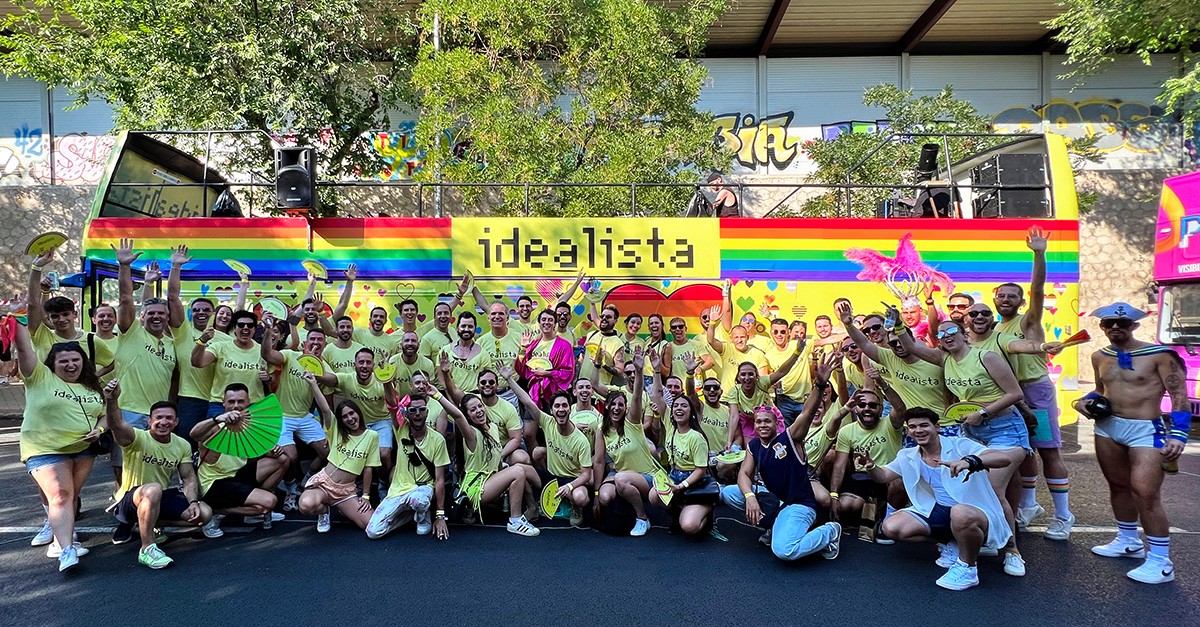
Chueca is the undisputed heart of Madrid's LGBTQ+ scene. Packed with bars, clubs, restaurants, shops, and social spaces, it's a welcoming neighbourhood.
It wasn't always this way, though. Back in the days of Franco's dictatorship, being openly LGBTQ+ was dangerous and often led to persecution. But in the years following Franco’s death, Chueca slowly transformed into a place where people could express themselves freely and find community.
If you’re planning to make Madrid home during Pride or for a longer stay, it’s easy to find a room in an inclusive flatshare. You can look for shared flats in neighbourhoods like Chueca using the LGBT-friendly filter and be sure you’ll be living somewhere welcoming, where being yourself is the norm.
- LGBT-friendly rooms for rent in Chueca
- LGBT-friendly rooms for rent in Malasaña
- LGBT-friendly rooms for rent in La Latina
Stay in the know about living in Spain as a foreigner—get our weekly newsletter for the latest travel, legal, and lifestyle news.
For a taste of the high life, sign up for the monthly luxury market round-up.