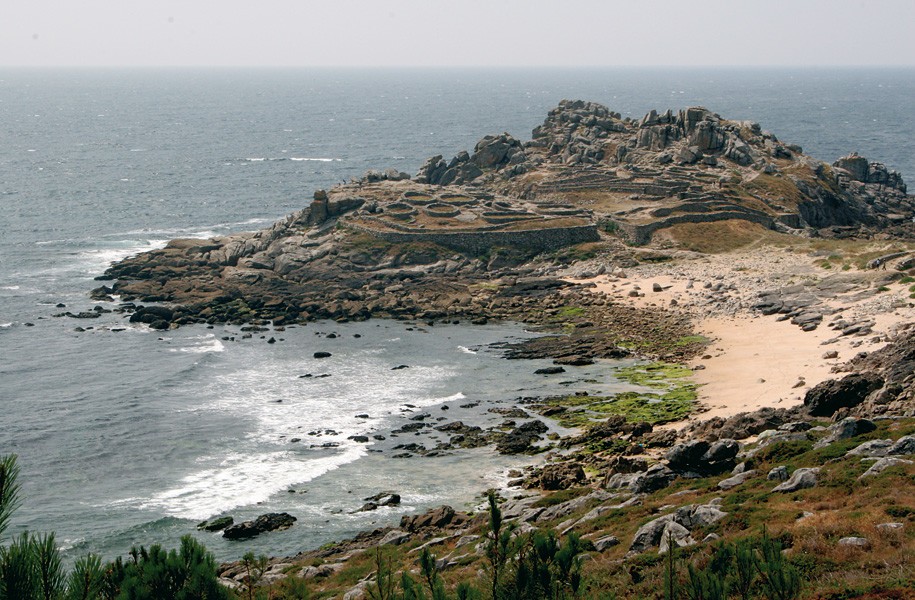

Modern Spain is built upon the remains of countless past peoples and cultures, whose vestiges are scattered across the country. While another article explored the best Roman ruins, this one highlights the most remarkable Celtic sites in Spain.
But first, who were the Celts? “Celtic” is the term used by linguists and historians to refer broadly to the Iron Age peoples who shared a common linguistic root: the Celtic languages, part of the wider Indo-European language family. They are recognised today as one of the major branches of this cultural and linguistic group.
Their origins are thought to lie in Indo-European populations who migrated from regions in Anatolia or from the steppes between the Black Sea and the Caspian Sea, spreading into Europe while other groups of the same lineage moved towards Iran and India.
The consolidation of the Celtic peoples can be placed around 1200 BC, at the beginning of the Iron Age in Central Europe, when local societies began shifting from a primarily livestock-based lifestyle to one with a stronger agricultural emphasis.
In the Iberian Peninsula, ancient historians referred to them as “Celtiberians”, a term encompassing the pre-Roman communities of Celtic descent – or those heavily influenced by Celtic culture – that inhabited the region known as Celtiberia from the late Bronze Age (13th century BC) until the full Romanisation of Hispania in the 2nd and 1st centuries BC.
Precisely defining the territories occupied by the Celts is challenging due to the scarcity of written sources and the varied interpretations of archaeological evidence. These are some of the most impressive Celtic ruins in Spain.
Castro de Santa Tecla (Pontevedra)
Situated on Mount Santa Tecla in A Guarda, it is one of the most significant and frequently visited Celtic archaeological sites in Galicia. The settlement was inhabited from the 1st century BC to the 1st century AD, although even earlier remains have also been discovered.
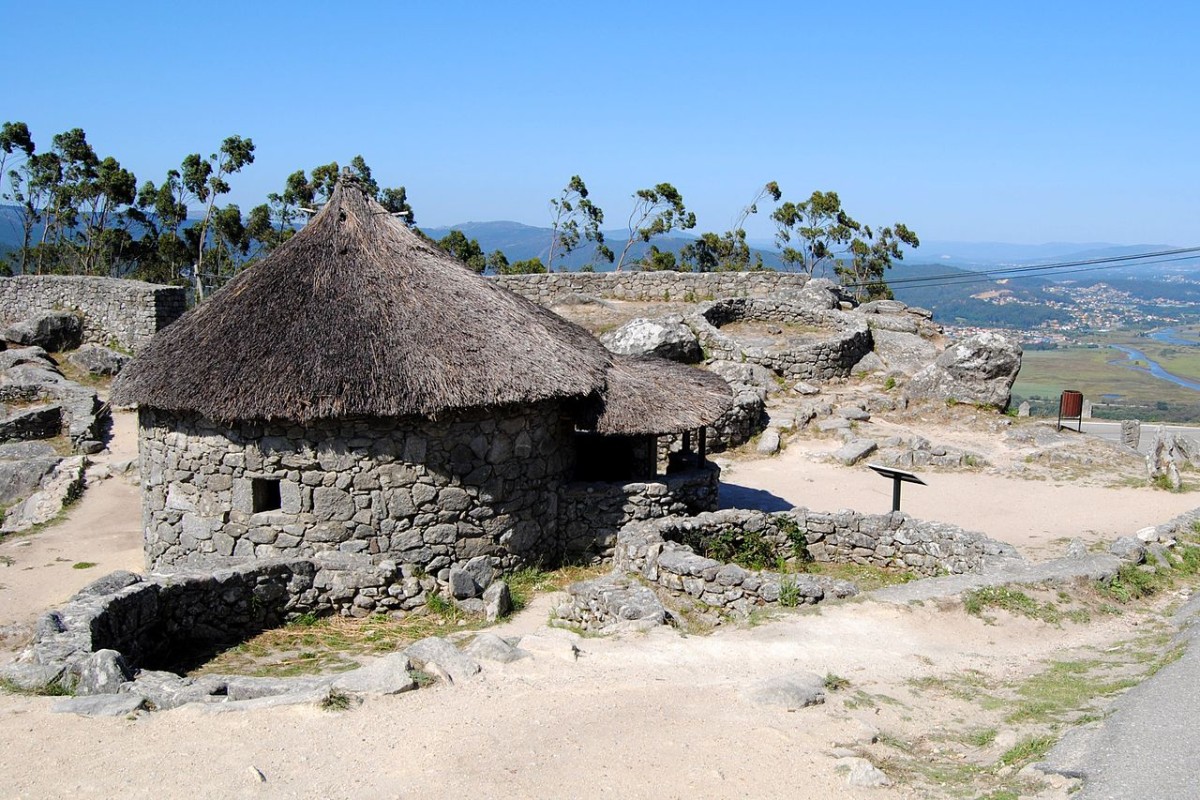
Their circular stone dwellings, some featuring double walls and internal partitions, offer insight into the family structures of the Galician peoples of the past. The defensive system, which included walls and ditches, reflects the need for protection in a territory in continual contact with other cultures.
The site was likely chosen for its strategic position: from the summit, the mouth of the Miño River and the Atlantic coast are clearly visible, providing a prime vantage point for trade and surveillance.
Castro de Borneiro (A Coruña)
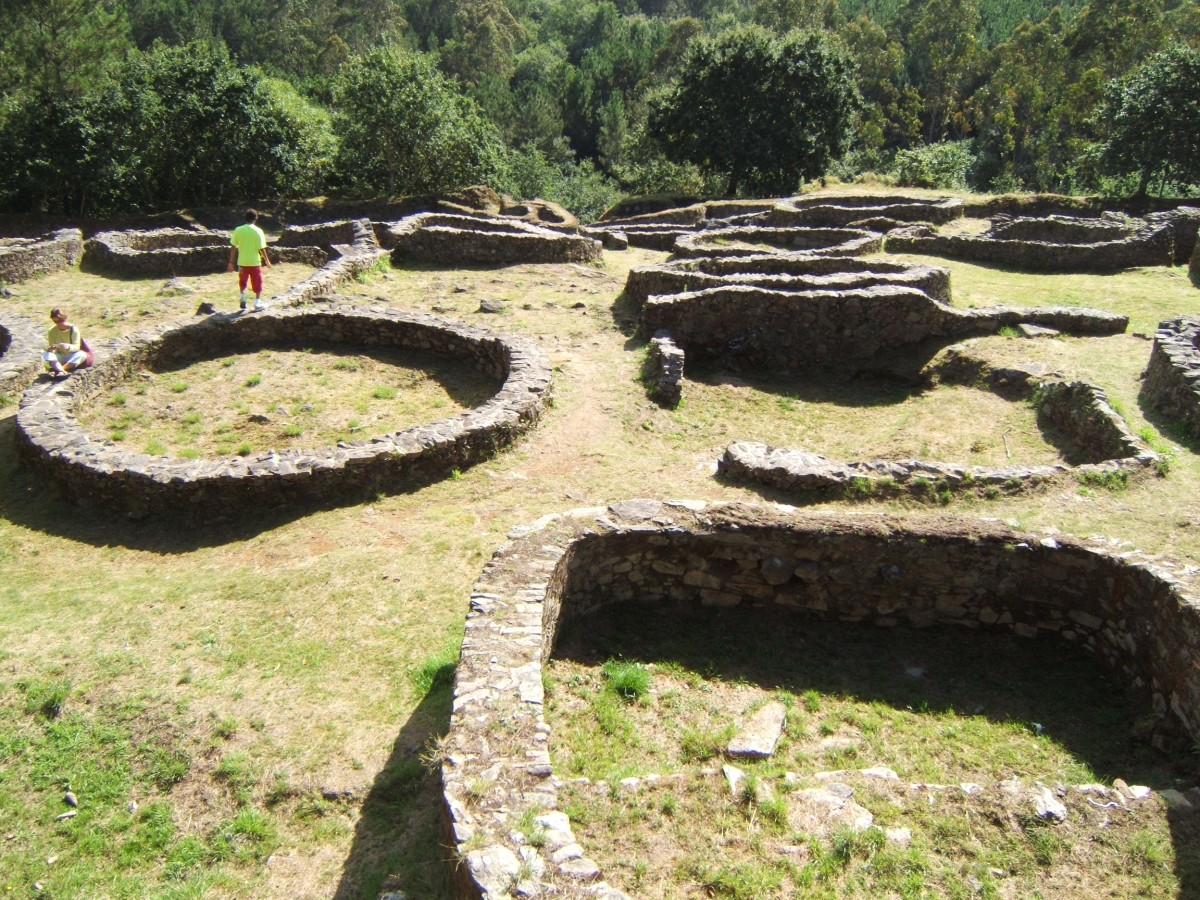
Also known as “A Cidá”, the origins of this hill fort date back to the 6th century BC, making it one of the best-preserved sites in Galicia. It is situated in Cabana de Bergantiños, a charming coastal enclave.
The settlement was occupied until the 1st century AD, coinciding with the Romanisation of the area. It features a well-planned urban layout, with clearly defined streets, plazas and over fifty circular and rectangular structures used as dwellings and storage spaces. Excavations have uncovered everyday items such as hand mills, fibulae and pottery fragments. Its layout reflects a stable and hierarchical community.
Castro de Coaña (Asturias)
It is one of the best-studied and most representative hill forts in Asturias. Inhabited from the 4th century BC, it reached its peak between the 2nd century BC and the 1st century AD. Perched on a hillside overlooking the Navia Valley, it preserves a complex defensive system of walls and ditches.

The settlement comprised over 80 dwellings, mostly circular, arranged along streets and within neighbourhoods, reflecting remarkable urban planning. In addition, the site includes an area believed to be sacred or communal, with structures that may have been used for collective rituals.
Castro de Baroña (A Coruña)
This coastal hill fort, located in Porto do Son, within the Noya region, was inhabited between the 1st century BC and the 1st century AD. It is notable for its excellent state of preservation and its position on a small rocky peninsula overlooking the Atlantic.
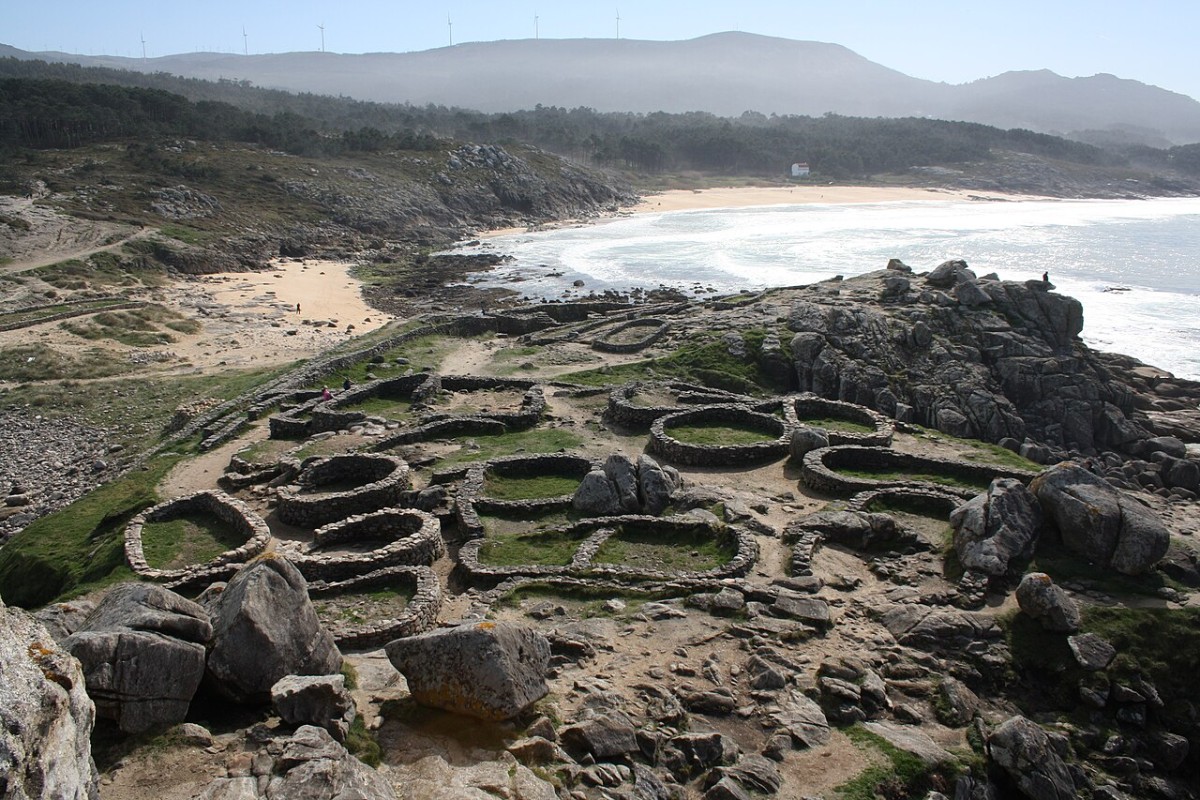
The settlement was protected by two walls and eventually comprised around thirty circular stone dwellings, arranged in clusters. Its inhabitants were primarily engaged in fishing, shellfish gathering and foraging, though they also practised livestock farming and trade.
The archaeological remains – tools, hand mills and bronze objects – reveal a self-sufficient community that maintained contact with other parts of the Atlantic. Its stunning surroundings make Baroña a unique site, where archaeology and nature combine spectacularly.
Castro de El Raso (Ávila)
Located in Candeleda, on the slopes of the Sierra de Gredos, Castro de El Raso is one of the principal Vetton settlements. It was inhabited between the 4th and 1st centuries BC and covered an area of around 20 hectares. Its strategic position allowed control of the natural mountain passes and oversight of the Tiétar Valley.

The settlement was protected by a wall over 3 kilometres in perimeter and contained roughly 600 houses, with an estimated population of up to 3,000 inhabitants.
Excavations have uncovered agricultural tools, iron weapons and ritual objects, providing insight into the Vettonian way of life. The discovery of sanctuaries and distinctive structures indicates that the site also held significant religious importance.
Numancia (Soria)
Numantia is perhaps the most renowned Celtiberian settlement on the Iberian Peninsula. Situated on Garray Hill, overlooking the Duero Valley, it became famous for the heroic resistance of its inhabitants against the Roman army led by Publius Cornelius Scipio Aemilianus in the summer of 133 BC. The Numantians chose suicide rather than surrender.
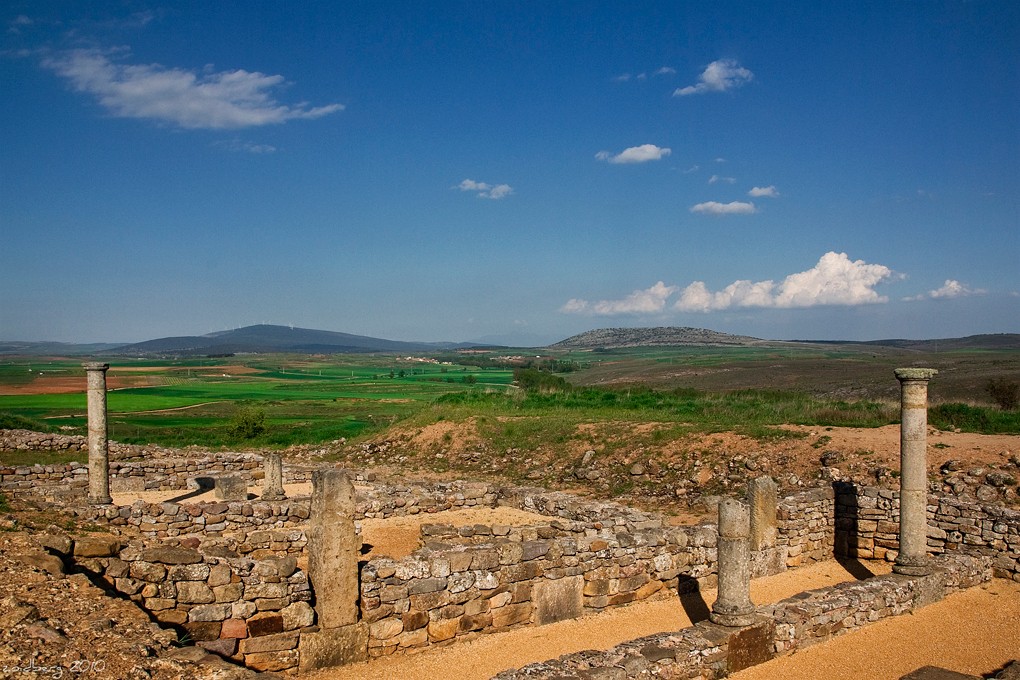
The site preserves walls, rectangular houses, cobbled streets and defensive structures that reflect both Celtiberian culture and the impact of Roman occupation.
Castro Vetón de Ulaca (Ávila)
This Vettonian hill fort, situated at over 1,500 metres in the Sierra de Ávila, is one of the largest on the Iberian Peninsula, covering around 70 hectares. Founded during the Iron Age, it was inhabited between the 3rd and 1st centuries BC.

Ulaca combines defensive and ritual features: alongside its walls and dwellings, it preserves a sanctuary carved into the rocks, likely used for sacrifices and religious ceremonies, and an initiation sauna thought to be associated with rites of passage or purification. Its size and complexity suggest it served as both a political and spiritual centre for the Vettones.