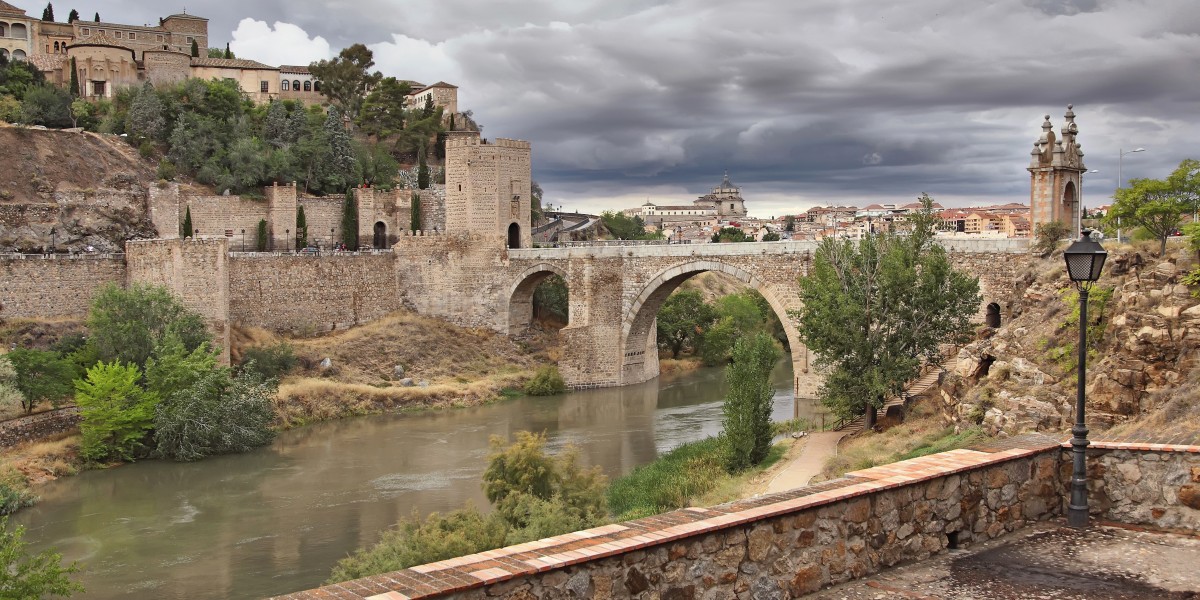
Toledo is one of Spain’s most historically significant cities. Its strategic position on a hill overlooking the River Tagus made it a key stronghold for controlling the Iberian Peninsula from ancient times. Over the centuries, it has served as a political, religious and cultural centre, while its name has evolved alongside the civilisations that settled there. Discover the origins of Toledo’s name.
Toledo's history
The earliest settlements in the area date back to the Bronze Age. Its elevated location, protected by a bend in the Tagus, provided natural defences that favoured human occupation. Before the arrival of the Romans, the region was inhabited by pre-Roman peoples, including the Carpetani.
In 193 BC, the Romans conquered the settlement and incorporated it into Hispania Citerior, giving it growing military and administrative importance. Following the fall of the Western Roman Empire in AD 476, Toledo gained even greater prominence. In the 6th century, it became the capital of the Visigothic Kingdom.
Later, in 711, the city was incorporated into Al-Andalus following the Muslim conquest of the Iberian Peninsula. In 1085, Alfonso VI captured Toledo for the Kingdom of Castile, ushering in a new era in which it became one of the most important cities of the Castilian monarchy.
What is the origin of the name Toledo?
The origin of the name Toledo dates back to pre-Roman times. Several theories exist regarding its meaning, although there is no definitive consensus. According to some linguistic hypotheses, it may derive from the Indo-European roots tol- or toll- – associated with the idea of elevation or prominence – a description that aligns with the city’s hilltop setting.
With the arrival of the Romans, the settlement became known as Toletum. The historian Livy refers to the city by this Latin name, which later evolved phonetically over the centuries. Some interpretations suggest that Toletum was linked to the concept of a raised or elevated place.
During the Muslim period, the name was adapted into Arabic as Tulaytula (طليطلة). Rather than being a direct translation, this was a phonetic adaptation of the existing name, reflecting the continuity of the settlement's identity through different historical periods.
What was Toledo called before?
Before adopting its current name, Toledo had different names depending on the dominant culture of each historical period. These are the main ones:
- Tolédola (pre-Roman form): This is attributed to the indigenous peoples who inhabited the area, but its exact meaning is not documented. However, it is believed to be associated with the terrain or local deities.
- Toletum (Latin): Official name during the Roman period. It appears in classical sources and was the administrative name of the municipality.
- Tulaytula (Arabic: طليطلة): Form used in Al-Andalus since the 8th century. It is a phonetic adaptation of the Latin name.
- Toldoth (Judeo-Spanish): A variant documented in Sephardic Jewish communities.
- Tolétho (Mozarabic): Romance evolution used by the Christian population living under Muslim rule.
Why is Toledo called the City of Three Cultures?
Toledo is known as the City of Three Cultures because of the historical presence of Christians, Jews and Muslims – particularly during the Middle Ages. Although coexistence was not always harmonious, the city became a place where communities with different religions, traditions and customs lived side by side and left a lasting mark on its identity.
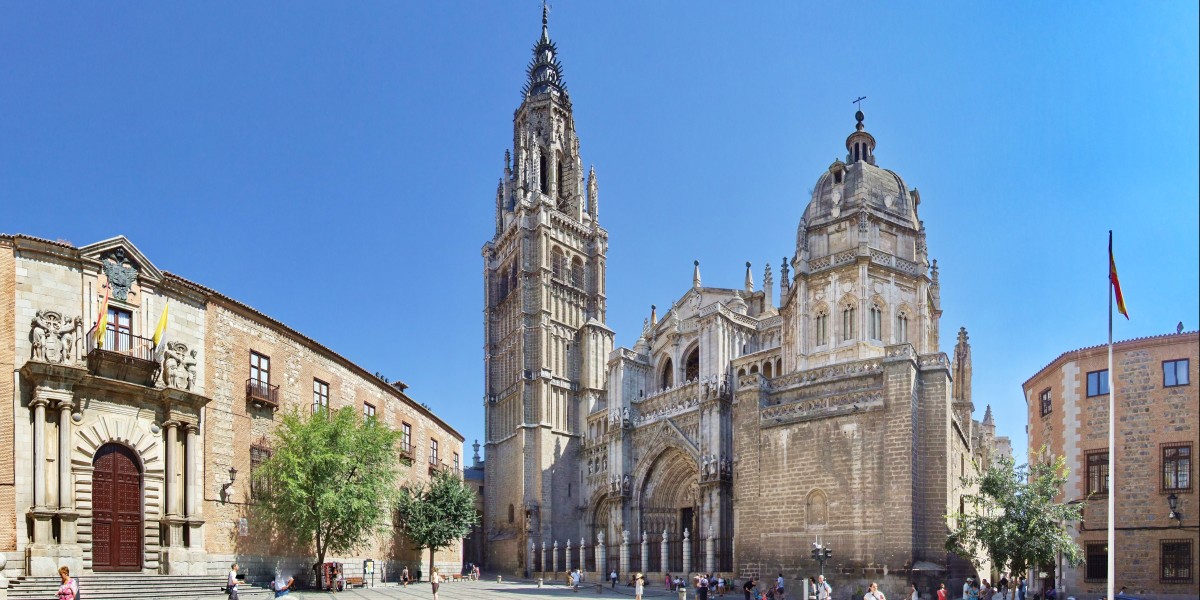
That legacy remains visible throughout the historic centre. Landmarks such as Toledo Cathedral, the Synagogue of El Tránsito, Santa María la Blanca and the Mosque of Cristo de la Luz stand as reminders of the city's multicultural past and its importance as a centre of religious, cultural and intellectual exchange.

Living in Toledo
Today, Toledo is a historic city and the capital of Castilla-La Mancha. Its proximity to Madrid – less than an hour away by train – makes it an attractive option for those seeking a quieter setting while maintaining easy access to a major urban centre.
Tourism and public administration play a central role in the local economy. Combined with its rich cultural offering, well-preserved heritage and quality of life, these factors give Toledo a distinctive identity that continues to attract both residents and visitors.