Spain’s most intense ultraviolet radiation is found in a region better known for year-round sunshine than for topping a national UV ranking. According to Spain’s State Meteorological Agency, AEMET, the area records the country’s highest UV levels not only in summer but across all 12 months.
The Canary Islands have Spain’s highest UV levels
The Canary Islands have the highest ultraviolet radiation levels in Spain year-round, according to AEMET.
The Canary Islands’ regional Health Department keeps its Preventive Action Plan against Ultraviolet Radiation active permanently. The local health service says UV protection should not be treated as a summer-only matter, as radiation can pass through cloud cover.
According to The Local Spain, the Canary Islands consistently record UV Index readings two or three points above the rest of Spain, and at some times of day the gap can reach four points.
At the start of July, the Canary Islands’ Directorate-General of Public Health issued an extreme-risk warning affecting almost 30 municipalities in the archipelago, according to AEMET. An extreme alert applies when the UV Index reaches 11 or above, the highest category on the international scale.
Why UV radiation is higher in the Canary Islands
The Canary Islands lie off the north-east coast of Africa, close to the Tropic of Cancer. This geographical position means the sun strikes more vertically than on mainland Spain, so radiation passes through less atmosphere and is filtered less.
Other factors cited by Canary Islands public-health authorities include low pollution and low humidity.
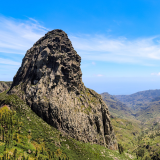
Altitude also matters: the higher areas of Tenerife and Gran Canaria exceed 2,000 metres, and radiation becomes more intense at greater elevation.
This makes mountain locations a notable part of the picture. Mount Teide, on Tenerife and Spain’s highest mountain and a place where sunburn risk is particularly high.
The regions of Spain with lower UV levels
By comparison, the regions that typically have the lowest UV levels are on Spain’s northern coast. They include:
- Galicia
- Cantabria
- Asturias
- The Basque Country
Clouds, breezes and temperatures do not tell the full story
The Canary Islands’ Directorate-General of Public Health stresses that UV radiation can pass through clouds and is not dependent on whether the weather feels hot.
Northern breezes and cloudy skies can make conditions feel cooler in the islands, but the radiation can still affect skin and eyes. Even with complete cloud cover, 40% of the sun’s radiation can still reach the Earth.
UV radiation is invisible, as it forms part of the invisible spectrum of sunlight.
When UV Index readings are highest
UV levels change throughout the day and tend to be highest from around 1 pm to 4 pm.
For people living in or visiting the Canary Islands, the central point from AEMET and the regional health authorities is that the region’s elevated UV levels are a year-round feature, with higher-altitude areas adding to exposure.