It’s not your dream flat. There’s no terrace, no three bedrooms, and no bright, spacious living room perfect for entertaining friends. But it offers something that, right now, may be even more valuable than any extra: it gives you a way into the property market.
At a time when many buyers are scrutinising prices, crunching numbers and realising that their ideal home may be slipping out of reach, a strategy is gaining traction in offices, conversations between couples and real estate searches: the "springboard" property. This smaller, more affordable first purchase is not intended as a final home, but as a springboard to help buyers take a leap in five years. We spoke to a panel of experts about this growing trend.
The logic is straightforward. Rather than waiting for “the perfect house” at the right price – a combination that, for many, seems almost impossible – you opt for a realistic, affordable property with potential. This allows you to build equity and gain experience as a homeowner before moving up to the next level over time. In many ways, it’s a practical response to a market that leaves little room for romance, where buying has become more strategic than ever.
In the sector, this trend is particularly evident among buyers around 30: individuals who have been working for a while, have managed to save and are ready to take the plunge into homeownership. But they are quickly confronted with a harsh reality: the market has risen faster than they anticipated.
“We’ve seen young people just starting to move out on their own – those around 30, who have perhaps been working for some time and saved enough to buy their first flat,” explains Francesc Quintana, Secretary of the AIC Board and CEO of Vivendex. “Many came with very high expectations. They were used to their parents’ flats or grew up during a boom, from a generation living much better than our grandparents did, and they had expectations that were simply unrealistic given the recent rise in property prices.”
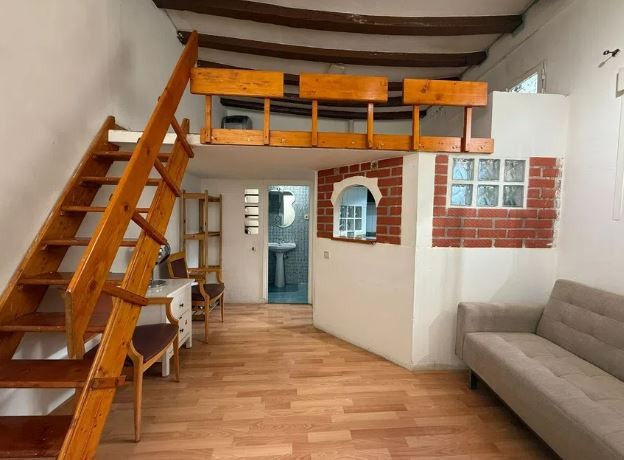
When those high expectations are dashed, the "springboard" property emerges as a practical alternative: a property that may be less aspirational, but allows you to buy now.
"We strongly promote the 'springboard' properties," says Quintana. "It's a small flat, which could be a one- or two-bedroom place, that serves as a way for singles or couples to enter the market." He stresses that it’s not about simply settling for a smaller home, but doing so deliberately. "With this approach, the buyer can take the next step in around five years, when a larger home is genuinely needed. If you’re living alone or with a partner, 60 square metres in a modest neighbourhood may be perfectly adequate. Later, you can move up to an 80, 90, or 100-square-metre flat, having had time to save and take advantage of the opportunity."
The idea isn’t new, but today’s market is pushing it more firmly into the spotlight. "The concept of 'springboard' properties has always existed," says economist and university professor Gonzalo Bernardos. “When buying a first home, most people don’t purchase the property they truly want, but the one they can afford. It’s usually small, not in a prime location and lacks the extra rooms you might dream of." Even so, he sees it as a natural rung on the residential ladder: "It’s the first step towards a home that will satisfy a significant portion of your desires."
In Bernardos’ view, one of the main reasons this strategy is gaining traction today is very specific: the challenge is no longer so much meeting the monthly mortgage payments as it is raising the initial sum needed to buy.
"Nowadays, the difficulty in buying a flat isn’t the mortgage payment – if the buyers are a couple – but having the capital the bank won’t lend you," he explains. He highlights just how significant that initial outlay can be: “In regions where the Property Transfer Tax (ITP) is highest, it can amount to 31% of the purchase price." Buying a more affordable first property allows buyers to overcome this hurdle, using that initial home as a springboard to move up the ladder to a larger, more aspirational property.
"It must be financially manageable and not a burden for the buyer."
Eva González-Nebreda, vice president of the Association of Real Estate Agents of Catalonia (AIC) and general secretary of FIABCI Spain, situates this trend within a broader life logic that increasingly shapes buying decisions.
"It fits with the way family size changes over the course of life: first sharing a flat, then living alone or as a couple, followed by the arrival of children, and eventually returning to one or two people in a home," she explains. She adds a point that reflects the current mindset: "People no longer plan or finance with such long-term horizons. And if they do, it’s usually with the idea that they can sell that property again or pay it off by moving to another purchase."
The idea that entering the market makes it easier to "move up" the ladder to a better home is one of the key appeals of a "springboard" property, and experts agree that, in general, it holds true.
Quintana sums it up with a dose of realism: "It’s much easier to move up the ladder. Why? Because you’re already in the system, already part of it, and you generate an increase in your net worth through your savings."
Bernardos explains it from the perspective of accumulated capital: "If you have a flat and want to buy a better one, selling the initial property provides the necessary savings to acquire the second – and often final – home."
González-Nebreda emphasises the broader value of property: "Yes, because buying a home fulfils a triple function: it’s a place to live, an asset and a long-term savings vehicle."
But for a "springboard" property to be just that rather than an anchor, certain conditions cannot be ignored. Quintana stresses that the key is not just to buy, but to buy without sinking into debt:
"Fundamentally, you need to be able to afford it comfortably, to maintain a savings plan, and to see that it has some growth potential," he explains. He adds bluntly: "Trying to buy something you can’t afford is the big mistake many people make. It puts you in debt and erodes your quality of life."
For some young buyers, that balance between housing and lifestyle is almost as important as the property itself. "What these young people want is to maintain a certain quality of life. They want to keep travelling, dining out and spending on weekends," Quintana notes.
Financial prudence
González-Nebreda quantifies that financial prudence: "Undoubtedly, it must be financially manageable and not a burden for the buyer; the debt-to-income ratio shouldn’t exceed 30% of the household’s income." In other words, a temporary home is only truly temporary if it leaves room to breathe, save and execute the plan. Otherwise, it risks becoming a trap that could take years to escape.
It’s equally important to consider the exit strategy from the very start. In a five-year plan, the flat isn’t chosen solely for its current suitability, but also for how it will perform when it comes time to sell or repurpose it. Bernardos puts it simply: "The price of the ‘springboard’ property must rise faster than the general market." To achieve this, he recommends what he calls a "promising neighbourhood or city," citing three examples: "the Arcosur neighbourhood in Zaragoza," "Martorell in the province of Barcelona," and "Ciudad Real if you eventually want to live in Madrid or nearby – proximity to the AVE high-speed train is key."
"We need to think about what the market will be like when we want to sell it."
Bernardos identifies three common reasons why the plan often fails. The first is that the buyer remains in the flat longer than intended, though he considers this unusual when finances are tight: "I’m happy with the flat," he notes. "This is quite rare, especially if the couple has two or more children, or if the property is far from the family’s home or where one or both partners grew up."
The second reason relates to failing to strengthen one’s financial position during those years: "I have an excessive level of spending. I live very well, bought a nice car on credit and haven’t made any prepayments on the mortgage," he explains.
The third, less predictable reason concerns changes in income: "The family’s income hasn’t increased as expected, but has actually decreased," he says, adding that this is uncommon, "unless one or both partners have lost their jobs and found positions with lower pay than before."
González-Nebreda concurs on the common mistakes, particularly among those focused only on the present: "People think first in terms of mortgage payments, and second as buyers, rather than considering whether the property they are purchasing will be sellable in the short or medium term." That’s why she stresses the importance of broadening one’s perspective: "We have to think about what the market will be like when we want to sell."
Then comes the final question – the one that completes the "springboard" property puzzle: what’s the best way to make the leap – sell it, or keep it and rent it out? Bernardos explains that most people choose to sell, particularly when the move occurs within a relatively short timeframe.
"Most people sell the first flat if they move to the second within five to ten years. They don’t sell because they want to, but because selling is essential to free up the capital (their prior savings) needed to buy the next property."
González-Nebreda adds that the decision ultimately depends on each buyer’s ability to sustain the effort without over-stretching financially, as well as the investment alternatives available. She also reminds us of an often-overlooked detail when doing the sums: “Buying a property doesn’t end with the purchase; you must be able to carry out proper maintenance, make any necessary temporary investments, and cover ordinary expenses, community fees and special assessments.”