Spain has emerged as one of the EU’s frontrunners on gender equality, ranking fourth in Europe in the 2025 Gender Equality Index and scoring clearly above the EU average. Yet the latest data also highlight how far there is still to go: across the bloc, women need to work around 15½ months to earn what men make in just one year.
Spain’s 2025 Gender Equality Index score and EU ranking
European Institute for Gender Equality’s (EIGE) index gives Spain 70.9 points out of 100. This is 13.2 points higher than in 2015, and 5.2 points up on 2020, confirming Spain as one of the EU countries moving fastest on gender equality.
In the overall EU ranking, Sweden ranks first, followed by France and Denmark, with Spain fourth and the Netherlands fifth.
Where Spain advances on gender equality in 2025
Spain’s result is underpinned by strong performance in power, time, money and health, with women increasingly visible in political and economic decision-making.
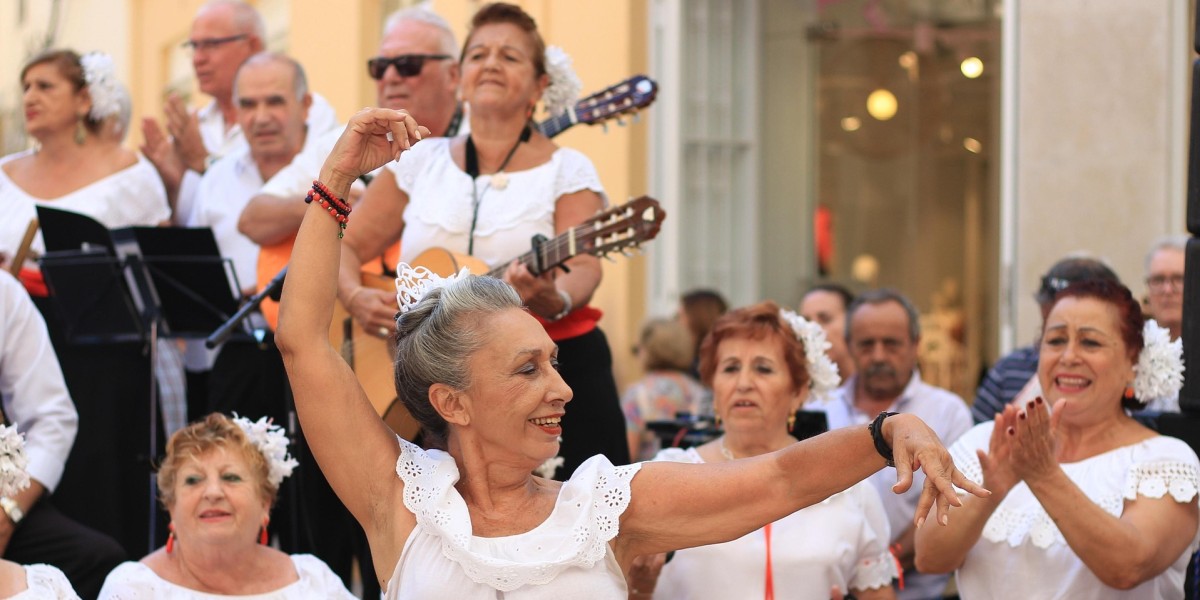
Power – women’s representation in politics and business
The power domain is the main driver of Spain’s recent advance, with a score of 66.6 points.
- Women hold 45% of ministerial posts and 44% of seats in the national parliament, and 47% of positions in regional assemblies and local municipalities.
- In the private sector, women account for 41% of board members in the largest quoted companies, compared with roughly a third across the EU.
Time – work–life balance and daily tasks
With 74.1 points in the time domain, Spain performs relatively well on work–life balance, even as unpaid work remains gendered.
- 59% of women report doing housework every day, while 39% of men say the same, a higher share than the EU average for men.
- Weekly leisure is also relatively widespread, with 35% of women and 47% of men reporting time spent on leisure activities, above EU levels.
Money and health – income and wellbeing
Spain’s score of 73.3 points in the money domain reflects comparatively solid, though unequal, earnings.
- Median pay in purchasing power standards stands at €21,516 for employed women aged 18–64 and €26,553 for men.
Health is Spain’s strongest area, with 86.2 points.
- Among those aged 16 and over, 79% of women and 69% of men neither smoke nor engage in harmful drinking, both above the EU averages.
Knowledge – women ahead in higher education
In the knowledge domain, Spain scores 55.7 points, reflecting high levels of educational attainment.
- Among 30–34-year-olds, 57% of women and 47% of men have completed tertiary education.
- In initial vocational education and training, however, women are less represented, accounting for 9% of graduates aged 25–34 compared with 12% of men.
Gaps that remain in Spain’s path to gender equality
Despite its strong ranking, the Index highlights deep-rooted inequalities in paid work, long-term income security, unpaid care and gender-based violence.
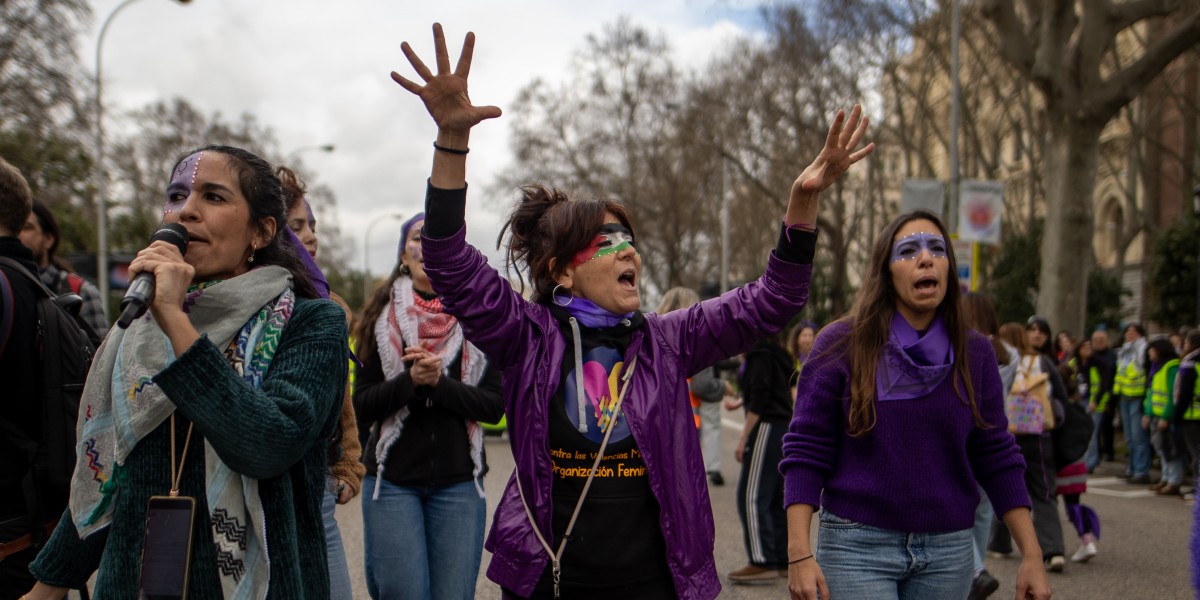
Work – employment gaps and working life
In the work domain, where Spain scores 69.4 points, women remain at a disadvantage in both working hours and career length.
- The full-time equivalent employment rate is 43% for women and 57% for men among people aged 15–89.
- Women’s average working life spans 35 years, compared with 38 years for men, reflecting higher rates of part-time work and career breaks.
Money – pensions and in-work poverty
The gender pension gap in Spain stands at 29%, above the EU average of 25%. This difference accumulates over time from lower earnings and shorter contribution periods for women.
Economic vulnerability is particularly visible among single and single-parent households: 20% of employed women in these households face in-work poverty, compared with 13% of men.
Time – unpaid care and domestic work
Behind the relatively strong time score lie very heavy unpaid care responsibilities.
- 56% of women provide informal childcare for children aged 0–11 for more than 35 hours per week, almost double the 29% recorded for men.
- In informal long-term care, 45% of women and 40% of men aged 45–64 provide more than 20 hours of care per week, showing substantial care demands on both genders.
Violence against women – persistent and widespread
The Index’s violence domain shows that gender-based violence remains a serious problem, underscoring the ongoing severity of the issue despite policy efforts to tackle it.
- Overall, 28% of women aged 18–74 in Spain report having experienced physical and/or sexual violence since the age of 15.
- The rate of women killed by an intimate partner or family member is one woman per 300,000 inhabitants.
Spain’s fourth-place ranking in the 2025 Gender Equality Index confirms its status as one of the EU’s frontrunners on gender equality. At the same time, the figures expose enduring structural gaps in paid work, pensions, unpaid care and violence against women.
The challenge now is to sustain progress in political and corporate power while closing the economic and social divides that still define many women’s lives.

Stay in the know about living in Spain as a foreigner—get our weekly newsletter for the latest travel, legal, and lifestyle news.