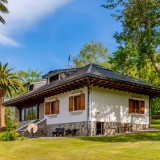
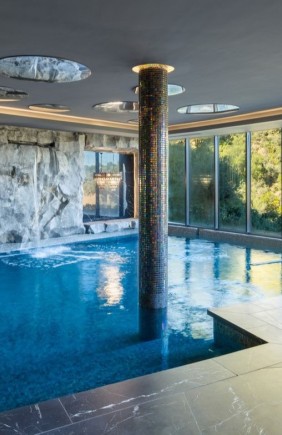
Madrid’s luxury housing market continues to attract international purchasers, with a €25 million sale in La Moraleja underlining the spending power at the city’s upper end.
Rebecca Bosch Bassat, co-founder of the luxury estate agency The Well Come Home, represented the buyer in the transaction for Villa Serenity, a home of more than 2,000 square metres. It's seen as the most expensive home sale in Madrid to date.
For Bosch, the transaction reflects a broader shift in the Spanish capital’s prime residential market. International demand, particularly from Latin America, has grown alongside interest in large homes, period buildings and properties with architectural character.
International buyers drive demand in Madrid’s prime districts
Foreign buyers make up a substantial share of demand in Madrid’s luxury market, according to Bosch, whose agency focuses on high-end homes in the capital.
She said Latin American clients are especially prominent. Venezuelan buyers featured strongly when she started working in the sector, followed by purchasers from Peru and Colombia. In more recent years, Mexican buyers have become increasingly significant.
“In recent years, a Miami–Mexico City–Madrid triangle has emerged,” Bosch said. “Some clients tell me they live in Mexico City, spend time in Miami and now also want a base in Madrid.”
Her comments reflect the growing international profile of Madrid’s most expensive residential areas, including parts of Salamanca, Chamberí and the northern residential district of La Moraleja.
For buyers based overseas, Madrid can offer a European base with direct international connections, a large cultural and business scene, and a residential market that still compares favourably with other major capitals at the very top end.
Why period apartments remain in demand
International demand is also shaping what buyers seek in Madrid’s luxury homes.
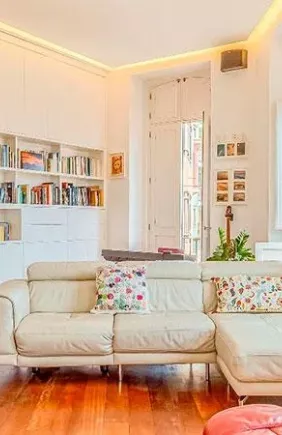
Bosch said many clients want fincas clásicas, the historic apartment buildings found in central districts such as Salamanca and Recoletos. High ceilings, original doors, mouldings, radiators and other period details can make a substantial difference to a home’s appeal.
“The majority are looking for classic buildings, preferably with very high ceilings and original architectural features,” she said.
The preference points to a wider demand for homes that feel distinctly connected to Madrid, rather than properties with an interchangeable contemporary interior. For buyers relocating to the capital or buying a second home, historic architecture can carry as much weight as floor area, location or a terrace.
Madrid’s relative value in Europe’s luxury market
The €25 million Villa Serenity sale was an exceptional transaction by Madrid standards, but Bosch argues that the capital is still less expensive than other European cities in the ultra-prime segment.
“Luxury in Madrid is still much more affordable than in European cities such as Paris or London,” she said.
The comparison helps explain why some buyers with international property portfolios are adding Madrid to their plans. Bosch said the €25 million price may appear striking, but it remains below figures paid for top-tier homes in other major markets.
La Moraleja, north of Madrid, has long attracted buyers seeking larger plots and houses outside the city centre. By contrast, central neighbourhoods such as Salamanca and Recoletos are more associated with renovated period apartments, often close to restaurants, shops and cultural institutions.
Why some high-end homes remain listed for months
A property that has spent a long time on the market is not necessarily a sign that it lacks appeal, Bosch said.
“There are genuine gems hidden on property portals,” she said.
In the luxury market, some homes can be difficult to present online. A property may have limited photographs because an owner does not want every room shown publicly. Others may be occupied by tenants, making viewings harder to arrange, while some large or unusual homes simply do not photograph well.
Bosch also noted that the same home may appear through several agents. Madrid’s high-end brokerage market is fragmented, with many independent brokers working alongside larger agencies and sharing properties through professional collaborations.
This can make online searches appear more complicated than they are. Several listings may refer to the same home, sometimes with different images, descriptions or asking prices. In other cases, a property’s marketing may not fully communicate its location, architecture or potential.
For international purchasers, this can make local market knowledge particularly valuable, especially in areas where individual buildings, streets and renovations can have a significant effect on price.
Foreign demand and Madrid’s wider housing debate
The role of international buyers has become part of the wider debate around housing affordability in Spain.
Bosch acknowledged that overseas buyers can attract attention because their budgets may be very different from those available to local households. Her view is that high-spending arrivals also generate demand for property managers, domestic services, restaurants and shops, contributing to local economic activity.
That argument sits alongside persistent concern about housing affordability in Madrid, where high demand and constrained supply have made it harder for many residents to buy or rent a home.
The effects are not evenly distributed across the market. A €25 million villa and a period apartment in Salamanca occupy a different segment from the homes sought by most local households. However, the rise of foreign demand in prime neighbourhoods remains part of a broader conversation about investment, supply and who can afford to live in the capital.
A market shaped by international lifestyles
Madrid’s luxury market is increasingly linked to international lifestyles, with buyers balancing homes across cities and looking for properties that combine space, architectural character and access to the capital.
For Bosch, demand for classic buildings and large homes is unlikely to disappear while Madrid remains attractive to overseas purchasers. Yet the market also depends on a limited pool of exceptional properties, especially those that retain historic character or offer privacy and outdoor space close to the city.
The Villa Serenity sale has set a new benchmark for Madrid. More broadly, it illustrates how the capital is competing for international wealth while continuing to face the housing pressures affecting residents across the city.
This feature is based on an interview originally published by idealista/news Spain with Rebecca Bosch Bassat.