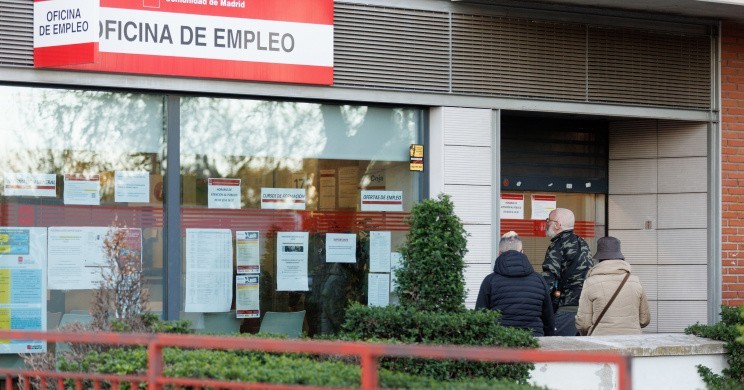
The latest employment data published by the Spanish government seem to be a double-edged sword. Although unemployment fell in April and Social Security registrations grew, human resource consultancies have highlighted a slump in recruitment in the fourth month of the year.
According to data from the Ministries of Labour and Social Security, 238,436 people registered for Social Security in April, while 73,890 people became unemployed, bringing the unemployment rate down to below 2.8 million. These figures, however, have been accompanied by a sharp and generalised fall in recruitment.
Randstad Research explains that "April is typically a month with good employment figures, especially when Easter is in the same month, as occurred this year. Social Security enrolment improved compared to the April figures of previous years, which was not the case for registered unemployment. Lastly, recruitment fell significantly in monthly and annual terms, in all its forms".
More specifically, recruitment fell by 12% compared to March, with a total of 1.16 million contracts. In monthly terms, the drop in recruitment has occurred for both temporary (-10.39%) and permanent contracts (-13.83%), while in year-on-year terms, permanent recruitment fell by 24.06% and temporary recruitment dropped by 16.59%, compared to figures for April 2022.
"One of the most striking results is the significant drop in overall recruitment (-20.19%), which for the first time in a year has also affected permanent contracts, not just temporary ones. In addition, the decline in permanent contracts has been much more significant (-24.06%) than temporary contracts (-16.59%), which is not good news", emphasises Randstad's research service.
The Adecco Group Institute also highlights these figures and warns that "contracts are still in free fall (-12% compared to March and -20.2% year-on-year), which is not a symptom of employment stability or a lack of turnover. In the month-on-month comparison, ordinary permanent contracts fell more (-20.6%) than temporary ones (-10.4%), except for permanent discontinuous contracts, which grew by 2.4% compared to March. However, all permanent contracts (-24.1%) fell more than all temporary ones (-16.6%) compared to a year ago".
The consultancy's research and dissemination centre also highlighted the slowdown in Social Security registration and the Spanish labour market's dependence on the services sector. "In April, Social Security registration grew considerably (+1.2% month-on-month), which confirms that our production model is seasonal and depends on the services, tourism, and hotels and restaurants sector. However, registration rose by 3% year-on-year, when it grew by 5.1% a year ago".
The reason behind this widespread decline in recruitment, which is particularly significant for permanent contracts, is that it is the first anniversary of the implementation of the Spanish labour reform. A reform that sought to reduce temporary contracts and promote long-term employment.
"The 2022 labour reform – limited in scope to modifying the contractual structure – became fully effective in April last year. It is, therefore, interesting to compare what happened in April 2023 with the same month of the previous year, since the year-on-year comparison is already based on two months in which the reform had a full impact," says the Randstad research service. It further adds that the reduction "is not good news and shows that the effect of 'substituting' temporary contracts for new permanent ones has already been exhausted.
On the other hand, Randstad Research also points out that the phenomenon of discontinuous permanent seasonal workers seems to have diminished, as they have fallen by 22.38% compared to April 2022. In this sense, the research centre explains that "the proliferation of discontinuous permanent seasonal workers since reform implementation caused a marked bias to recorded unemployment figures, by not counting the hundreds of thousands of people who – with a discontinuous fixed contract – became unemployed. This April, we have seen the other side of the coin. The hotel and catering industry – where many thousands of these contracts have been signed – was revived by the tourist season, yet unemployment only fell by 74,000 people in April, compared to a drop in 144,000 job seekers".
The research centre concluded, "There has been a sharp fall in permanent contracts, and the hotel and restaurant sector has revealed the discrepancies between job seeker and unemployment figures one year after the labour reform was adopted".