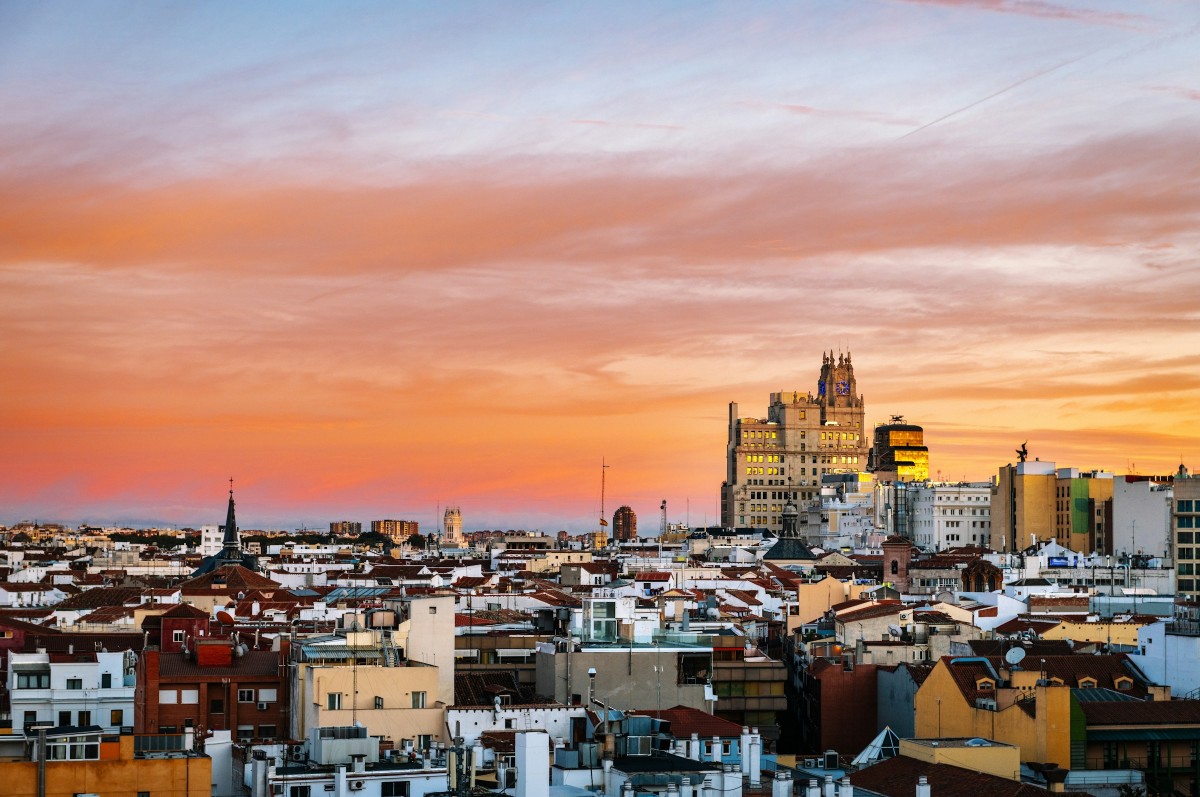
Madrid and Malaga are set to be the two Spanish cities with the highest growth in the number of international tourists in 2024 compared to 2019, before the pandemic, with up to 25% in the case of the capital of Madrid and 30% in the case of the capital of the Costa del Sol.
This is one of the main conclusions shared by the president and CEO of the World Travel and Tourism Council (WTTC), Julia Simpson, in an interview with Europa Press, during which she discussed the latest international visitor figures.
Spain will receive 19% more tourists in the first half of this year compared to 2019 figures – a clear example that 2024 will be a year of tourism growth and consolidation, as explained by the head of the forum for the travel and tourism industry.
Meanwhile, the main outbound markets include Colombia, Ireland and Sweden, which exceeded 2019 levels by 65%, 62% and 51%, respectively. Growth is also notable among travellers from the United Kingdom (30%) and France (20%).
Luxury tourists are one of the fastest-growing profiles in Spain. According to Simpson, there has already been an increase in visitors' income since last year, although other traditional profiles remain, such as those interested in sun and beach tourism and food tourism.
New destination competitors
Despite being a mature market and remaining second for international arrivals, Spain faces increased international competition, with new players on the map investing a lot of money in attracting all tourist types.
This is particularly the case with the Asian market or the Gulf countries, which have been experiencing a tourism boom in recent years and aspire to compete with more consolidated destinations like Spain or Greece. However, according to the president of the WTTC, Spain continues to invest heavily in adapting to tourist demand, adapting to profiles such as the luxury tourist.
More sustainable tourism and transport SMEs
The head of the WTTC also commented that Spain's tourism sector faces some sustainability challenges, among which she highlighted systems to support the sector's SMEs and small hotels moving towards energy sustainability, and the need to continue electrifying the land fleet.
According to Simpson, it is "very important" that the transport sector and public administrations work hand in hand to electrify all vehicles in the supply chain. "We need some help on sustainability," she said.
Meanwhile, the tourism sector's energy demand is another of the sustainability challenges. Although she welcomed Spain's progress in renewable energy, Simpson considered that more clean energy is still needed.
In this sense, she encouraged bolstering efforts to support small businesses and hotels, representing around 70% of the Spanish market, which need help to move towards a sustainable energy supply.