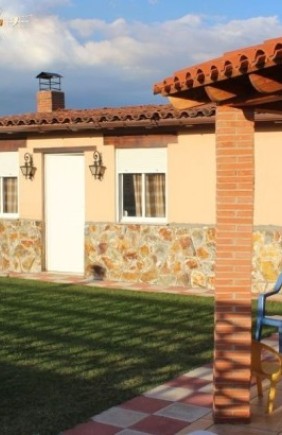
In sparsely populated inland Spain, the village of Arenillas is testing a very direct response to rural decline. With only around 45 registered residents, this small community in Soria has launched a package that combines a rent-free home with a permanent job and the option to run the village bar.
Where is Arenillas, and why is it offering free housing?
Arenillas lies in the province of Soria, in northern inland Spain, within the autonomous community of Castile and León. The area sits firmly inside what Spanish media and policymakers refer to as España vaciada, the “emptied Spain” of low-density rural provinces that have lost residents to larger cities over several decades.
Like many municipalities in Soria, Arenillas faces a simple arithmetic problem. As younger people move away and older residents age, the village risks dropping below the threshold at which basic services, social life and local infrastructure can be maintained.
The local council and the Asociación Cultural de Arenillas have decided that active repopulation is the only way to avoid a gradual shutdown of daily life. Their answer has been to focus on what tends to matter most to families considering a move: housing security and stable employment.

What exactly is Arenillas offering to new families?
The Arenillas repopulation plan is built around three main elements: free municipal housing, a guaranteed job as a builder and the optional management of the social bar.
The scheme is designed for families prepared to live there all year round and to become part of local life. For people who already have the right to live and work in Spain, it illustrates how some villages in the country’s interior are trying to secure their future.
Free housing with no rent
The housing component centres on a rehabilitated municipal home:
- A village-owned house that has been refurbished and is described as fully equipped.
- No rental payments; the selected family does not pay rent for the property.
- Households are responsible for their own running costs such as electricity, water, heating and other personal expenses
A guaranteed job as a builder in the village
Arenillas also offers a salaried position as a builder or construction worker. The role is framed as a permanent contract, designed to provide a stable income in a very small labour market. It focuses on the maintenance and rehabilitation of municipal buildings and infrastructure.
Optional management of the village bar and social centre
The third part of the package relates to the village bar, often called the bar social or social centre. In many small Spanish villages, this space does far more than serve drinks, functioning as the main meeting place for residents of all ages. In Arenillas, the incoming family is offered the opportunity to take over the management of this bar.
Who can apply for the free house and job in Arenillas?
The Arenillas initiative is not a general open invitation. It sets out a relatively clear profile of who the village is trying to attract.
Preferred profile:
- Families, ideally with children of school age.
- Applicants who are prepared to live in Arenillas year-round, not only in summer.
- People with experience in construction or related trades.
- Applicants comfortable with the responsibilities of rural life and basic maintenance work.
From a legal standpoint, the scheme is aimed at those who already have the right to live and work in Spain. That normally includes Spanish citizens, citizens of other EU or EEA countries and non-EU nationals who already hold valid Spanish residency and work permits.

Schools, services and daily life in Arenillas
Life in Arenillas differs markedly from that in a major Spanish city or coastal resort. The village offers a quiet environment, a compact social circle and ready access to the countryside, but fewer on-the-spot services.
Schooling and transport for children
One of the central questions for any family thinking about a rural move is education. Arenillas addresses this through established links with nearby schooling:
- Children attend the colegio comarcal (regional school) in Berlanga de Duero, a larger nearby municipality located about 20 kilometres away.
- The Junta de Castilla y León operates a free school transport service, so pupils travel by bus at no cost to the family.
Internet, remote work and practical services
The Arenillas authorities highlight that the village has internet connectivity suitable for teleworking. For households that include remote workers or digital professionals, this can be a deciding factor.
Day-to-day services typically follow a rural pattern:
- Health services, supermarkets and most specialist shops are based in nearby towns.
- Administrative tasks often require trips to municipal or provincial centres.
- Cultural life revolves around the bar, village square and organised activities, particularly in summer.
How to apply for the Arenillas housing and job offer
The application process is managed at the local level, with the Ayuntamiento de Arenillas (town council) acting as the main point of contact and the cultural association involved in the final selection.
According to local information, prospective families are expected to:
- Make initial contact with the council by telephone (975 18 51) or email (ayuntamiento@arenillas.es)
- Submit a written application that sets out:
- Family composition and current living situation.
- Reasons for wanting to move to Arenillas and expectations of rural life.
- Professional experience in construction or building maintenance.
- Any previous experience in managing bars, cafés or community spaces.
A wider trend in Spain’s España vaciada
Although Arenillas has attracted attention for the clarity of its offer, it is part of a broader movement among municipalities in Spain’s interior regions. Across Castile and León, Aragón, Castilla-La Mancha and other areas associated with España vaciada, local councils have been experimenting with measures such as:
- Free or subsidised housing in municipal properties, similar to the incentives seen in several towns and villages in Spain, where you could get paid to live.
- Support for small rural businesses, including bars, grocery shops and guesthouses, such as the one in Galera. Sometimes tied to regional schemes such as the HolaPueblo project.
- Job offers linked to municipal services, agriculture or local care provision, alongside targeted grants and tax reductions in abandoned villages in Spain.
- Campaigns aimed at remote workers and families seeking quieter environments.
- Regional programmes such as those in La Rioja that pay younger buyers to purchase homes in its smallest villages.
Stay in the know about living in Spain as a foreigner—get our weekly newsletter for the latest travel, legal, and lifestyle news.