Few cities in the world are as cosmopolitan as Barcelona. Famous for its Modernist architecture, football club, Gothic Quarter and vibrant atmosphere, it is an ancient city whose past has left a lasting mark on its streets and monuments. In this article, we explore its history, from its origins to the present day.
- This is how Barcelona was founded
- There was history before Rome too
- Visigoths, Muslims and Counts
- The Middle Ages: capital of the Crown of Aragon
- Barcelona during the wars
- Factories, the Eixample and Modernism in the 19th Century
- 20th Century: Montjuïc, the war and the post-war period
- From the 1992 Olympic Games to today
- What to see in Barcelona
This is how Barcelona was founded
Barcelona was founded more than 2,000 years ago as Barcino. Between 15 and 10 BC, Emperor Augustus established a small Roman colony covering barely 10 hectares on Mount Tàber, in what is now the Gothic Quarter and Plaça Sant Jaume.
Follow idealista/news in Spanish on the WhatsApp channel
It was a small city, planned from scratch according to Roman urban principles:
- Grid layout, organised around two perpendicular axes, the cardo maximus and decumanus maximus.
- Forum at the intersection of both roads, with the Temple of Augustus, whose columns can still be seen on Carrer del Paradís.
- The city walls, which gave physical form to the Roman settlement. In the 3rd century, a stronger defensive wall was added.
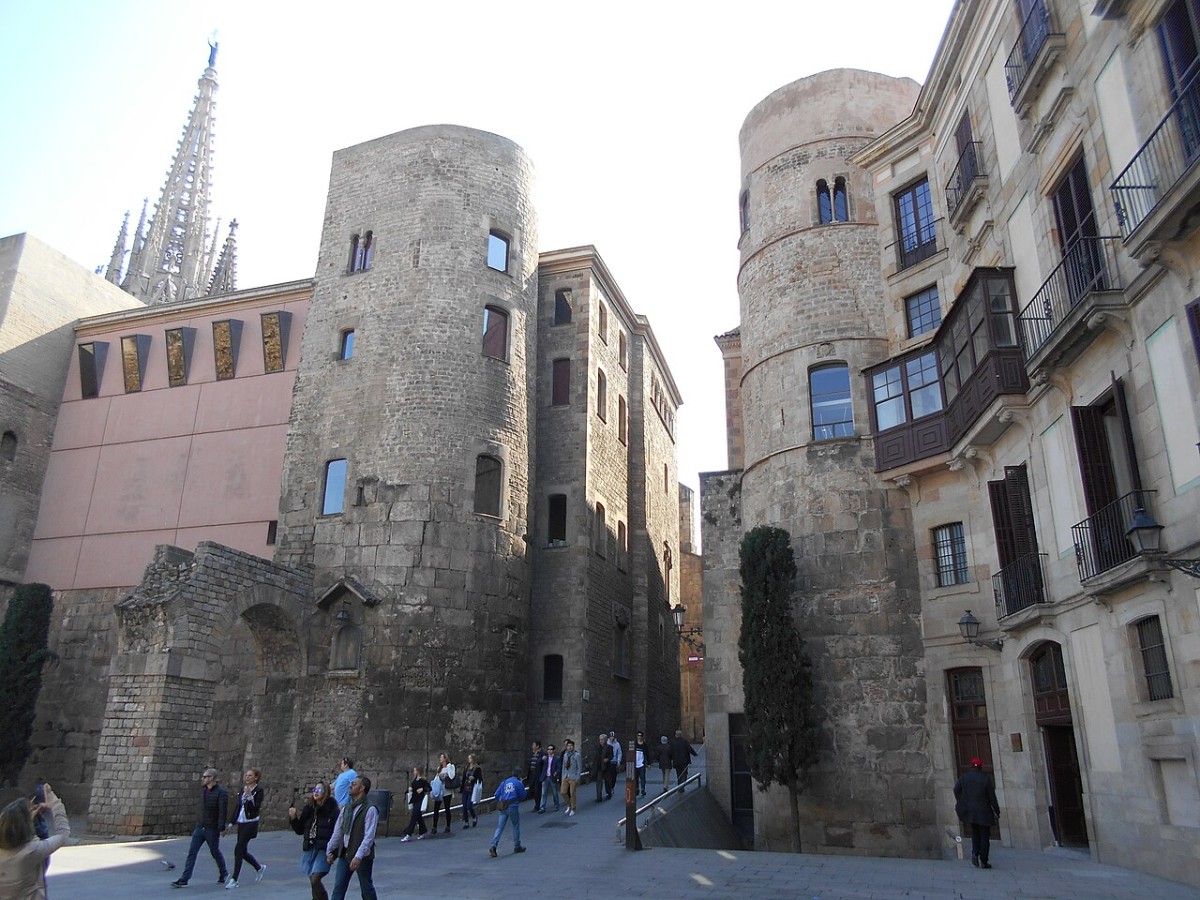
Despite its modest size, Barcino controlled a vast and fertile agricultural territory, while the Via Augusta connected it to the rest of the Roman Empire. Beneath Plaça del Rei, more than 4,000 m² of Roman streets and workshops have been uncovered, including a laundry, dye works, fish-salting and garum factory, and a wine cellar dating from the 2nd and 3rd centuries.
There was history before Rome too
Although its foundation was Roman, the Barcelona plain had been inhabited since the Neolithic period. Archaeologists have discovered pottery fragments and flint and jasper tools on Montjuïc.
Later, the area was occupied by the Laietani, an Iberian people. During this period, the territory was organised into a network of settlements, including hilltop centres such as Montjuïc and Turó de la Rovira, alongside smaller farming communities spread across the plain.
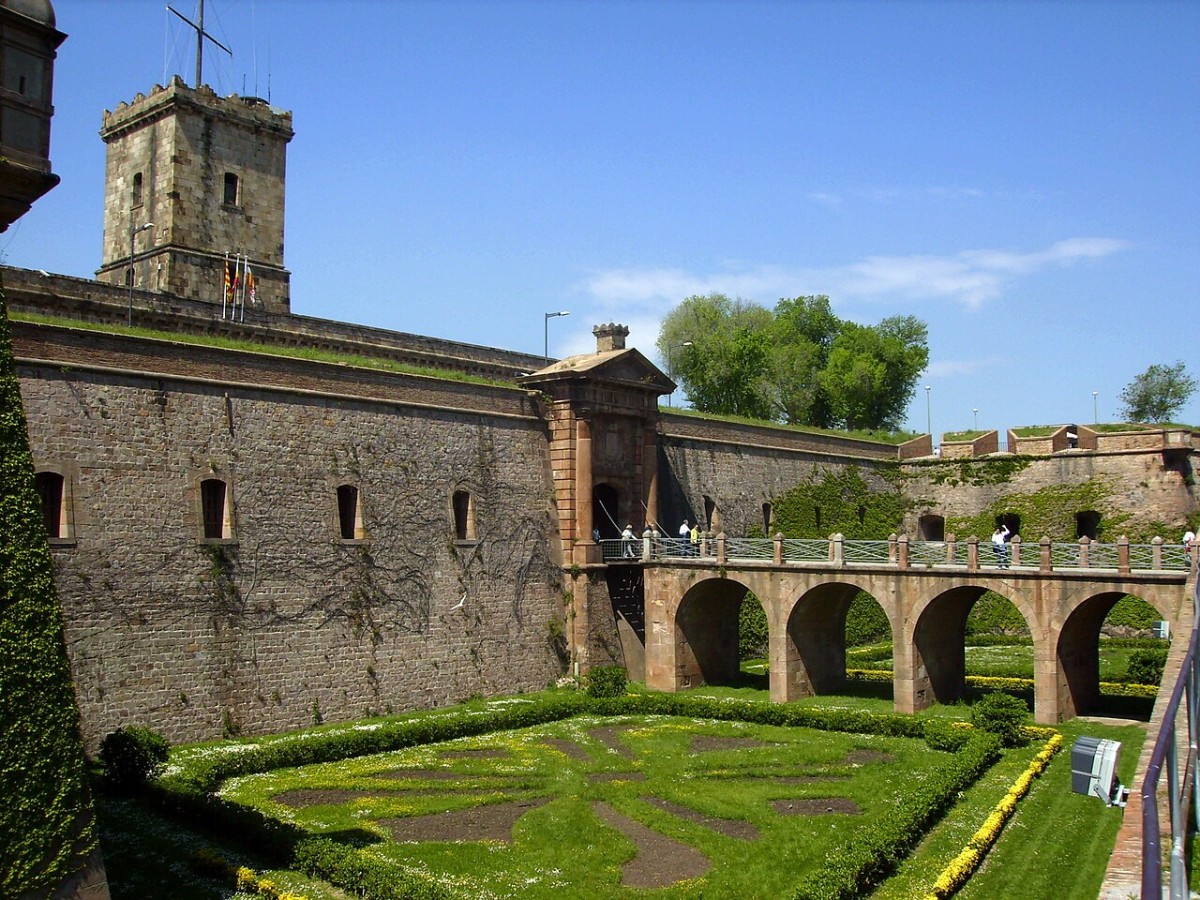
The Montjuïc area is associated with Barkeno, a name that appears on silver coins minted between the 3rd and 1st centuries BC. Many historians consider this Iberian toponym to be the origin of Barcelona's name. By contrast, the legend linking the city's foundation to the Carthaginian general Hamilcar Barca lacks archaeological evidence.
Another curious fact is that around 13 million years ago, during the Miocene epoch, the area was inhabited by Pierolapithecus catalaunicus, an extinct species of hominoid primate. The remains discovered in the Barcelona-area municipality of Els Hostalets de Pierola are believed to belong to a potential common ancestor of humans and great apes.
Visigoths, Muslims and Counts
At the beginning of the 5th century, the Visigoths arrived on the Iberian Peninsula. One of their rulers, King Ataulf, chose Barcelona as his residence.
Ataulf arrived in Barcelona in AD 414 and briefly made it the capital of the Visigothic kingdom before being assassinated in 415. During this period, Barcino became known as Barcinona, and Arian and Catholic bishops coexisted until the Third Council of Toledo in 589.
After a brief period of Muslim rule (711-801), when the city was known as Madinat Barshaluna, it was conquered by the Carolingians. At the end of the 8th century, Charlemagne established the Marca Hispanica, a defensive buffer zone between the Frankish and Muslim territories. Divided into counties, the region was administered from Barcelona, giving rise to the nickname "Ciutat Comtal" (County City), which is still used today.
The Middle Ages: capital of the Crown of Aragon
A major turning point came in 1150, when Count Ramon Berenguer IV married Petronila of Aragon and became Prince Regent of the Crown of Aragon. Thereafter, the Counts of Barcelona also became kings, and the city prospered alongside the Crown's Mediterranean expansion.

In 1249, James I laid the foundations for local self-government through what would become the Consell de Cent, which governed the city until 1714. During the 13th and 14th centuries, new walls were built and much of the Gothic architectural heritage that defines Ciutat Vella today took shape.
Barcelona during the wars
With the dynastic union of Castile and Aragon, Barcelona lost its status as a royal court, although it retained its institutions and privileges. The 17th century was marked by epidemics and political unrest, culminating in the Reapers' War (1640-1652).
The revolt was directed against Philip IV and fuelled by resentment towards the presence and conduct of royal troops as well as the fiscal demands imposed by the Count-Duke of Olivares.
In response, a Catalan Republic was proclaimed under French protection. However, in 1652, Felipe IV's forces, led by John of Austria, recaptured Barcelona after a prolonged siege.
The next major turning point came during the War of the Spanish Succession. Following a lengthy siege, Barcelona surrendered to Felipe V on 11 September 1714. The subsequent Nueva Planta decrees abolished the Consell de Cent, although the city maintained its leading role within Catalonia.
Factories, the Eixample and Modernism in the 19th Century
By the mid-19th century, Barcelona was an industrial city constrained within its medieval walls. In 1854, their demolition was authorised, an event widely celebrated by residents.
Urban growth was guided by Ildefons Cerdà's Eixample Plan, approved in 1859 despite an alternative proposal by Antoni Rovira i Trias winning the municipal competition. Its distinctive block design remains one of the icons of modern urban planning.
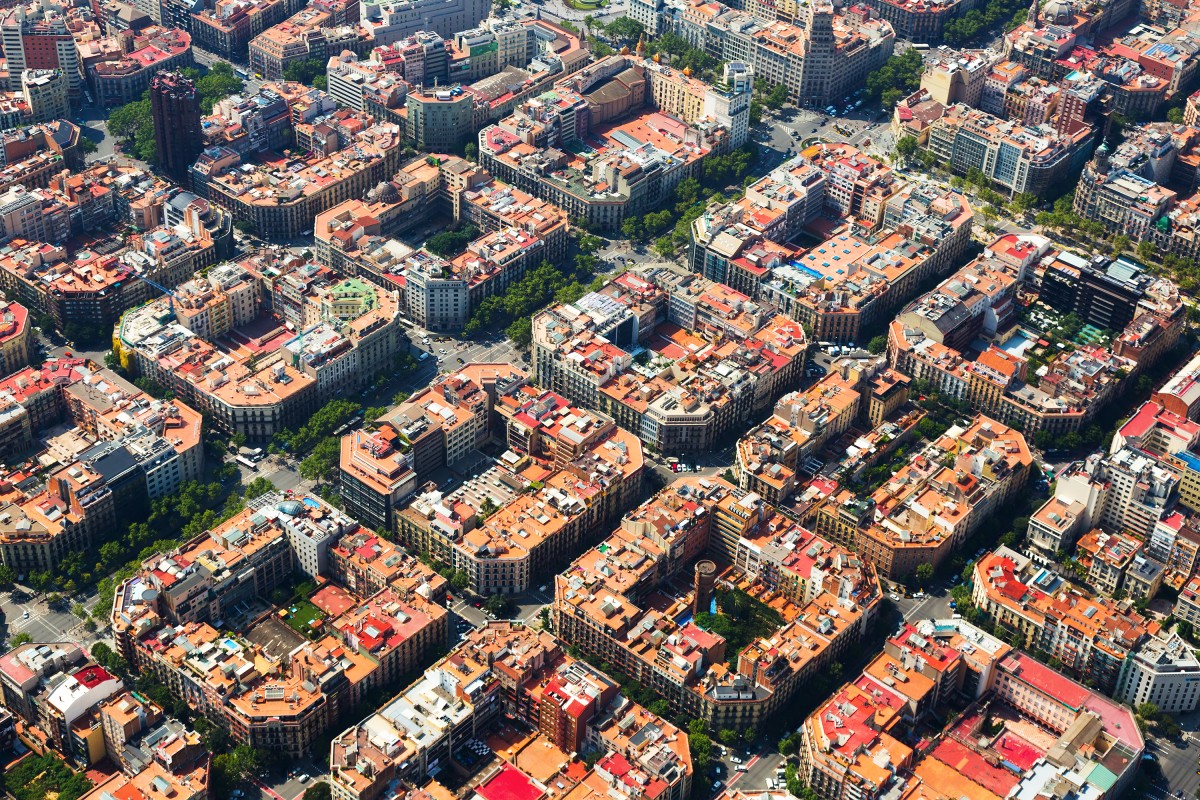
The demolition of the Ciutadella after the 1868 revolution freed up the space where the 1888 Universal Exposition was held, an event immortalised in Eduardo Mendoza's novel, The City of Marvels. This event served as a showcase for the bourgeoisie that financed Catalan modernism.
By the end of the century, the annexation of neighbouring towns such as Gràcia, Sants and Sant Andreu had begun to shape the Barcelona we know today.
20th Century: Montjuïc, the war and the post-war period
While the 1888 Exposition transformed the Ciutadella area, the 1929 International Exposition focused on Montjuïc. The event reshaped the hill and left landmarks such as the Palau Nacional, the Magic Fountain and the stadium that would later be used for the Olympic Games.
During the Civil War, Barcelona became a target for aerial bombardment. More than 1,300 air-raid shelters were built, including the well-preserved Shelter 307 in Poble-sec.
Following the Franco dictatorship, and after decades of expansion driven by migration from other parts of Spain, democratic local government returned in 1979.
From the 1992 Olympic Games to today
In 1986, Barcelona was chosen to host the 1992 Olympic Games, and the city used the occasion to undertake its largest urban renewal project since Cerdà. The Ronda de Barcelona ring road, a 35-kilometre road network, was built, along with the Olympic Village in Poblenou, on former industrial and railway land. For the first time in decades, Barcelona opened up to the sea with beaches stretching from Barceloneta to the Besòs River.
The transformation continued with the 2004 Forum of Cultures, which completed the recovery of the coastline, and with the 22@ technology district in the old industrial Poblenou.
Currently, the city of Barcelona has 1,731,649 registered residents (as of 2026), according to the most recent data. One of the challenges the city faces is the housing market, since measures taken in recent years have reduced supply and put pressure on prices.
According to the latest data from idealista, the average price of homes for sale is €5,462/m² (Sept. 2026), an all-time high. Meanwhile, renting a flat costs an average of €20.1/m²/month, 60 cents less than the all-time high reached in January 2025: €20.7/m²/month.
What to see in Barcelona
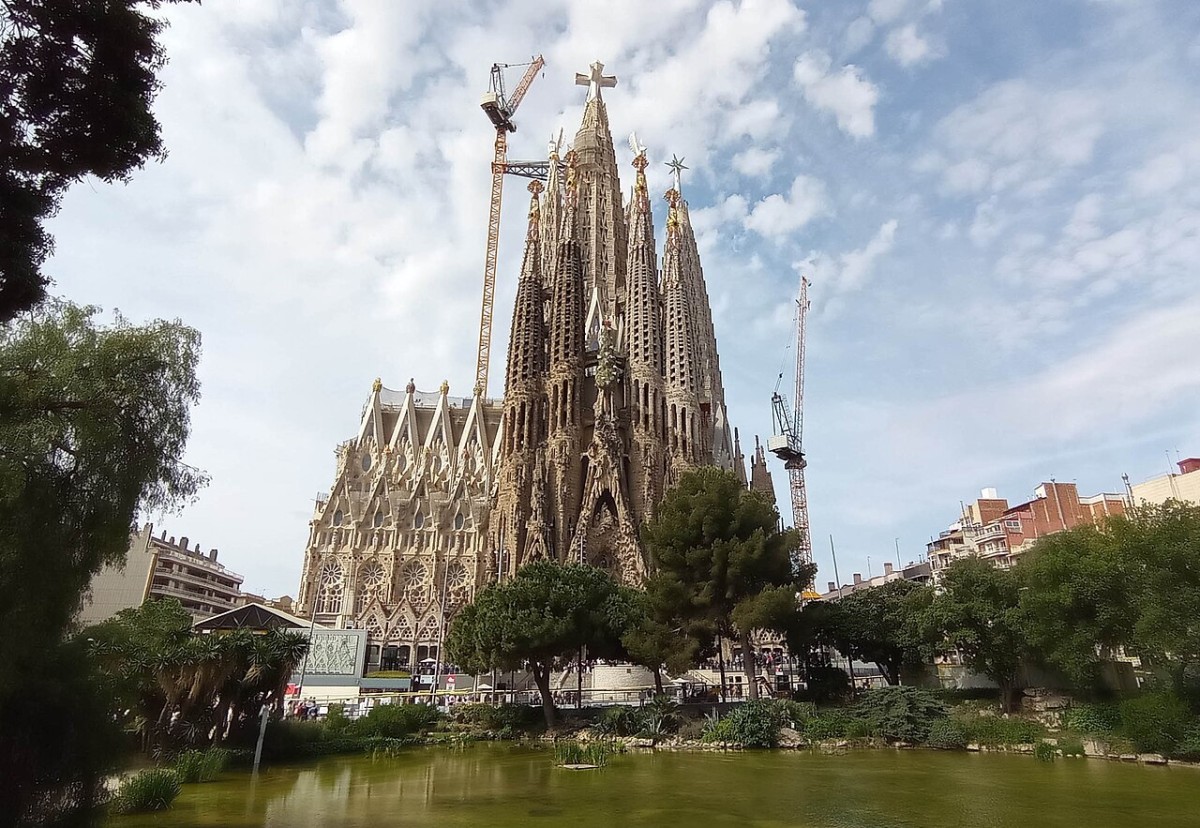
This is a selection of must-see places:
- Sagrada Família: Gaudí's masterpiece. Its interior, with the spectacular interplay of light from the stained-glass windows, is breathtaking. It's advisable to book in advance, especially if you want to climb the towers.
- Park Güell: Gaudí's famous park, with "trencadís" mosaics, undulating shapes and excellent views of Barcelona.
- Passeig de Gràcia: Walk along this elegant avenue to see Casa Batlló and La Pedrera (Casa Milà), two of the most famous works of Catalan modernism.
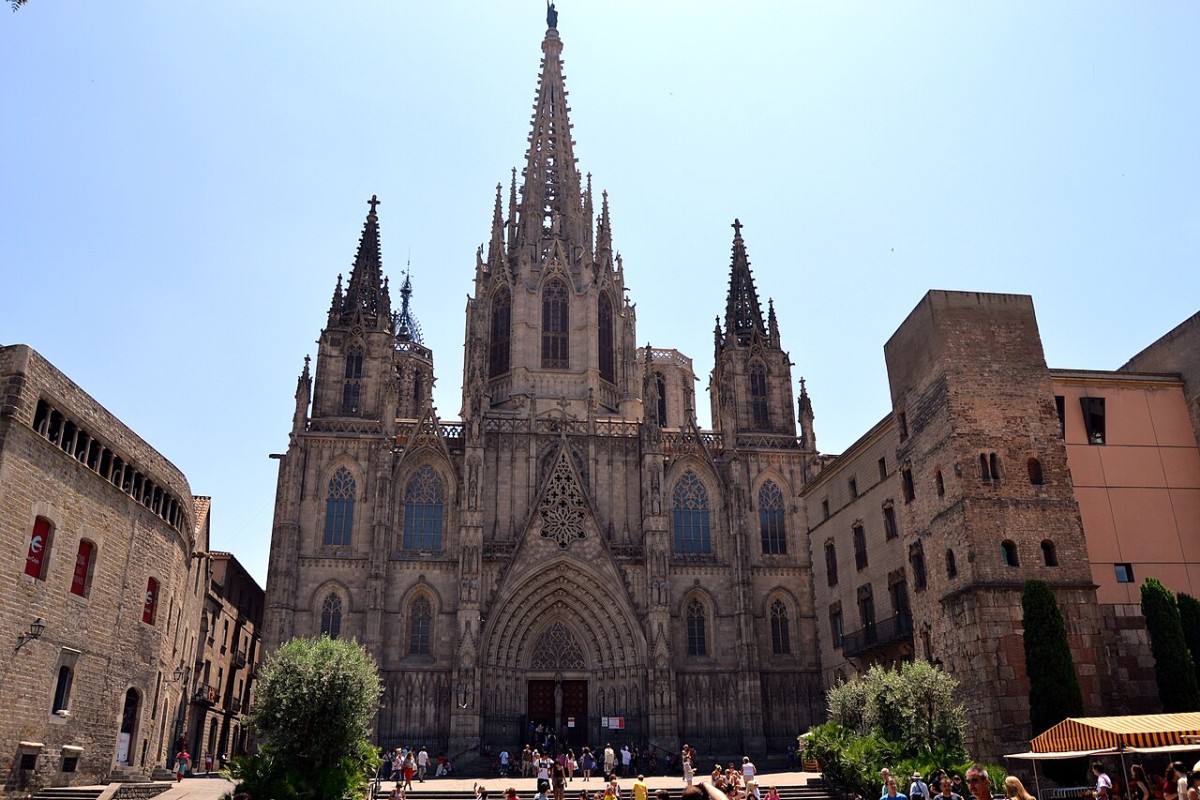
- Gothic Quarter: Get lost in its medieval alleyways and visit Barcelona Cathedral, Plaza del Rei and the remains of the ancient Roman wall.
- Las Ramblas and La Boqueria: Barcelona's most famous promenade leads to this historic market, perfect for discovering its colourful stalls of fresh produce.
- El Born: A neighbourhood with a more bohemian atmosphere where the Basilica of Santa Maria del Mar, the Picasso Museum, design shops and tapas bars stand out.
- Barceloneta: An old fishing neighbourhood. Stroll along its beach and enjoy the atmosphere of the seafront. For food, it's worth venturing away from the more touristy beachfront restaurants.
- Montjuïc: It combines nature, culture, and great panoramic views. You can take the cable car up, visit Montjuïc Castle and the National Art Museum of Catalonia (MNAC), or explore the Olympic area.