One Spanish building has been ranked among the world’s most beautiful for 2026. Rising above Barcelona’s Eixample district, its towers are the result of more than 140 years of work.
A major exterior milestone was reached in 2026, as Barcelona marks 100 years since the death of the architect whose imagination reshaped the city. Yet the basilica is still not entirely complete, with further work planned on its principal entrance.
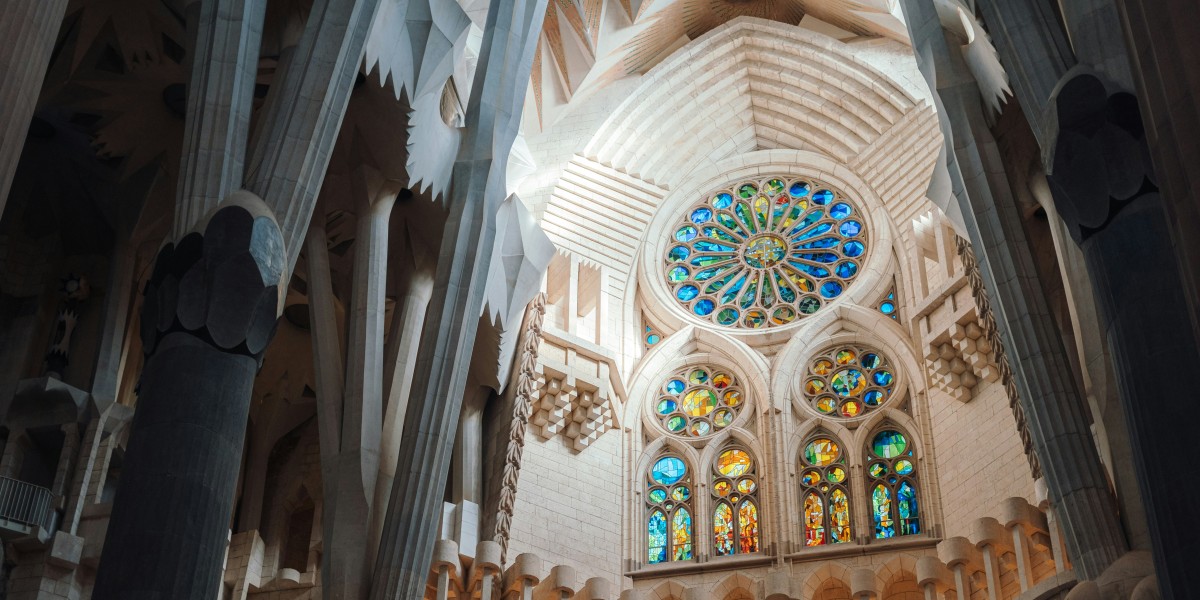
Its extraordinary scale, as now the tallest church in the world, is only half the story. Behind the sculpted stone façades sits an interior designed like a sunlit forest, where branching columns carry the weight of the building and stained glass shifts the space through changing bands of colour.
The Barcelona building selected for 2026
The building is the Basílica de la Sagrada Família, Antoni Gaudí’s monumental basilica in Barcelona. Its intricate façades, soaring towers, coloured stained glass and tree-like interior have secured its place among the world’s most admired works of architecture. It has been named one of the most beautiful buildings for 2026 by TimeOut.
Construction began in 1882. Gaudí took over the project a year later and spent the final decades of his life refining a design that drew on faith, geometry and the patterns of the natural world.

The basilica’s progress has never followed a simple timetable. Gaudí died in 1926, having seen only a small part of the project completed. The work has since continued through changing political eras, shifting construction methods and generations of architects, engineers and craftspeople.
In 2026, the exterior reached an important stage with finishing work added to the Tower of Jesus Christ. The Glory Façade, intended as the principal entrance, remains a longer-term undertaking. This is why the building is still described as nearing completion rather than fully finished.
Gaudí’s vision in stone, colour and light
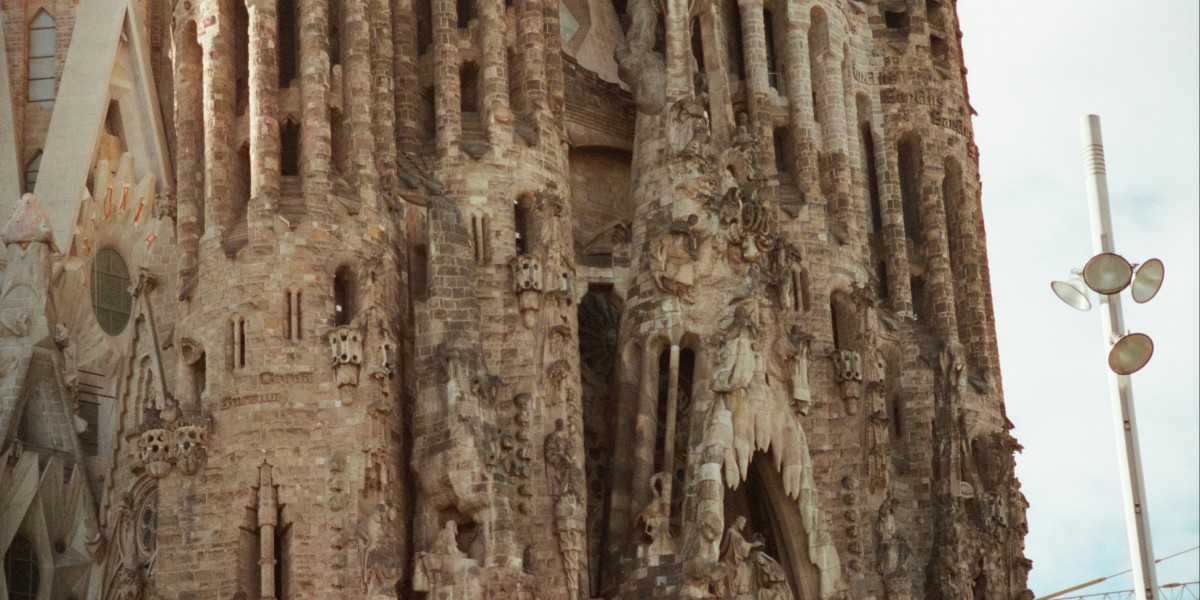
The Sagrada Família does not reveal itself all at once. Its exterior is packed with sculptural detail, and each of its façades has a distinct mood.

- The Nativity Façade is filled with plants, animals and religious figures. It has a softer, more organic feel and reflects Gaudí’s close study of the natural world.
- The Passion Façade is starker, with angular forms and a more restrained emotional weight. Its magic square contains a grid of numbers that total 33 across each row, column and diagonal, referring to Christ’s age at the crucifixion.
Inside, the basilica feels markedly calmer. Stone columns rise and split above the nave, creating the impression of a forest canopy. They are not merely decorative. Their branching form distributes the building’s weight, blending engineering with Gaudí’s interest in natural structures.
Light plays an equally important role. The stained-glass windows fill the interior with changing blocks of colour, moving through blues and greens on one side and warmer tones on the other. Bright sun, cloud cover and the low light later in the day all alter the atmosphere.
A building shaped by more than one generation
The Sagrada Família is sometimes reduced to an unfinished masterpiece, but its long construction story is one of its defining features. It has been developed across more than a century, with later teams working from surviving models, photographs, drawings and Gaudí’s complex geometric calculations.
That process has not been free of debate. Some architects and historians have questioned the degree to which contemporary work can reproduce an architect’s intentions after such a long gap. Others see completion as a continuation of Gaudí’s project, made possible through techniques that did not exist during his lifetime.
The result is architecture with an unusual sense of time. It carries nineteenth-century craft traditions, twentieth-century interruptions and present-day engineering in the same structure.
Visiting the Sagrada Família in Barcelona
Timed entry is generally required, and popular slots can disappear quickly during school holidays, long weekends and the main summer season. Current opening times, ticket types, security information and accessibility guidance are listed on the official Sagrada Família website.
The building remains a Catholic basilica, so respectful dress is expected. Tower access can be affected by weather, maintenance work and mobility requirements, making it worth checking the conditions attached to each ticket before booking.
Barcelona architecture beyond the basilica
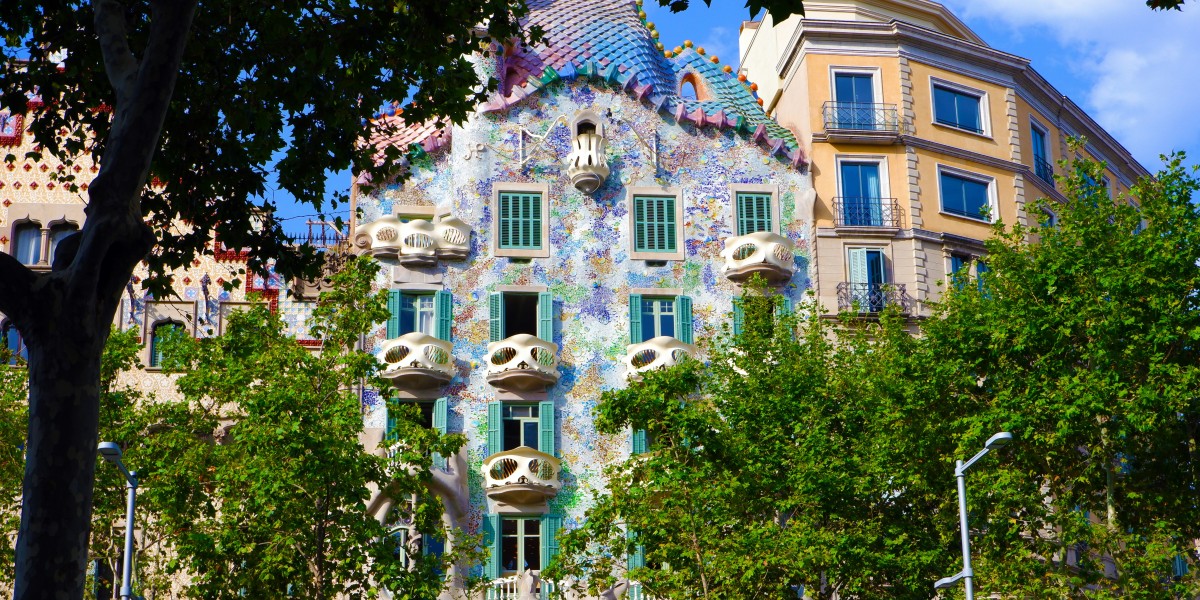
The Sagrada Família offers one route into Barcelona’s architectural identity, but it is not the whole story. Casa Batlló and Casa Milà, also called La Pedrera, reveal Gaudí’s more domestic side along Passeig de Gràcia, where he transformed apartment buildings into sculptural statements.
Other notable places to explore in Barcelona include Park Güell, which brings curved structures, mosaic work and landscaped views into a public setting. The medieval streets of the Gothic Quarter provide another contrast altogether, with Roman traces, later religious buildings and narrow lanes that bear little resemblance to the planned geometry of Eixample.
Check out holiday rentals in Barcelona, or find properties for sale and long-term rentals in the city.
Stay inspired for your adventures in Spain—get our weekly newsletter for the latest travel guides, cultural news, and lifestyle tips.