
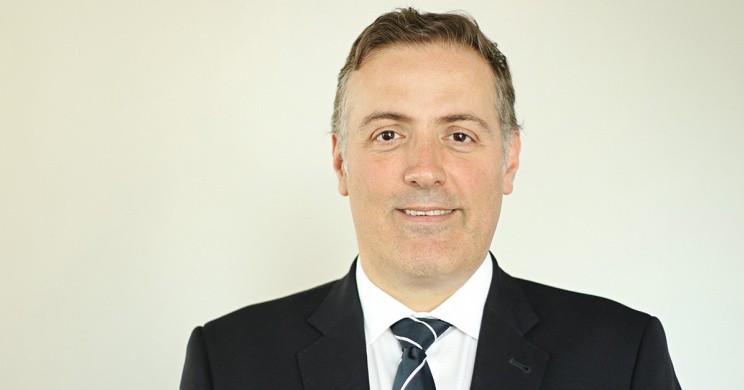
The CEO of the developer Aedas Homes has taken stock of his company's situation and that of the real estate sector. David Martínez was optimistic about the future, although he warned that rising interest rates may result in a fall of around 15% in new-build home sales. Despite the uncertainty generated by the new Spanish Housing Law, the executive assured that foreign investors trust our country very much. "Foreign capital believes a lot in Spain, sometimes more than we do ourselves," he said at an event organised with the financial press.
"Foreign investors believe they will find legal security (except with the latest moves by the central government). Another important factor is having physical security, i.e. being able to walk around at any time of the day in Spain. We may not value this highly but it does not happen in other first-world countries where they also invest. Furthermore, the imbalance between supply and demand makes Spain a great place to invest," he said.
This mismatch between supply and demand makes Martínez optimistic about the future of the new housing development sector. "Rising interest rates will have an impact, and we will see a slowdown in sales and even reductions of up to 15%. But this situation is not worrying because there is still more demand than supply. In Spain, 85,000 homes are being built every year, when we should be building close to 150,000 units a year," he said.
About the macro situation in the European Union, the CEO of Aedas Homes is in line with what other sector experts have pointed out at Sima: 2023 is set to be quiet in terms of real estate investment. "Everything points – geopolitics permitting – to the European Central Bank (ECB) slowing down its rate hike. This will allow economic activity to increase, and as a result, there will be a recovery in sales in 2024," he stated. "We are only one month into our next fiscal year, but we already have 75% of products sold and 30% of the next one," he said regarding the developer's current situation.
Martínez also reiterated one of the sector's endemic problems: the lack of land. "In Spain, there are three types of land: protected, urban and developable. We cannot build on protected land. Urban land is the best because it is ready for final use, but the third is where we encounter the greatest obstacles because we have to convert land for development into urban land before we can build on it. These procedures require administrative approvals that are usually slow and cumbersome. Moreover, if you make a mistake when processing this conversion, you may have to start again from scratch. I trust that the new regional and municipal governments will pay the necessary attention to speeding up this process," he said.
On a political level, the visible head of the company welcomed the fact that housing has entered the electoral debate. "We were missing that it was not on the politicians' agenda. In Spain, less housing is being built than the country needs. It is creating a backlog of demand. It is a state problem and a national problem", he said.
To tackle this problem, the director is adamant that money is needed from outside. "Developers' capital is different from the previous cycle. At present, most of this money comes from abroad, from pension plans, for example, which manage millions of euros and which appoint managers (investment funds) to move this money to find a return. These funds can invest in real estate, the financial sector, other products, etc. But they can also invest in Asia, in Europe and within Europe in France, Italy, Portugal, Spain, etc. Therefore, the success of our industry is based on attracting this capital because otherwise, we would not be able to invest. The reality is that each Spaniard owes €35,000, and we need investment from outside to build new homes. If the investment fund, due to political or technical issues, believes that it is difficult to invest, it will not do so or will ask for a higher return," he stated.