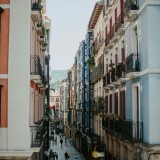
Barcelona is no longer just expensive; it’s edging into capital-city territory. Property prices in the city centre now average over €6,300 per m², which is why more people are now searching for an alternative to Barcelona for buying property that still keeps them within commuting distance of the city.
Why buyers are looking beyond Barcelona
Barcelona still delivers on architecture, food and an international social scene. The difficulty is access. Mortgage criteria are stricter for non-residents, transaction costs typically add 10–12% on top of the purchase price, and competition in central districts remains fierce.
At the same time, hybrid work has shifted priorities. A 30–45 minute Rodalies commute a few days a week feels reasonable for many professionals, particularly when prices fall so sharply beyond the city boundary.
Spanish commuter cities combine solid infrastructure with far more attainable entry points, which is why they’re firmly on buyers’ radar.
Property comparison: Barcelona vs commuter alternatives
In February 2026, an 80m² flat in Barcelona averaged €411,520. In nearby commuter cities, the same-sized property costs less than half.
City | Price per m² | Avg. price (80m² flat) | Connection to Barcelona |
|---|---|---|---|
Terrassa | €2,030 | €162,400 | 35–45 mins (R4) |
Sabadell | €2,150 | €172,000 | 35 mins (R4/R7) |
Mataró | €2,113 | €169,040 | 35–40 mins (R1) |
Santa Coloma de Gramenet | €2,289 | €183,120 | 15–20 mins (Metro L1) |
Best alternatives to Barcelona for buying property
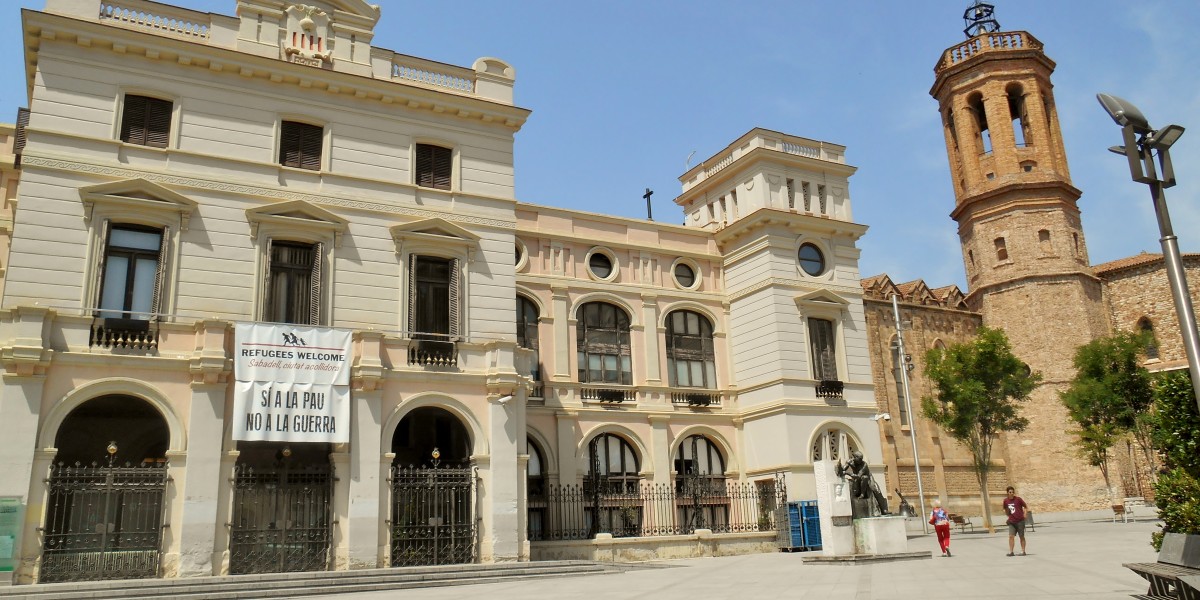
Sabadell
Next door to Terrassa but slightly more polished in parts, Sabadell has broad avenues, a strong commercial centre and a long industrial history that’s evolved into a service-based economy.
Best thing about living here: balance. It feels orderly, established and less transient than some coastal towns.
Best suited to: buyers who want commuter convenience without feeling like they’ve compromised on city infrastructure.
Terrassa
North-west of Barcelona, Terrassa feels like a proper standalone city rather than a suburb. It has modernist architecture, a defined centre, hospitals, shopping streets and the impressive Seu d’Ègara church complex. There’s also a noticeable international presence thanks to industrial business links and more affordable family housing.
Best thing about living here: space and realism. You can still find three-bedroom flats at prices that would barely secure a studio in Eixample.
Best suited to: families, professionals working hybrid contracts, buyers wanting a long-term base rather than a pied-à-terre.
Mataró
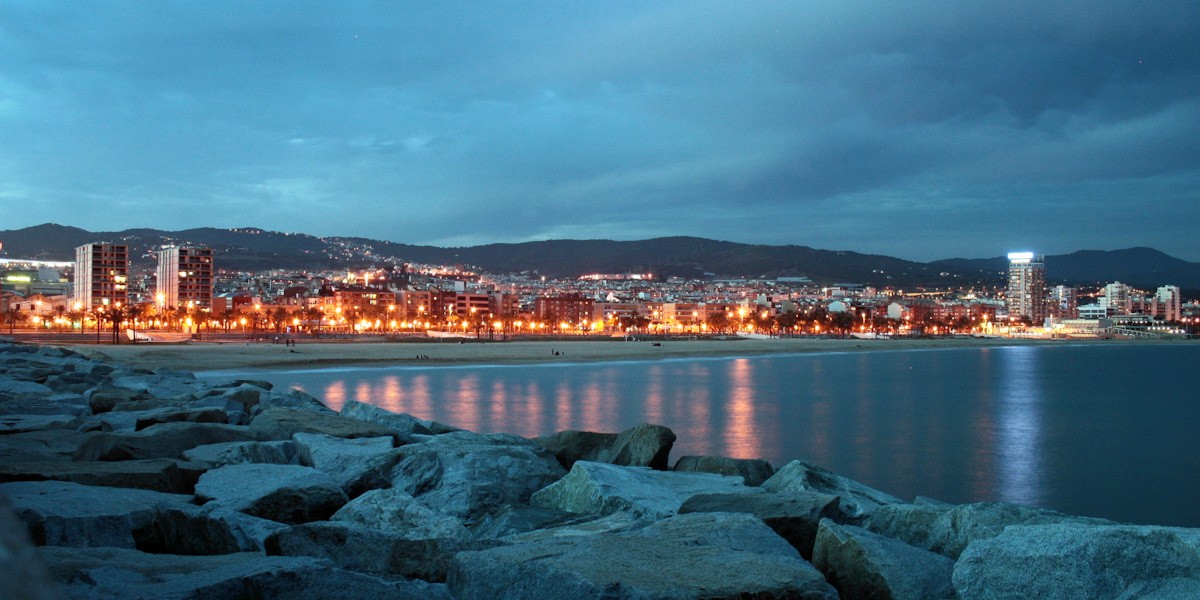
If Barcelona’s biggest emotional pull for you is the sea, Mataró deserves serious attention. It sits on the Maresme coast with beaches, a marina and a historic centre anchored by the Basilica of Santa Maria. You get Mediterranean light, promenade walks and noticeably more square metres for your budget.
There is one trade-off: summer tourism increases, and prices have crept up partly because coastal commuter towns are no longer secret.
Best thing about living here: coastal lifestyle without Barcelona’s pricing.
Best suited to: remote workers, couples and international buyers who value sea access over big-city nightlife.
Santa Coloma de Gramenet
This is the closest and most urban alternative. Santa Coloma de Gramenet borders Barcelona directly and connects via Metro Line 1 in under 20 minutes.
It’s denser, more working-class historically, and less polished architecturally. But prices remain far below Barcelona proper, and you’re effectively still inside the metropolitan grid.
Best thing about living here: location without Barcelona pricing.
Best suited to: buyers who want to stay plugged into Barcelona's daily life but can’t justify €5,000+ per m².
Thinking of moving to Madrid instead? See how the capital's commuter cities compare to those of Barcelona.
Stay in the know about living in Spain as a foreigner—get our weekly newsletter for the latest travel, legal, and lifestyle news.