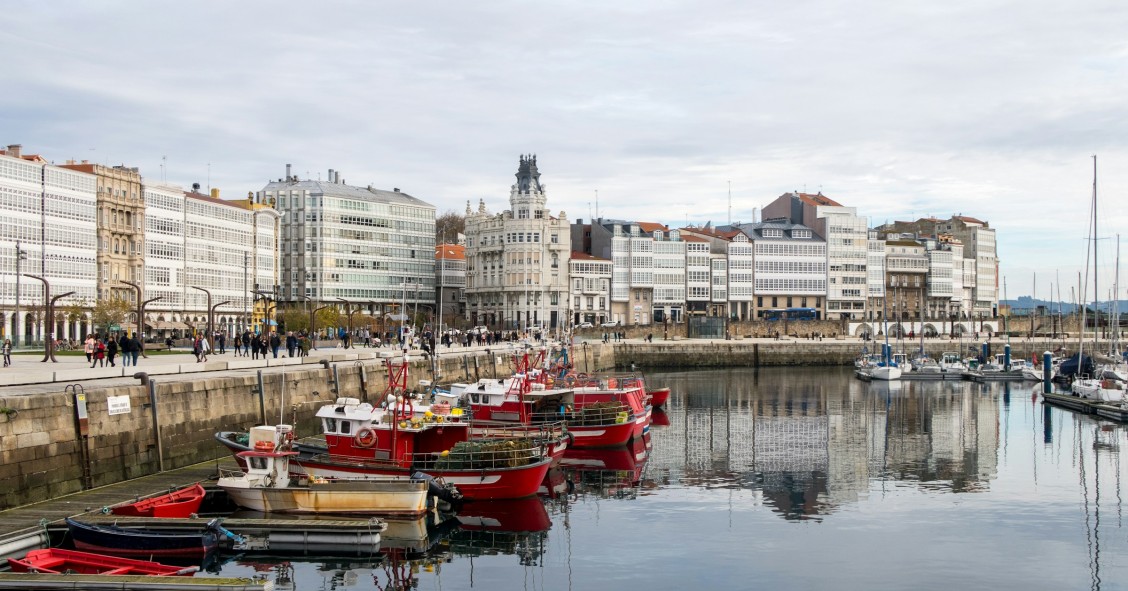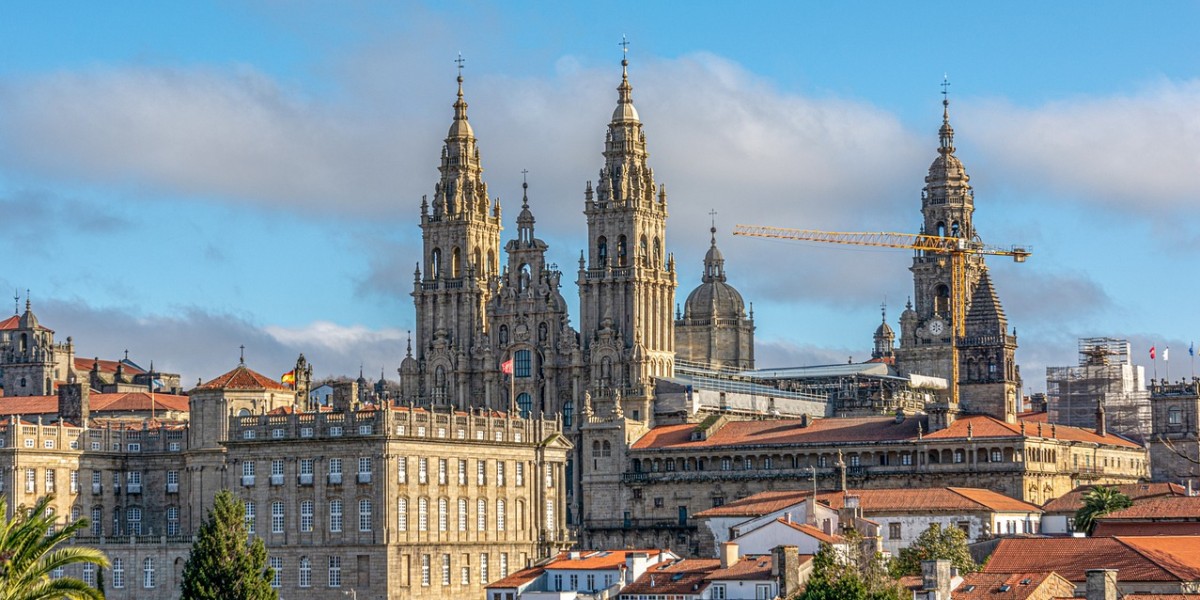

Santiago de Compostela is a compact university city in Galicia, famous as the endpoint of the Camino de Santiago and anchored by its UNESCO‑listed Old Town. Living in Santiago de Compostela means granite arcades, candlelit bars, and a pace that encourages long coffees rather than rushed commutes.
- Is Santiago de Compostela a nice place to live?
- Pros and cons of living in Santiago de Compostela
- Cost of living in Santiago de Compostela
- Santiago de Compostela: weather
- Best places to live in Santiago de Compostela
- Work, study and everyday life in Santiago
- Eating, drinking and culture
- Living in Santiago de Compostela as a foreigner
- Living in Santiago de Compostela or A Coruña?
Is Santiago de Compostela a nice place to live?
Santiago is friendly, safe and walkable, with daily life clustered around cafés, markets and leafy parks. The student energy gives the city a youthful, slightly bohemian streak. It’s greener and wetter than much of Spain, with a big student footprint thanks to the Universidade de Santiago de Compostela (USC) and a steady stream of pilgrims doing the famous Camino through most of the year.
It suits students and researchers, remote workers who like small‑city living, and families who want green space and coast‑and‑countryside day trips.
Pros and cons of living in Santiago de Compostela
Life here has clear upsides, with a couple of quirks you’ll want on your radar before you move.

Some of the pros of life in Santiago de Compostela include:
- Walkable scale where most errands, study and social spots sit within a 15–20 minute stroll.
- Culture and community through USC events, the pilgrim‑season buzz, and traditions like Festas do Apóstolo each July.
- Food culture that punches above its weight backed by Albariño and Ribeiro wines.
A few drawbacks to keep in mind:
- Weather brings frequent rain and damp, especially in older stone buildings.
- The private sector is modest, and many roles require Spanish or Galician (Galego).
Cost of living in Santiago de Compostela
Day‑to‑day spending is gentle by Spanish standards. According to Numbeo, a cheap main course is about €12, a meal for two in a mid‑range spot comes in around €50, a beer is €3, and a cappuccino or café coffee averages €1.60. The monthly public transport pass is generally affordable, with strong incentives for under‑21s who can travel free and discounts for over‑65s. Expect roughly €38 for a gym membership and about €150 per month for basic utilities in an 85 m² flat.
As for housing, as of October 2025, property prices in Santiago de Compostela averaged around €2,059 per m². Rent prices in Santiago de Compostela averaged €9.9 per m², so an 80 m² apartment would typically cost about €792 per month.

Santiago de Compostela: weather
Santiago runs on a mild Atlantic climate, with cool summers, wet winters and a lot of soft, grey sky. The upside is lush parkland like and countryside that stays green all year. Winters usually hover around 10–12°C by day. Summers tend to sit in the low to mid-20s, and heat spikes are less common than elsewhere in Spain.
Rainfall is among the highest of any Spanish city, so dehumidifiers are standard kit at home. When viewing flats, check for double glazing, recent insulation and decent ventilation.
Best places to live in Santiago de Compostela
The city is small enough that it’s easier to think in zones than reel off barrio after barrio. Many internationals split themselves between the historic centre and the newer blocks that fringe it, choosing based on nightlife tolerance, building age and lift access.

Centre
The Old Town (Casco Histórico) wraps around Praza do Obradoiro and the Catedral de Santiago, with stone townhouses, covered arcades and a lively bar scene. Just south sits the Ensanche, a grid of broader streets, mid‑century buildings and most day‑to‑day shops and services.
The medieval core is atmospheric and social, good if you thrive on bustle. The Ensanche is popular with internationals who want quieter nights, lifts in many buildings, and easy access to buses and the train station.
- Property for sale in Santiago de Compostela centre
- Long-term rentals in Santiago de Compostela centre
North and north‑east
Head out towards San Lázaro and Fontiñas, close to the exhibition centre, for newer flats with lifts and parking. Around Vista Alegre and Bonaval, you’ll find calmer streets with quick access to the Centro Galego de Arte Contemporánea (CGAC) and the Museo do Pobo Galego, plus green space for a breather.
This slice suits families and anyone who values a newer, larger flat and convenient road links towards the airport and the AP‑9.
South and south‑west
Conxo, Santa Marta and Campus Sur cluster around the university's southern faculties, hospitals and the Parque Eugenio Granell. The Multiusos Fontes do Sar sports complex is handy for five‑a‑side, gym time and concerts, and there’s a good mix of student‑friendly rentals and family blocks.
It’s a practical pick if you study or work at the hospital or university and want a calmer, residential feel with green pockets.
Work, study and everyday life in Santiago
Santiago’s economy leans on education, public administration, healthcare and culture, with tourism ticking along most of the year.
The Universidade de Santiago de Compostela (USC) and the Complexo Hospitalario Universitario de Santiago (CHUS) are major employers, while the Xunta de Galicia has a strong presence. There’s a modest startup and remote‑work crowd, often found on laptops in Ensanche cafés near Praza de Galicia.
Studying in Santiago de Compostela
Santiago is a great choice for studying abroad in Spain as an international student. USC’s language centre runs Spanish courses for foreigners, and Erasmus students give the city a lively international rhythm.
Eating, drinking and culture
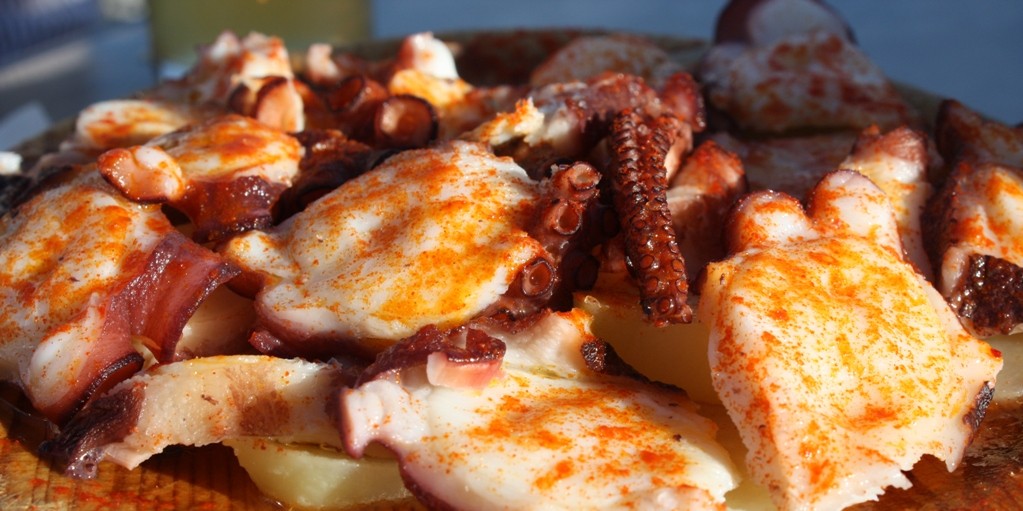
Food here is rooted in the market and the estuaries. Mercado de Abastos is the daily heartbeat, with fishmongers, cheesemongers and counters that’ll cook what you buy. Traditional bites include pulpo á feira, pimientos de Padrón when in season, queso de tetilla, and tarta de Santiago with a short coffee.
For a treat, Michelin-starred Casa Marcelo blends Galician produce with inventive cooking. O Gato Negro keeps things old‑school with simple plates and elbow‑to‑elbow chatter. Wine bars along Rúa do Franco pour Albariño and Ribeiro, and culture fans can dip into CGAC for contemporary art, the Museo do Pobo Galego for regional heritage, and summer concerts during Festas do Apóstolo.

Living in Santiago de Compostela as a foreigner
The expat mix tends to be students, researchers, Camino volunteers and a growing handful of remote workers. It’s easy to plug into language exchanges in the Ensanche and find walking groups that roam the green fringes of the city. Day‑to‑day admin is done in Spanish, and Galician is widely spoken and appreciated in neighbourhood life.
Schooling is largely local. A well‑regarded private option in town is Colegio Manuel Peleteiro. Families after British or IB curricula often look to Colegio Internacional Eirís in A Coruña, O Castro British School in Vigo, or SEK Atlántico in Pontevedra.
Living in Santiago de Compostela or A Coruña?
Santiago is smaller, historic and inland, with a huge student footprint and a calmer rhythm outside term time. A Coruña is coastal, with in‑city beaches, a busier business scene, and a wider spread of international schooling. Fast regional trains typically run in 30–40 minutes, so living in one and working or studying in the other is common.
On prices, Santiago generally undercuts Madrid and Barcelona and sits a touch below A Coruña for both sale and rent. Property prices in A Coruña were slightly higher than in Santiago in October 2025, at €2,900 per m², as was rent. Plus, according to Numbeo, the cost of living in Santiago de Compostela is 5.7% lower than in A Coruña.
- Holiday rentals in Santiago de Compostela
- Long-term rentals in Santiago de Compostela
- Property for sale in Santiago de Compostela
Stay in the know about living in Spain as a foreigner—get our weekly newsletter for the latest travel, legal, and lifestyle news.

Explore Playa de las Catedrales: a stunning natural wonder in Galicia
Spain is a country boasting stunning coastlines and beaches, some more renowned than others. One of the most beautiful and iconic is undoubtedly Playa de las Catedrales, located in Galicia, specifically in the Lugo region.