If you’re researching the best places to live on the Costa del Sol, you’re not alone. This stretch of southern Spain remains one of the most popular choices for expats, thanks to reliable sunshine, an international airport, solid healthcare, and well-established expat communities that make settling in far less daunting.
Average property and rent prices on the Costa del Sol
Location | Property price (€/m²) | Approx. price 80m² | Rent (€/m²) | Approx. rent 80m² per month |
|---|---|---|---|---|
Málaga city | €3,667 | €293,360 | €16.1 | €1,288 |
Marbella | €5,607 | €448,560 | €19.4 | €1,552 |
Nerja | €3,839 | €307,120 | €15.7 | €1,256 |
Fuengirola | €4,407 | €352,560 | €16.5 | €1,320 |
Mijas | €3,637 | €290,960 | €14.9 | €1,192 |
Estepona | €4,234 | €338,720 | €18.8 | €1,504 |
- Marbella is now firmly in luxury territory.
- Mijas and Málaga city are comparatively better value if you want urban life without Marbella prices.
- Nerja has seen serious growth, with rents up +25.2% year-on-year, so it’s no longer the bargain it once was.
Where to live on the Costa del Sol
If you’re weighing up what daily life here really looks like, it’s worth understanding the practicalities of living in the Costa del Sol before narrowing down the right town for you.
Málaga

If you want proper city life by the sea, Málaga is the most balanced option on the Costa del Sol. You’ve got the international airport, high-speed AVE trains to Madrid, and a serious food scene. Plus, you'll find cultural heavyweights like the Picasso Museum and Centre Pompidou Málaga.
It suits professionals, remote workers and families who don’t want to feel cut off in a resort town. The historic centre is lively and noisy, while areas like Teatinos and the eastern neighbourhoods are more residential.
Marbella

Marbella is still the heavyweight. Think golf courses, beach clubs, international schools and high-end developments in Nueva Andalucía and Sierra Blanca. Puerto Banús remains the flashiest postcode on the coast.
This is where you move if budget isn’t your main concern and you want polished surroundings and a strong international infrastructure. It’s also one of the safest bets for long-term resale value, though entry prices are steep.
Nerja

Smaller, more traditional, and framed by the cliffs of Burriana Beach and the Balcón de Europa, Nerja feels less developed than the western Costa del Sol.
Around 30% of residents are foreign, so you get community without losing the Spanish rhythm of life. It attracts retirees, remote workers and couples who prefer scenery and a slower pace. Prices have climbed sharply over the past year, so it’s no longer under the radar.
Fuengirola

Fuengirola has one of the strongest British and Irish communities on the coast, along with growing Nordic and German populations. There’s a long promenade, commuter train access to Málaga airport, and plenty of international services.
It’s practical. Not as glossy as Marbella, not as historic as Málaga, but very liveable. For many expats, it hits the sweet spot between cost and convenience.
Mijas
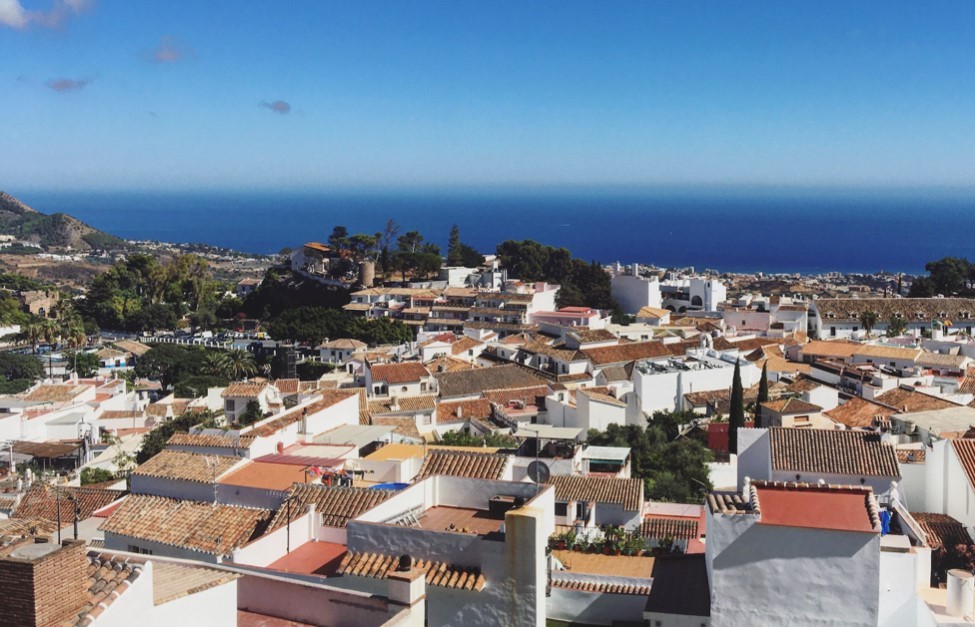
This municipality gives you two distinct lifestyles. Mijas Pueblo sits in the hills with whitewashed streets and sea views. Stock is limited, and properties move quickly.
Down on the coast, Mijas Costa (La Cala, Riviera del Sol, Calahonda) is far more international and residential. Prices per m² are currently among the lowest in this list, which makes it one of the more accessible entry points in 2026.
Estepona
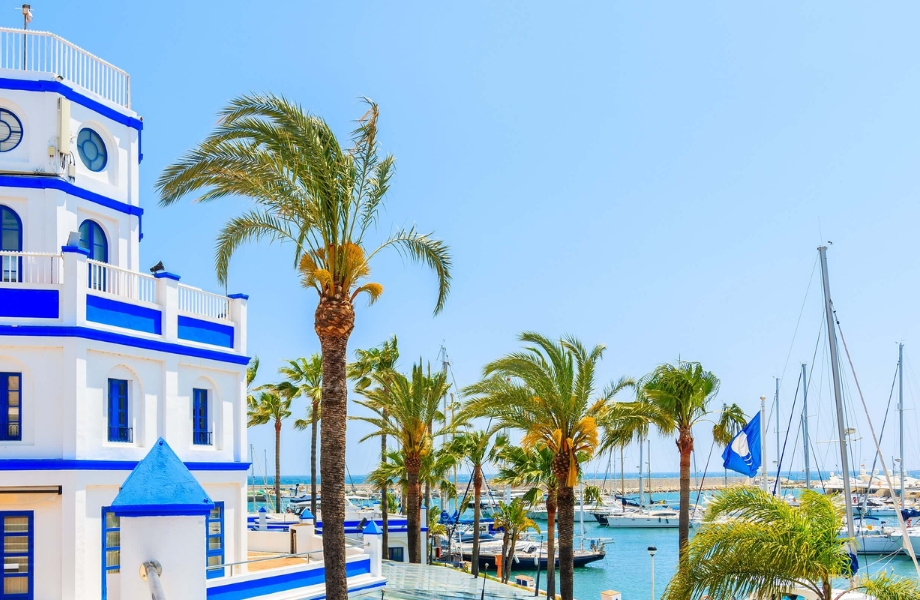
Estepona has changed a lot in the last decade. The old town is beautifully maintained, the marina is active without feeling rowdy, and there’s ongoing development along the New Golden Mile.
It’s quieter than Marbella but more polished than it used to be. Popular with families, Belgian and Dutch buyers, and retirees who want space without isolation. Rental prices are now the second highest in this group, reflecting demand.
Cost of living on the Costa del Sol
The cost of living on the Costa del Sol depends heavily on where you settle.
In Málaga, Numbeo estimates a single person needs roughly €700 per month, excluding rent. Add rent for an 80m² flat and you’re realistically looking at around €1,900–€2,100 per month for a comfortable lifestyle.
Typical everyday costs:
- Coffee: €1.80–€3.00
- Beer in a local bar: €3–€4.50
- Mid-range three-course dinner: €25–€30 per person
- Utilities for an 80m² flat: around €120–€180 per month
Marbella and Estepona trend higher for dining and services. Mijas and Fuengirola are usually slightly more manageable. Grocery prices are broadly similar across the coast.
Buying property on the Costa del Sol in 2026
The market has cooled slightly compared to the frenzy of 2022–2024, but demand from northern Europe and remote workers remains strong. Anything well-priced near the sea or close to international schools still moves quickly.
Realistically:
- Under €300,000: more feasible in Mijas Costa, parts of Málaga, and inland from Nerja.
- €300,000–€450,000: solid apartments in most areas except prime Marbella.
- €500,000+: opens up better locations, sea views, and small villas outside Marbella’s top zones.
Stay in the know about living in Spain as a foreigner—get our weekly newsletter for the latest travel, legal, and lifestyle news.
For a taste of the high life, sign up for the monthly luxury market round-up.