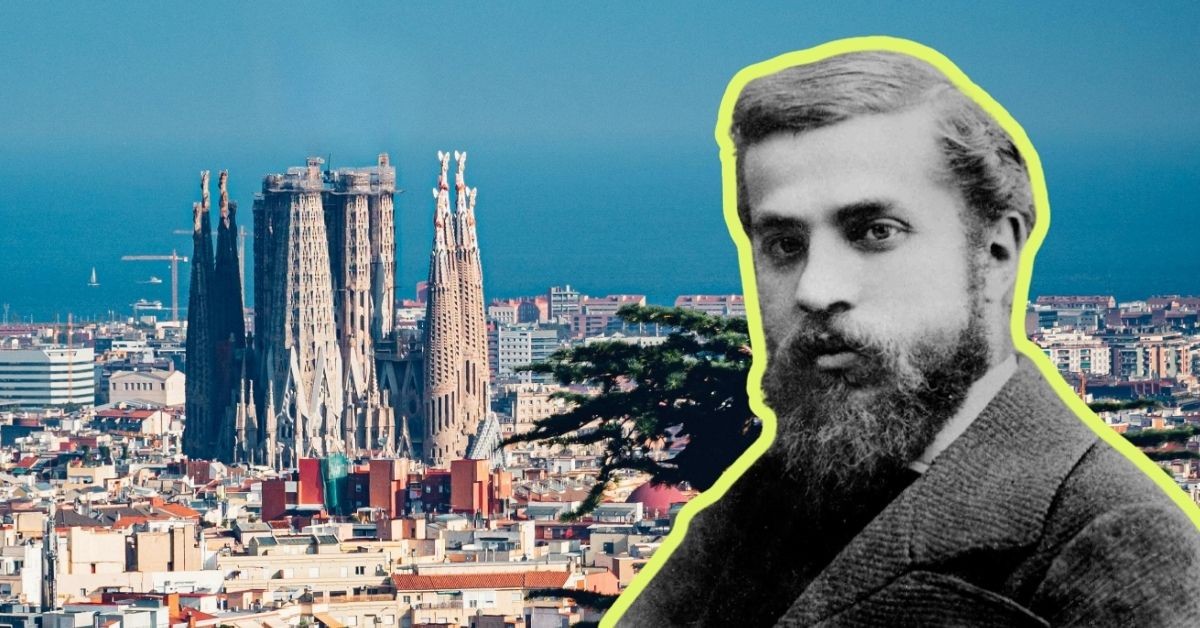

Few architects capture the spirit of Spanish architecture as vividly and powerfully as Antoni Gaudí. This internationally acclaimed Catalan artist was a leading figure of Modernism, leaving an architectural legacy that testifies to his genius. Many of his works have even been named UNESCO World Heritage Sites.
In this article, we take you on a tour of Antoni Gaudí's most representative works in chronological order so you can discover the career of one of history’s most influential architects.
Plaça Reial lampposts, Barcelona (1879)
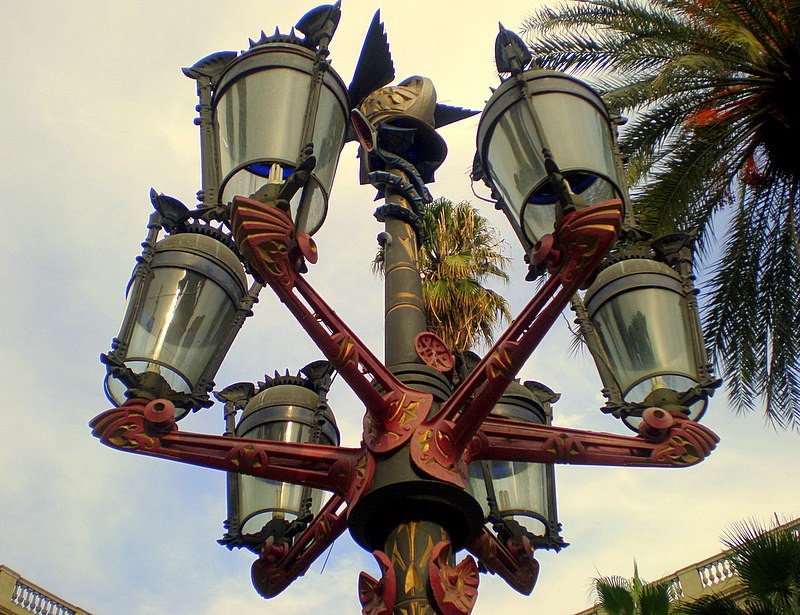
Shortly after graduating, Gaudí was commissioned by the Barcelona City Council to design the public lighting for two of the city’s squares: Plaça Reial and Pla del Palau.
For Plaça Reial, he created six-armed lampposts that you might have overlooked, yet they remain a striking feature of the streetscape today.
These wrought-iron lamps are notable for their vibrant colours, beginning at the base, which is adorned with a large medallion featuring floral motifs. The cast-iron columns display intricate vegetal ornamentation, culminating in six arms that support the glass lanterns. The finial references Barcelona’s commercial activity, featuring symbols associated with Mercury, the Roman god of commerce.
Casa Vicens, Barcelona (1885)
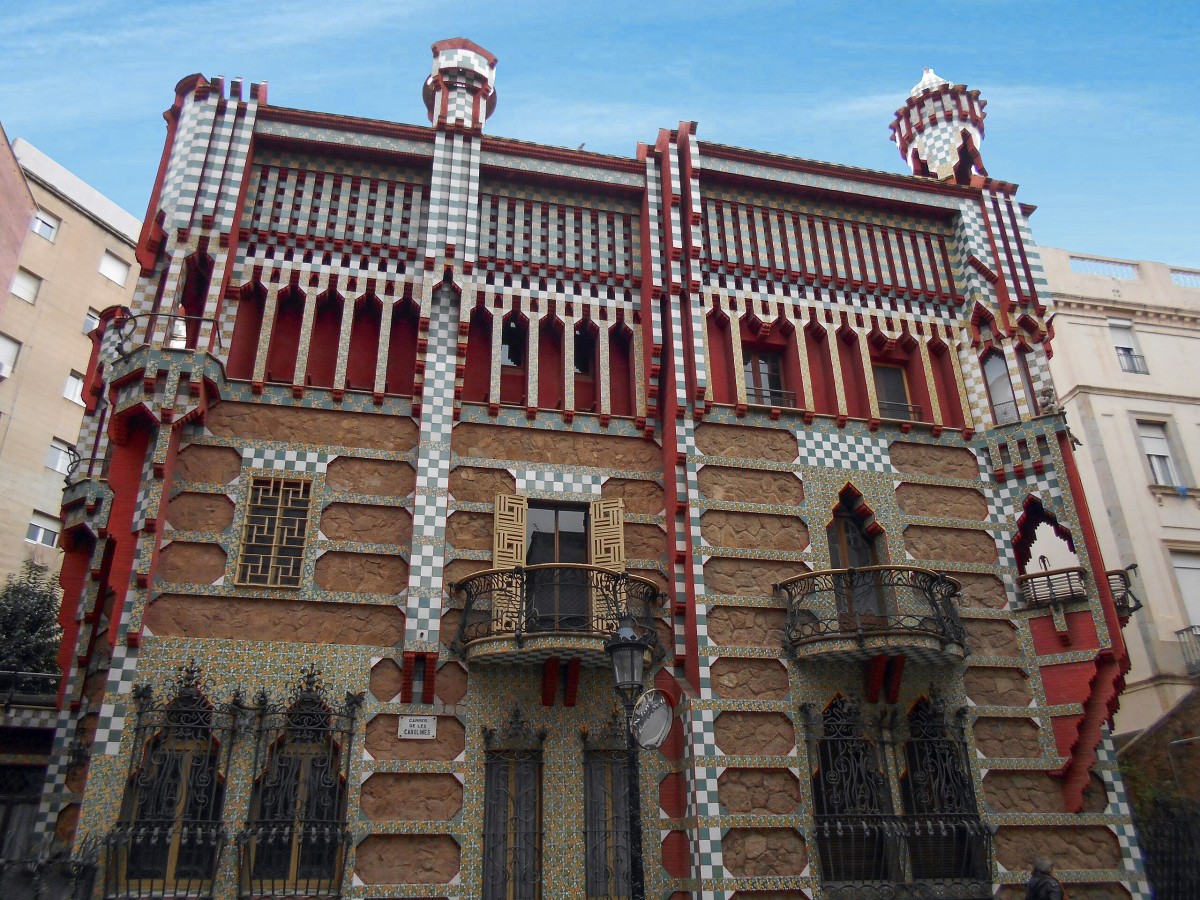
Declared a UNESCO World Heritage Site, this house was Gaudí’s first major project and shows the influence of Oriental architecture, which was fashionable in Barcelona at the time.
Commissioned shortly after he graduated, at just 26, it became the second residence of Manuel Vicens Montaner. Located in the Gràcia district, then popular with bourgeois families, the interior features early signs of Modernism: decorative arts, references to Arab and Oriental styles and ornamentation with a strong focus on plant motifs.
Villa Quijano ('El Capricho'), Cantabria (1885)

This building belonged to Máximo Díaz de Quijano, brother-in-law of the Marquis of Comillas, and is located in the Cantabrian town of Comillas.
Its nickname, "El Capricho" (the folly), draws a parallel with the free-form musical piece of the same name, reflecting the originality and imagination evident throughout the design, which combines a variety of materials, including brick, tile and wrought iron.
Designed by a young Gaudí, just 31 years old, the house already reveals his distinctive style. The structure is traditionally U-shaped, featuring a tower reminiscent of a Persian minaret. Once again, the Arab influence is clear, making this building a notable part of the Barcelona architect’s celebrated legacy.
Güell Estate pavilions, Barcelona (1887)
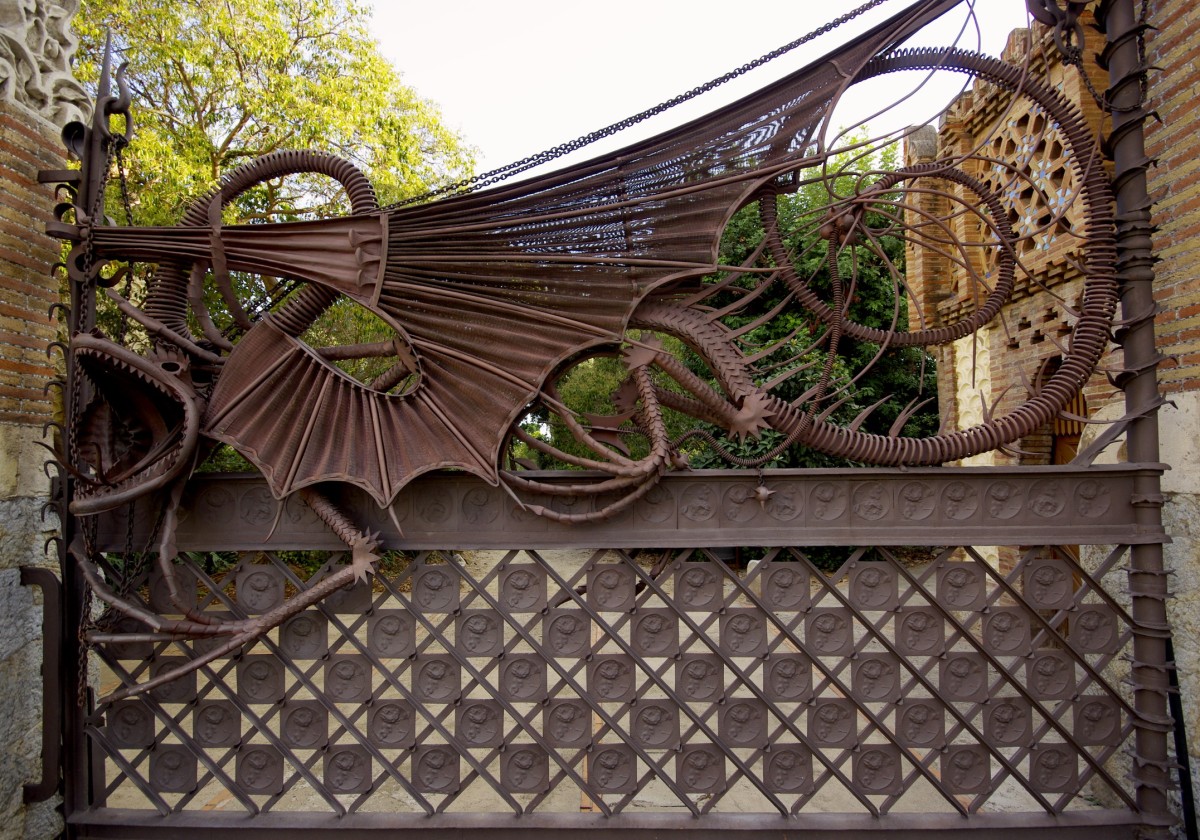
This is a series of buildings located in Barcelona’s Pedralbes neighbourhood, created during Gaudí’s orientalist period.
It was one of the first commissions from his major patron, Eusebi Güell. Gaudí was tasked with renovating a small palace and designing a perimeter wall with gatehouses. Today, the main entrance pavilions, the gatehouse, and the east and south gates marking the property boundaries are still preserved.
In 1969, the Güell pavilions were declared a National Historical-Artistic Monument.
Palau Güell, Barcelona (1890)
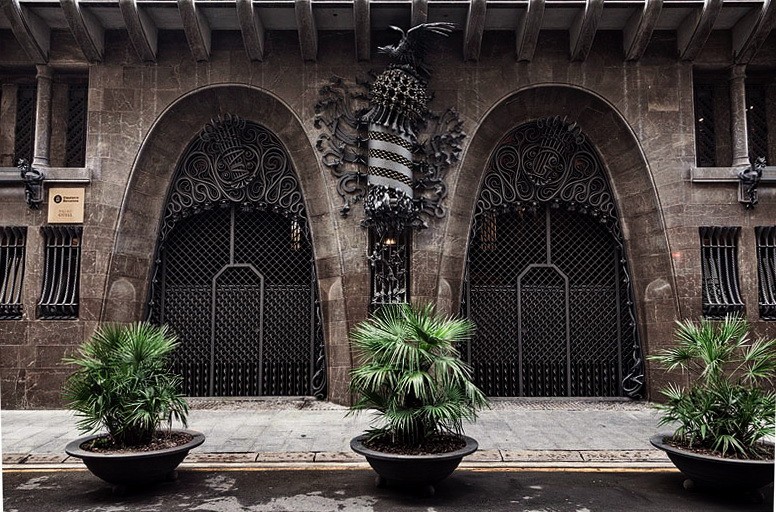
Palau Güell, located in Barcelona, was commissioned by Eusebi Güell and is a luxurious urban palace set in the working-class neighbourhood of El Raval. The project aligned with Ildefons Cerdà’s urban plan, which envisioned a reorganisation of the area with parks and gardens integrated into the city blocks.
For this building, Gaudí reserved his most decorative touches for the interior, while the façade remains relatively sober yet clearly reflects his developing style and aesthetic. The palace combines stone, iron and ceramics, with volumetric play and features reminiscent of Florentine Renaissance architecture.
The result is an iconic building, recognised as a UNESCO World Heritage Site.
Casa Calvet, Barcelona (1898)
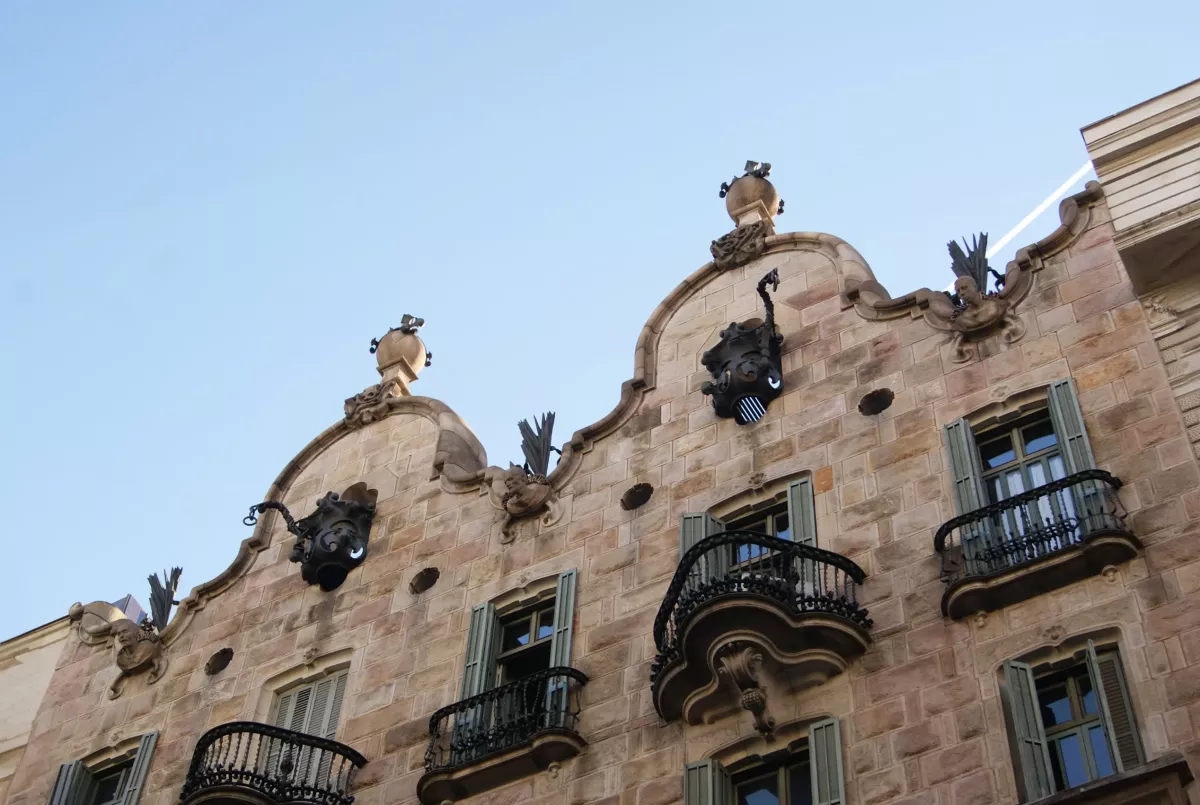
This commission came from the heirs of the cotton industrialist Pere Màrtir Calvet. The result is a restrained work in which Gaudí departs from his earlier style and Oriental influences, embracing a Baroque approach.
The building is notable for the volumes of its rear façade and the organic forms of the furniture Gaudí designed for its luxurious interior. The lobby and staircase are also remarkable features.
The Barcelona City Council awarded it Best Building of the Year 1900, and it is now classified as a Cultural Heritage Site.
Casa Batlló, Barcelona (1906)

Casa Batlló is undoubtedly one of Gaudí’s most remarkable, well-known and visited works, recognised as a UNESCO World Heritage Site. It was created within the context of the Cerdà Plan, Barcelona’s ambitious urban development project that established Passeig de Gràcia as the city’s principal avenue. As a result, prestigious residences were built along this thoroughfare, including this luxurious building, which draws attention for its organic beauty and originality.
The project was commissioned by Josep Batlló, who granted Gaudí complete creative freedom – an opportunity the architect fully embraced while preserving the existing structure, originally designed by his former professor Emili Sala Cortés. Major changes focused on the façade, while the interior saw an enlarged light well and a rearrangement of the partition walls.
Casa Batlló remains a UNESCO-listed icon and an essential stop for anyone wishing to experience Gaudí’s architecture in Barcelona.
Casa Milà ('La Pedrera'), Barcelona (1912)
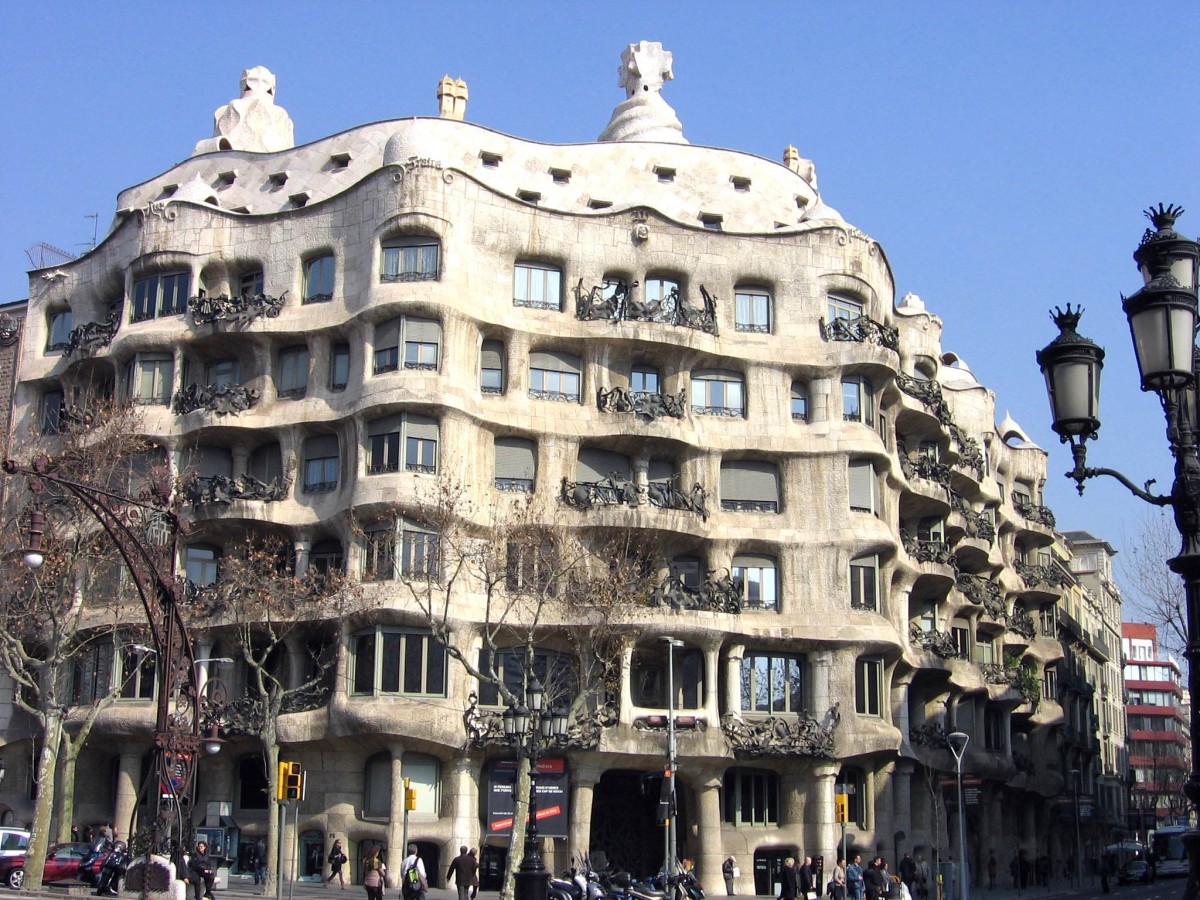
This house was Gaudí’s final civil project and is also a UNESCO World Heritage Site. Its nickname, "La Pedrera" (The Stone Quarry), derives from its exterior, where stone shapes the façade and balconies into flowing, organic forms – one of its most distinctive features.
Although it is among Gaudí’s most iconic buildings, he was unable to complete it as he had envisioned due to disagreements with the Milà family and the Barcelona City Council. Had his original plan been realised, the building would have been topped by a large sculpture of the Virgin Mary.
Park Güell, Barcelona (1914)

This was a new commission from Eusebi Güell, following earlier projects such as El Capricho, the Güell Estate and Güell Palace. Although it is now a public park, the original plan was for the space to serve as a residential development for wealthy families.
Declared a UNESCO World Heritage Site, the park quickly became an icon of Barcelona and a prime example of Gaudí’s distinctive style, where organic forms blend with nature to create an enchanting environment full of flowing, sinuous shapes.
After Eusebi Güell died in 1918, his heirs offered the park for sale to the Barcelona City Council, which purchased it in 1922. It opened as a municipal park shortly afterwards, in 1926.
Colònia Güell crypt, Barcelona (1914)

This striking church is part of Eusebi Güell’s project to create a textile industrial complex in Santa Coloma de Cervelló. The area was planned to include housing for workers, situated close to the factory but away from the town centre, where the labour movement was beginning to gain momentum.
The goal was to provide the colony with a full range of amenities, including cultural and sports facilities and a church, which was gradually developed as the population grew.
The Crypt of the Colònia Güell is a unique, understated structure designed to harmonise with the workers’ housing and the surrounding forest. It is also recognised as a UNESCO World Heritage Site.
Sagrada Familia, Barcelona (1915)
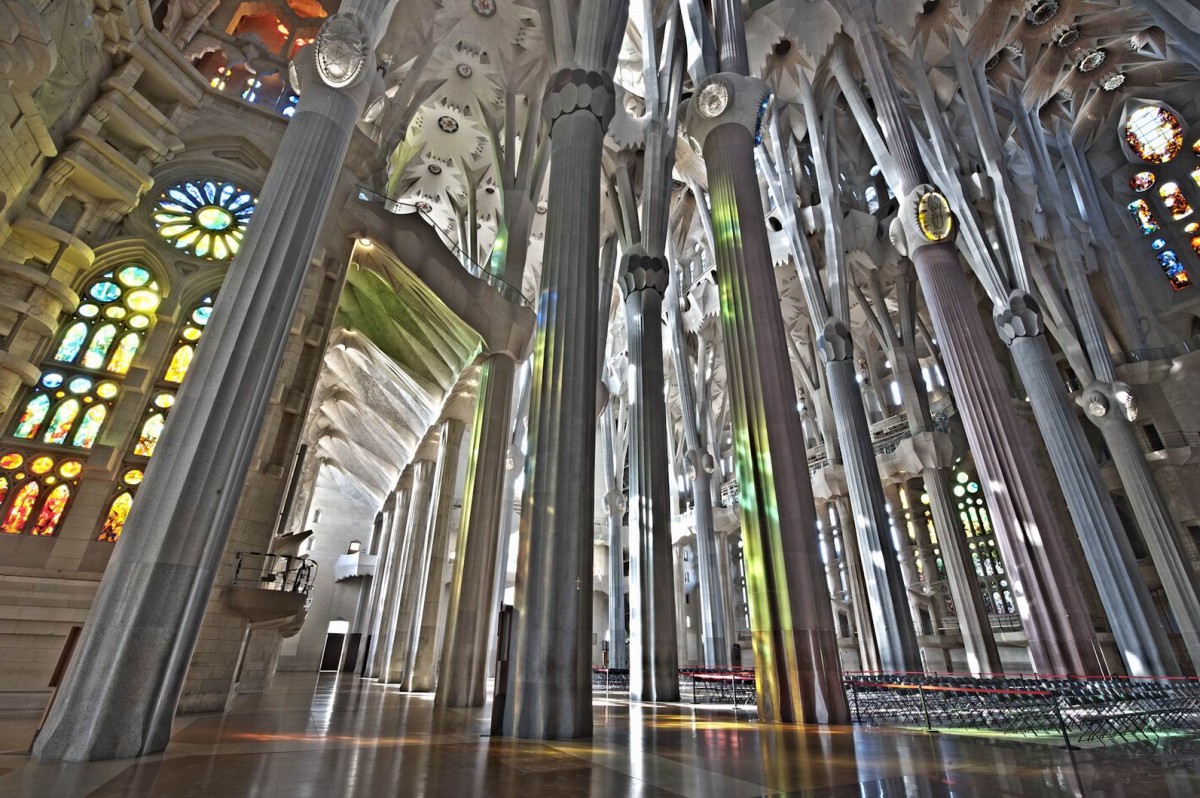
This is perhaps Gaudí’s most iconic work, still unfinished – although it was opened to the public in 1915 – and is now one of the most recognisable symbols of Barcelona worldwide. Like many of the Catalan architect’s creations, it is a UNESCO World Heritage Site.
Gaudí aimed to build the perfect temple, which would also be the tallest structure in Barcelona and the tallest church in the world. His untimely, accidental death cut these plans short, though successive architects have continued the project, often amid controversy. Completion is now expected in 2026, marking the anniversary of Gaudí’s death.
What are Antoni Gaudí's most important works?
The list of Antoni Gaudí’s major works is extensive, but fortunately, much of his legacy can be explored without travelling far, as many of his projects are concentrated in Barcelona and its surroundings.
There are, however, some remarkable works by Gaudí located elsewhere in Spain. Often due to their location, these sites are less visited and less well known.
Which works by Antoni Gaudí are World Heritage Sites?
No fewer than seven of Antoni Gaudí’s works have been listed as UNESCO World Heritage Sites. This group of buildings, located in Barcelona and its surrounding area, “bear witness to the architect’s creative genius and the evolution of construction techniques of his time,” according to the Spanish National Committee of ICOMOS.
Among them, Gaudí’s “very particular personal expression” stands out, evident not only in the architectural elements but also in the sculpture, decorative arts and the urban landscape.
The seven works are Park Güell, Palau Güell, Casa Milà, Casa Vicens, Gaudí’s contributions to the Nativity façade and crypt of the Sagrada Família, Casa Batlló and the Crypt of the Colònia Güell.
Additionally, most of Gaudí’s other works are classified as Cultural Interest Assets in Spain, granting them special heritage protection.