Spain’s landscapes aren’t just about beaches, sierras and medieval towns. Beneath the surface, you’ve got limestone chambers carved over millions of years, volcanic tubes left behind by ancient eruptions, and even caves shaped by the sea.
These are seven caves you can actually visit, spread across mainland Spain and the islands, each offering something slightly different and far less internationally saturated than the obvious headline acts.
Gruta de las Maravillas
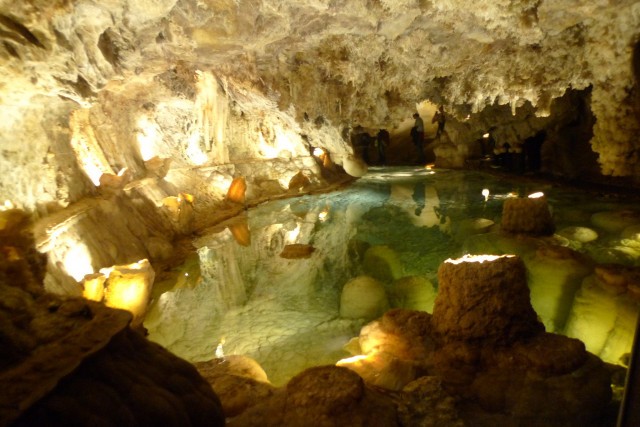
Right under the town of Aracena, in the Sierra de Aracena in northern Huelva province, sits Spain’s first tourist cave, opened to the public in 1914. Discovered in 1886, it stretches for around 1.2 kilometres across two levels, with chambers linked by narrow passageways and underground lakes.
The formations are classic karst limestone: stalactites, stalagmites and large reflective pools that give parts of the cave an almost mirrored effect. It’s an easy, guided walk and one of the more accessible cave experiences in southern Spain.
Quirky fact: the cave lies directly beneath Aracena Castle, so you’re effectively walking under a medieval fortress while underground.
Grutas del Águila
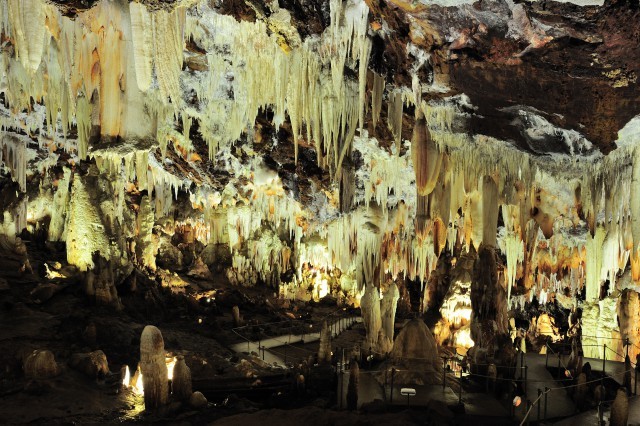
Discovered in 1963 by local residents, the Grutas del Águila lie on the southern slopes of the Sierra de Gredos in the Tiétar Valley. The cave system is estimated to be around 12 million years old and features a large central chamber with impressive vertical formations.
Walkways and lighting make it straightforward to explore, and it’s often visited as part of a wider trip into the Gredos mountains. Its location makes it a realistic day trip from Madrid if you’re based in the capital.
Quirky fact: the cave was officially declared a Natural Monument by the regional government of Castilla y León.
Cueva del Soplao
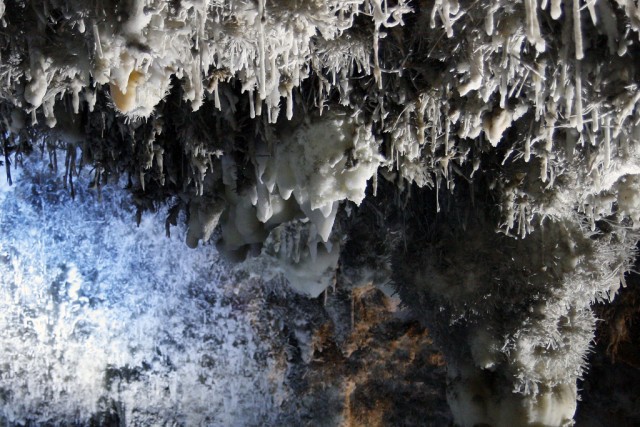
Discovered in 1908 during mining operations, El Soplao in Cantabria opened for public visits in 2005 and has more than 20 kilometres of surveyed galleries. It’s internationally recognised for its exceptional concentration of helictites, those eccentric formations that grow in twisting, gravity-defying directions.
The standard visit takes you through vast chambers shaped by both natural processes and historic mining activity, while specialised tours explore less altered sections. It’s one of northern Spain’s most geologically significant cave systems.
Quirky fact: the name “Soplao” comes from a mining term referring to a blast of air encountered when breaking into a new underground cavity.
- Find your holiday rental in Cantabria
- Find property for sale in Cantabria
Cueva del Tesoro
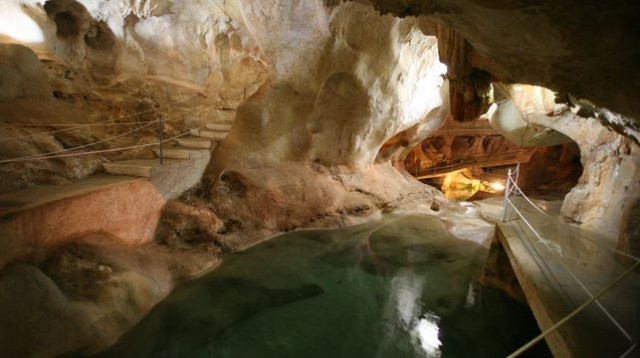
Just east of Málaga city, in Rincón de la Victoria, this cave is one of the very few marine-origin caves in Europe that can be visited. Its chambers were formed by the action of the sea rather than by underground rivers dissolving limestone.
The interior is relatively compact, with wide galleries and interpretive displays explaining its geology and long human history. It has been inhabited at various points since prehistoric times.
Quirky fact: the cave’s name, “Treasure Cave”, comes from a long-standing legend that an Almoravid treasure was hidden inside during the 12th century.
Cueva del Viento
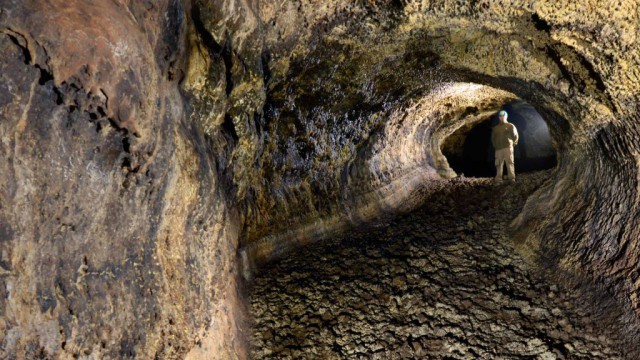
Formed by lava flows from the Pico Viejo volcano, near Mount Teide, Cueva del Viento is one of the longest volcanic tubes in Europe. Its network of passages was created around 27,000 years ago and extends for many kilometres beneath Tenerife’s north.
Visits are strictly guided and conservation-focused, with small groups entering different sections depending on the level chosen. Inside, you’ll see lava shelves, side galleries and geological features typical of basaltic volcanic systems rather than limestone caves.
Quirky fact: archaeological remains found inside show that the cave was used by the island’s pre-Hispanic Guanche population.
Coves de Sant Josep

In Vall d’Uixó, north of Valencia, you’ll find Europe’s longest navigable underground river. The Coves de Sant Josep combine a short boat journey along the subterranean river with a walking section through dry galleries.
The caves have been inhabited since prehistoric times, and archaeological remains from the Upper Palaeolithic have been discovered inside. The steady internal temperature throughout the year makes it a comfortable visit in both summer and winter.
Quirky fact: the exact source of the underground river is still unknown.
- Find your holiday rental in Vall d’Uixó
- Find property for sale in Vall d’Uixó