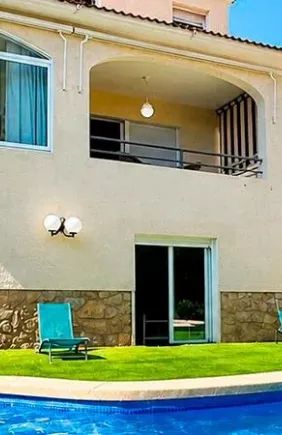
Spain is home to some of the best natural wonders in Spain, offering both visitors and residents a surprisingly varied mix of landscapes. This selection follows a list published by Viajes National Geographic, the Spanish travel edition of National Geographic.
Ordesa y Monte Perdido National Park
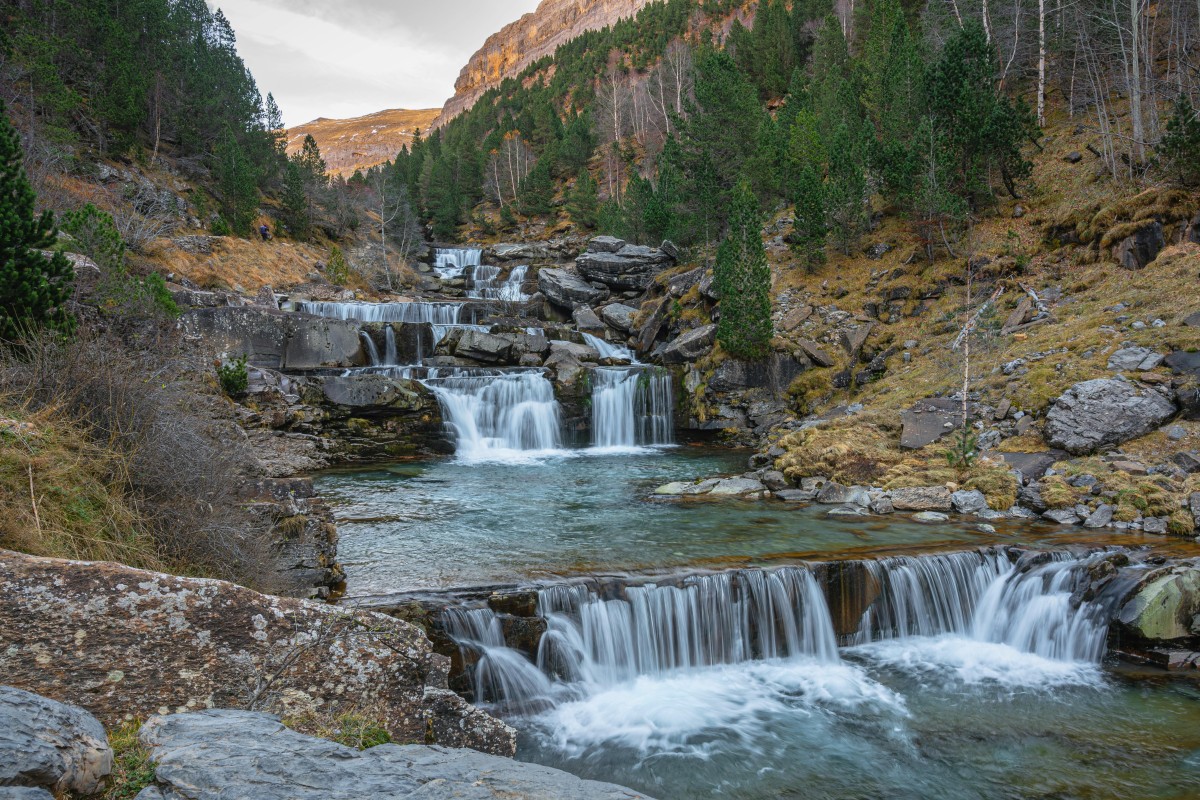
Ordesa y Monte Perdido National Park sits high in the central Pyrenees in Huesca, a huge limestone amphitheatre of cliffs, waterfalls and forests. Created in 1918, it’s one of Spain’s oldest national parks and a UNESCO World Heritage Site, centred on the 3,348‑metre Monte Perdido massif.
What’s special – and what it’s like to live nearby
This is classic high‑mountain Spain: glacial valleys, beech and fir woods. There's also serious wildlife, including bearded vultures circling above the cliffs. In summer, you’re hiking to waterfalls and high meadows. And in winter, you’re close to ski resorts and cosy stone villages.
Living near Ordesa usually means a small Pyrenean town with a very local feel. Expect traditional stone houses, village apartments and old farm properties rather than big developments. It suits people who want dramatic nature on the doorstep rather than nightlife
Find holiday rentals in the Ordesa y Monte Perdido National Park.
Property market near Ordesa y Monte Perdido
According to idealista’s November 2025 price report, average property prices in Huesca were around €1,691 per m². For a spectacular mountain setting, it’s relatively affordable compared to better‑known Alpine regions, especially if you’re happy with a village base and a car.
Timanfaya National Park
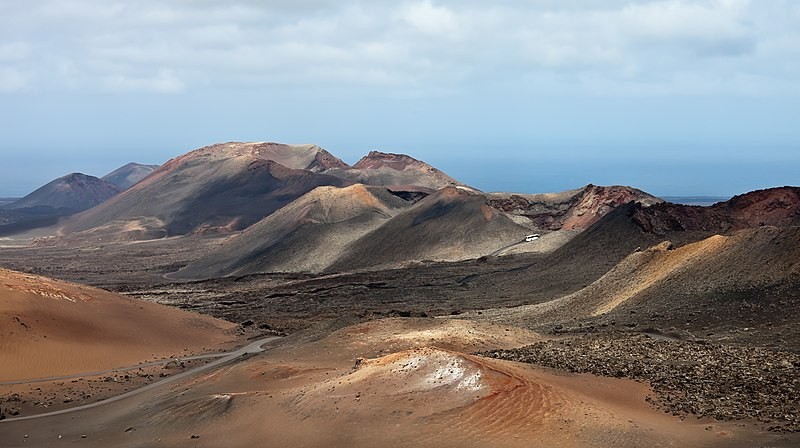
Timanfaya National Park on Lanzarote is basically the set of a sci‑fi film made real: black lava fields, rust‑red cones and 25 volcanoes frozen in time. The huge eruptions of the 18th century reshaped the island into the “Mountains of Fire” you see today.
What’s special – and what it’s like to live nearby
Here you get raw geology up close. On the Ruta de los Volcanes, you roll past craters and lava seas, and at the visitor centre, they still demonstrate how hot the ground is just below the surface. Add nearby attractions like Cueva de los Verdes and Jameos del Agua, and you’ve got one of the most unusual landscapes in Spain.
Life near Timanfaya, in towns like Tinajo and Yaiza, is much quieter than in the big beach resorts. Think whitewashed houses against dark lava, small local bars, and easy drives to the coast. It works if you want year‑round warmth, decent services and a more authentic, rural vibe than the main tourist strips.
Property market near Timanfaya National Park
In November 2025, average property prices in Yaiza were €3,768 per m², one of the more expensive places in Las Palmas province. Tinajo is the more affordable option with a countryside feel, while Yaiza and its coastal areas command higher prices thanks to tourism and second‑home demand.
Garajonay National Park
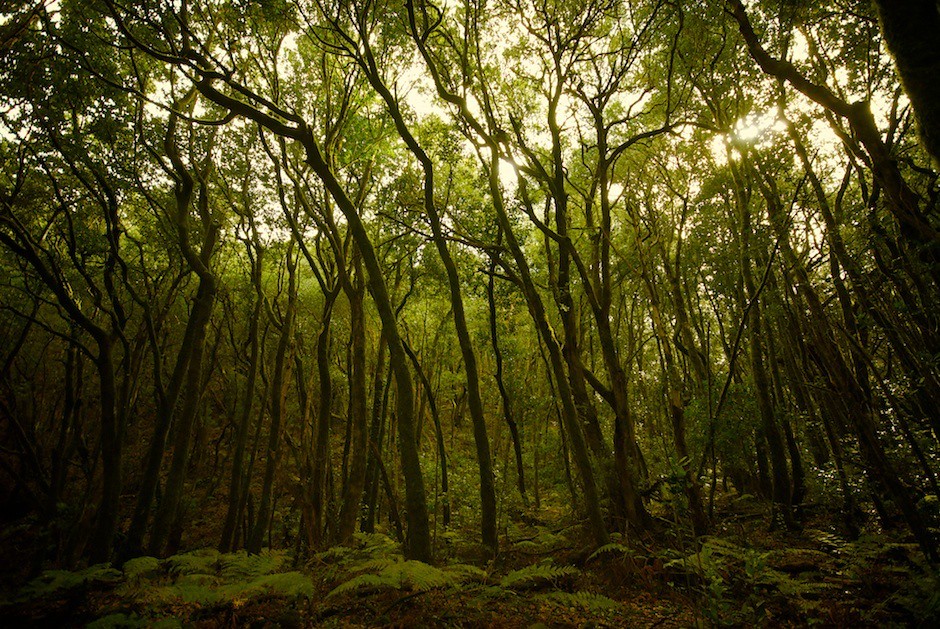
Garajonay National Park on one of Spain's lesser-known islands, La Gomera, is a cloud forest in the middle of the Atlantic. This UNESCO‑listed laurel forest is a survivor from the Cenozoic Era, a pocket of ancient, mist‑wrapped greenery that once covered much of southern Europe.
What’s special – and what it’s like to live nearby
Walk into Garajonay, and everything feels enchanted: moss‑covered trees, dense undergrowth and that constant fine drizzle known as “horizontal rain”. Trails take you through ravines and up to viewpoints, while the old Guanche legend of Gara and Jonay adds a romantic backstory to the landscape.
Living near Garajonay means embracing small‑island life. Villages are tiny, roads are winding, and the pace is unhurried. Most homes are simple village houses or modest apartments, sometimes with terraces looking out over ravines or the ocean.
Property market near Garajonay National Park
Garajonay spans six municipalities on La Gomera, with the main visitor centre close to Agulo. Average property prices in the province of Santa Cruz de Tenerife were €3,302 per m² in November 2025. Compared to bigger Canary Islands like Tenerife or Gran Canaria, La Gomera remains more affordable and much less developed.
Doñana National Park
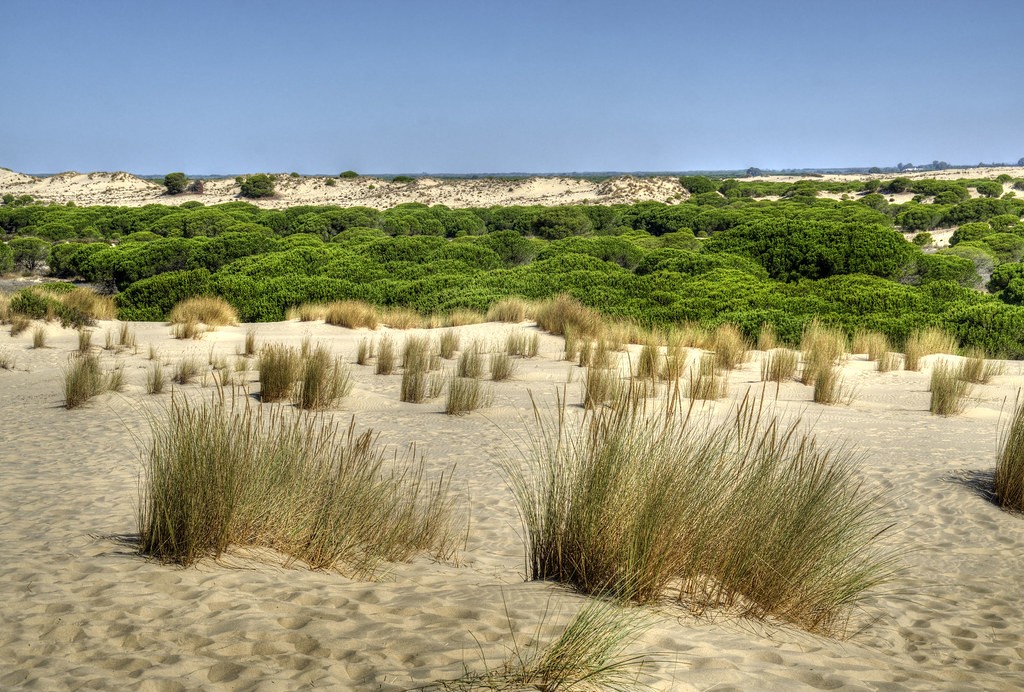
Doñana National Park spreads across Huelva, Seville and Cádiz provinces in south‑west Andalusia. It’s one of Europe’s key wetlands, a huge mosaic of marshes, dunes, pine forests and scrub at the mouth of the Guadalquivir River, and a UNESCO World Heritage Site.
What’s special – and what it’s like to live nearby
Doñana is bird‑watching heaven and biodiversity central. You'll find over 4,000 species of flora and fauna, including the Iberian lynx and Spanish imperial eagle. The park started life as a royal hunting ground, and that long history of protection is partly why so much wildlife has survived here.
Around the park, you’ve got a mix of small agricultural towns, rural communities and coastal resorts. Locals work in farming, tourism and conservation, plus, many Sevillanos and Madrileños keep weekend houses by the sea. It’s a good fit if you want big skies, migratory birds, sandy beaches and warm winters, but you’ll need to be realistic about summer heat and occasional flooding in low‑lying areas.
Property market near Doñana National Park
A large part of Doñana lies within Almonte in Huelva province. According to idealista, average property prices in Almonte were about €1,083 per m² in November 2025. That’s relatively accessible for Andalusia, especially compared with more famous coastal areas like the Costa del Sol.
Picos de Europa National Park
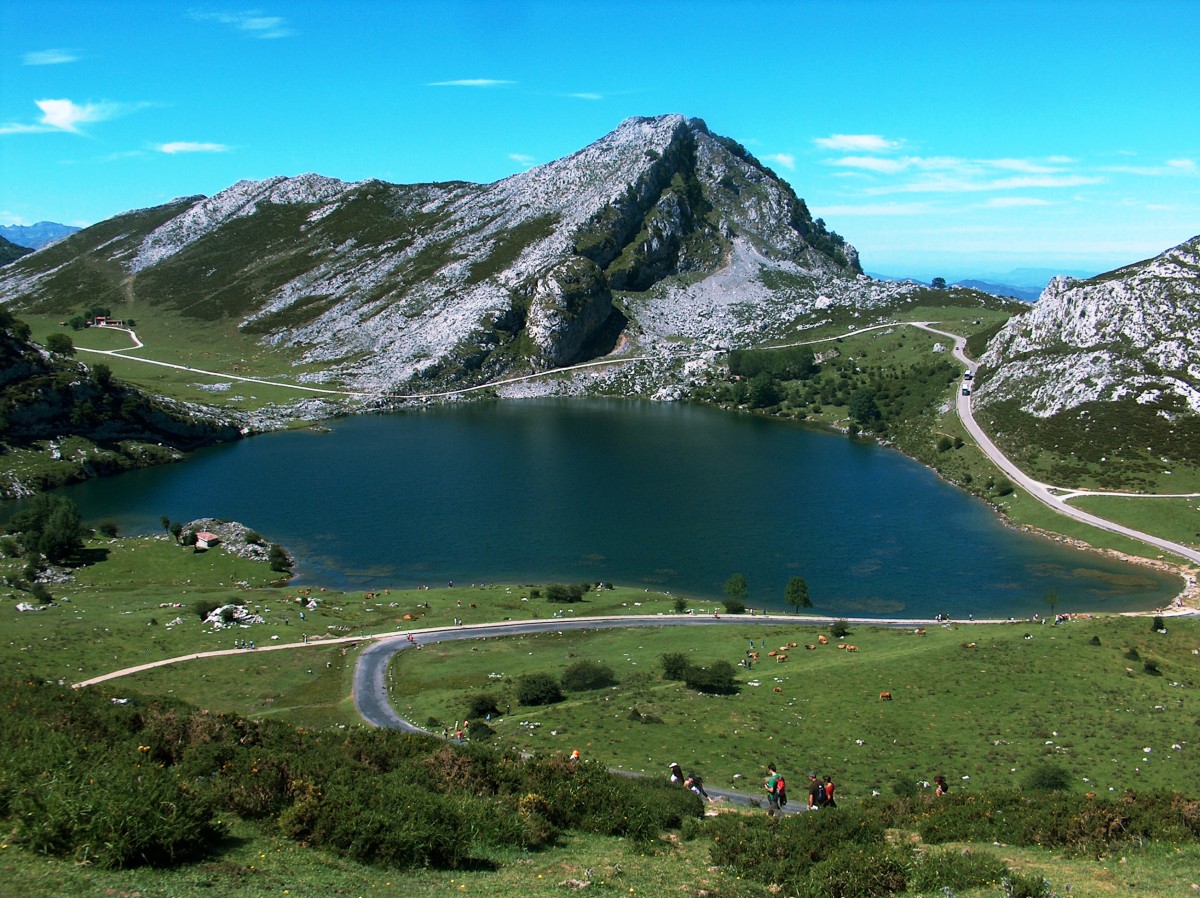
The Picos de Europa National Park straddles Asturias, Cantabria and Castile‑León in northern Spain. It’s a dramatic limestone mountain range of jagged peaks, glacial valleys and deep gorges, and was one of Spain’s first national parks, founded back in 1918.
What’s special – and what it’s like to live nearby
This is big‑sky, green‑Spain territory: alpine meadows, snow‑capped peaks, and high-up villages that still make their own cheeses and cider. Iconic summits such as Picu Urriellu are legendary in mountaineering circles.
Most people who live near Picos are locals and farming families, but there’s a small, growing international crowd. Housing is mainly stone village houses, traditional farmsteads and small town apartments. It suits someone happy driving twisty roads, dealing with proper rain, and trading city convenience for landscapes that look like a postcard.
Property market near Picos de Europa National Park
One of the main gateways to the park is Cangas de Onís in Asturias. Average property prices there were around €1,459 per m². For mountain scenery of this quality, that’s very reasonable, especially compared to more international Alpine regions or Spain’s fashionable coasts.
Ses Illetes, Formentera's most famous beach
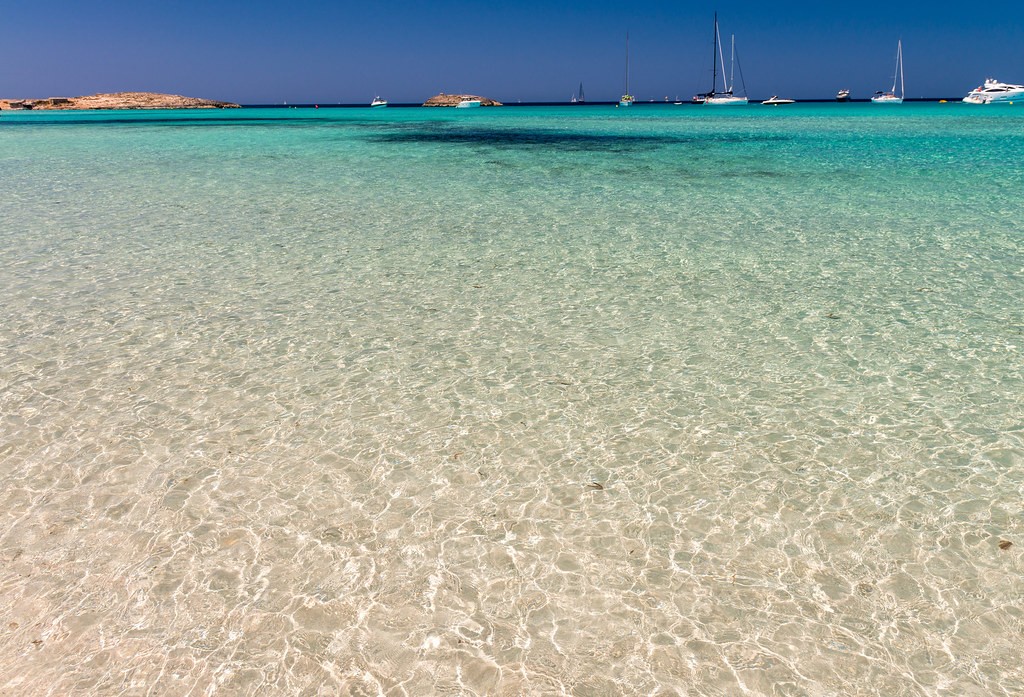
One of the most famous beaches in Spain, Ses Illetes, sits at the northern tip of Formentera. It’s a slim strip of white sand, shallow turquoise water and tiny offshore islets, all within the Ses Salines de Eivissa i Formentera Natural Park.
What’s special – and what it’s like to live nearby
The water here is ridiculously clear thanks to protected seagrass meadows, and the beach stretches out into the Trucadors peninsula. In high season, access is controlled to protect the fragile dunes and keep the area from being completely overrun.
Living on Formentera, you’re not on Ses Illetes itself (it’s protected), but the whole island is small enough that the beach is never far. Life here mixes a tiny year‑round population with a high concentration of international second‑home owners and summer visitors. Properties are mostly detached villas, stylish holiday houses and small apartment buildings.
At the end of 2025, average asking prices for homes on Formentera were around €8,941 per m². It’s one of the most expensive places to buy in Spain, driven by strict planning rules, very limited land and strong international demand for second homes.
Flysch Coast, Gipuzkoa UNESCO Geopark
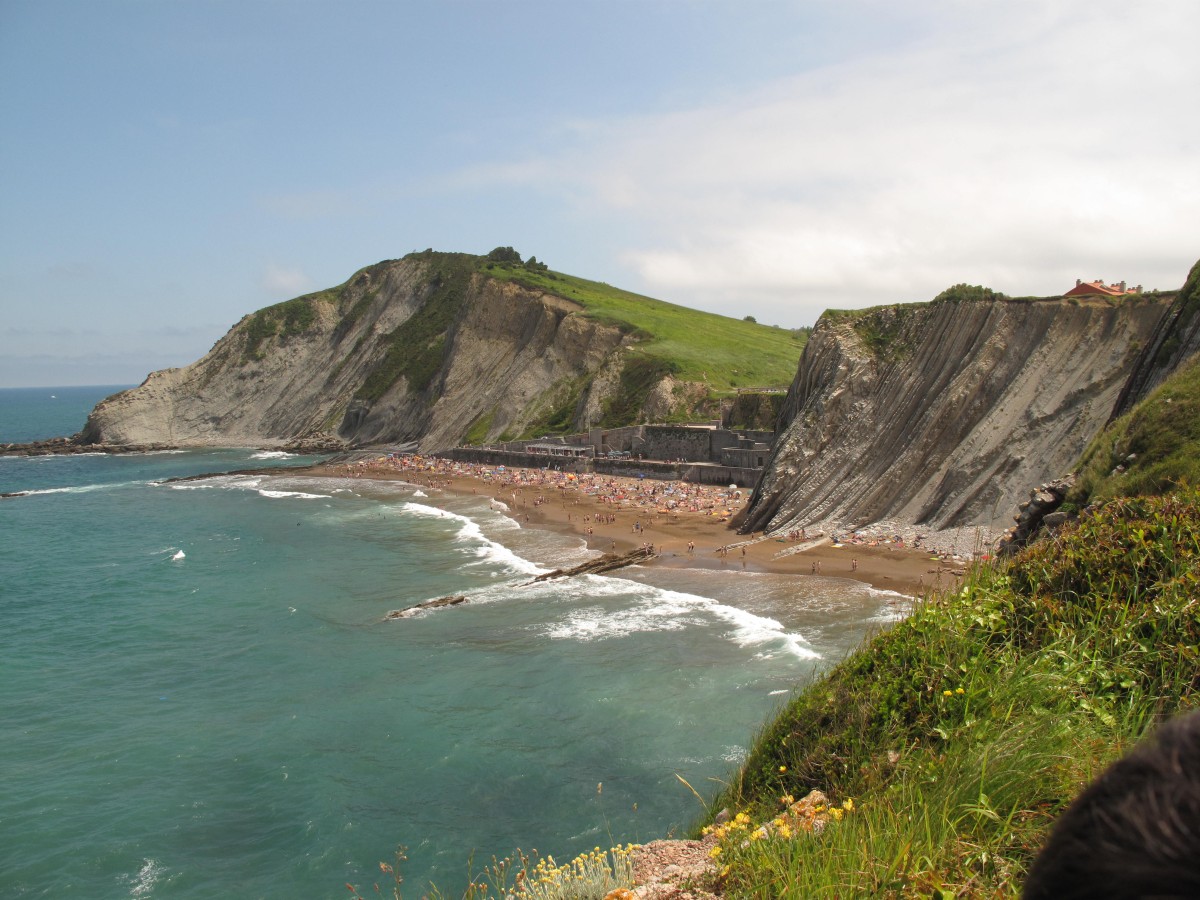
The Flysch coast in Gipuzkoa, between Deba and Zumaia, is a 13‑kilometre stretch of cliffs where the rocks look like someone has stacked giant stone pages on their side. These layers record more than 60 million years of geological history and are part of a UNESCO Global Geopark.
What’s special – and what it’s like to live nearby
The alternating hard and soft layers of rock were created as tectonic plates collided and the Bay of Biscay opened. It’s a dream for geologists, but also for photographers, surfers and anyone who likes wild Atlantic coasts.
Living along this bit of Basque coast means small towns, green hills and the sea never far away. Housing is a mix of apartments and townhouses in the centres, plus traditional baserri (farmhouses) scattered in the countryside. It suits you if you want surf, hiking and Basque food culture, and you’re fine with frequent rain and a cost of living that’s higher than much of inland Spain.
The Flysch cliffs run along the coast of Gipuzkoa province. According to idealista’s figures, average property prices in Gipuzkoa were around €4,124 per m². Coastal towns and well‑connected areas often sit above the provincial average thanks to strong local demand and limited space between mountains and sea.