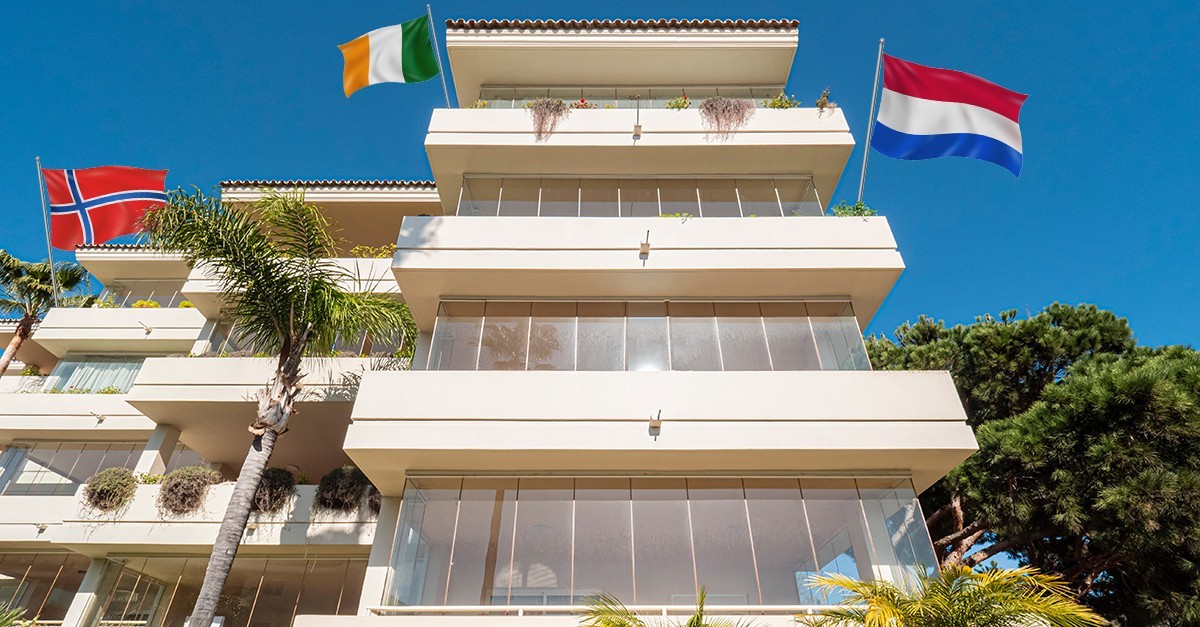
Foreigners are once again buying homes in Spain en masse following the end of the health pandemic. According to data from notaries, foreigners bought 72,987 homes in the domestic market in the first half of the year 2022, the highest figure in the historical series that began in 2007. Furthermore, these transactions accounted for 20.3% of the total registered in the country as a whole, equalling the record recorded in the second half of 2015; and the average price paid for the properties has reached record highs. We have all the details about foreign buying trends in Spain in 2022, where Dutch, Norwegian and Irish buyers are on the rise.
Which foreigners bought the most property in Spain in 2022?
The British, Germans and French continue to be the most prominent nationalities, although in the first half of this year the Dutch, Norwegians and Irish have also played a leading role: they have led the increase in the number of transactions
As the statistics of the General Council of Notaries reveal, buyers from the Netherlands, Norway and Ireland sealed between January and June 2022 more than double the number of home transactions compared to the first half of 2021. "For the third consecutive semester, sales and purchases made by foreigners of all nationalities increased (with an average increase of 52.75), but those made by the Dutch (121.5%), Norwegians (119.5%) and Irish (106.7%) did so with greater intensity," the notaries detail.
- Buyers from the Netherlands, in particular, bought 3,641 homes in Spain in the first half of the year: in addition to breaking the record for the historical series, the Dutch have become the seventh most important nationality in terms of volume of transactions.
- Buyers from Ireland, on the other hand, were involved in 1,395 transactions, the second highest figure since 2007, second only to the first half of that year.
- In the case of Norwegians, the number of home sales and purchases is lower: 979 home sales and purchases have been formalised, the highest figure in four years.
As well as formalising twice as many transactions as last year, figures from idealista/data shows that the demand for housing from citizens from these countries has been growing strongly over the last two years. In fact, searches for homes for sale on idealista from the Netherlands, Ireland and Norway have doubled since 2020.
So far in 2022, there have been almost 830,000 searches for homes from the Netherlands, making it the fifth most prominent country behind Germany, France, the UK and the USA. Compared to last year, the increase is around 22%, while compared to 2020 it reaches 98.8%.
In the case of Ireland, the numbers also reflect the same trend: the number of visits has shot up by 32% year-on-year so far this year and by 122% compared to the covid year, standing at around 334,000 searches. In line with this, searches from Norway have increased at a rate of 18% compared to last year and up 111% compared to 2020, with almost 131,400 visits.
Why home purchases in Spain by foreigners are growing
And what is the reason for this strong increase? The experts consulted by idealista/news summarise several factors; among them, the boost of teleworking, Spain's good climate, good communications, the technological hubs that are being consolidated in Spain, comparatively lower housing prices than in other European countries and the energy crisis.
For Luis Corral, CEO of Foro Consultores, some of the main reasons are "teleworking, retirement, the need for more open spaces, good weather and good communications. And in these times of energy crisis, living in a much warmer area, especially in winter, means significant savings".
Anna Puigdevall, treasurer of FIABCI Spain and director general of the National Association of Estate Agents (ANAI), also points out that teleworking or remote work is one of the main reasons. "We are a very attractive country for all professionals who can work remotely, especially from Northern Europe, such as Belgians, Germans or the Dutch".
But she also points out that "now in Spain we have several very important technological hubs that attract talent: Barcelona has historically been one and now Málaga is growing a lot in this aspect. Those moving to Spain are professionals who buy homes with high purchasing power". In the Catalan capital, many technology companies are present in the 22@ district, while in the birthplace of the Costa del Sol, technology giants such as Google, Vodafone, Oracle and Huawei, as well as financial institutions such as Citigroup, are setting up research centres.
Finally, Puigdevall explains that the fact that "real estate investment is a safe and profitable investment" is also having an influence, which is why the number of operations carried out by foreign investors is growing.
For his part, Robin Decaux, CEO of the investment platform Equito, maintains that "house prices in these countries have risen sharply in recent years. It is estimated that in Amsterdam alone there is a shortage of almost one million homes, so buying a property has become very complicated. Investors from these countries are looking to Spain because house prices are much cheaper than in their home countries and they can afford them.
According to a Bloomberg study for the first quarter of this year, the Netherlands is one of the countries where house prices were at alarming levels, registering a real increase of almost 17%. In Ireland the rise also reached double digits (13.9%), while in Norway it stood at 8.1%. In Spain, on the other hand, the rise stood at 6.3%. The real estate consultancy Knight Frank also placed the Netherlands and Ireland among the countries in the world where average house prices rose the most between January and March 2022.
The same is shown by statistics from the EU's Eurostat office. In the second quarter of the year, housing prices rose by an average of 9.3% year-on-year in the eurozone and 9.9% in the European Union as a whole, while in the Netherlands the rise exceeded 18% and in Ireland 14%, compared to 8.1% in Spain. "This is why we are going to see a lot of investors from these countries coming to the Spanish property market," Decaux stresses.
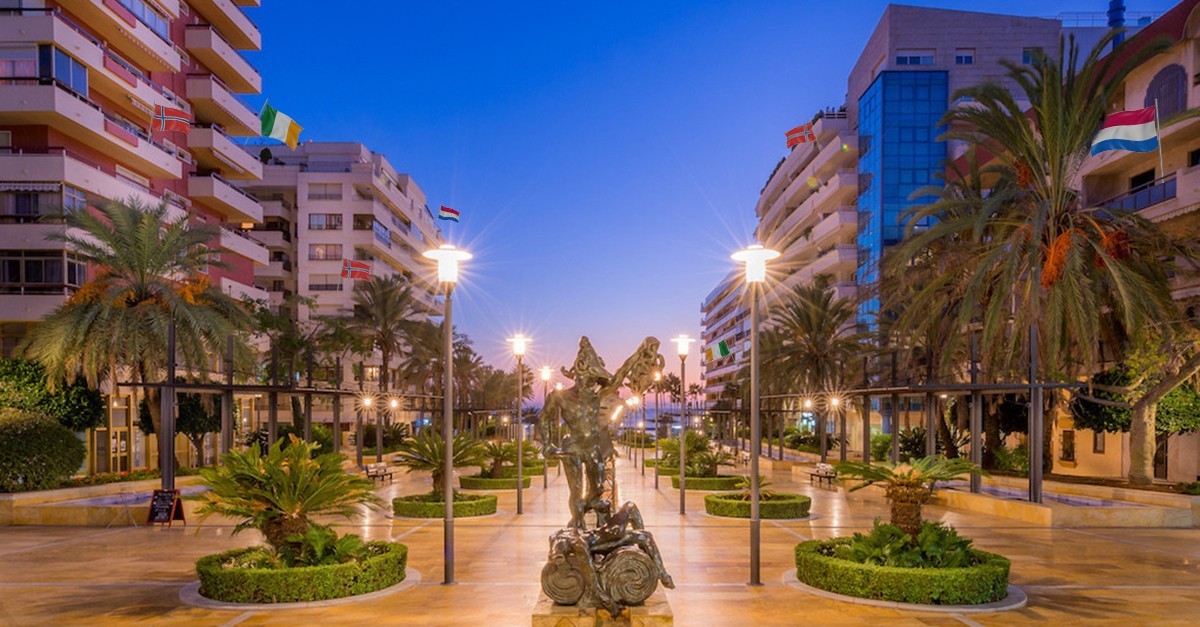
Where foreigners are buying property in Spain
Foro Consultores maintains that "the boom in teleworking has become a lever of change for foreign investment at user level, which prioritises pleasant environments with full services to develop their employment. And not only in front of the sea, but also in urban areas of coastal cities".
According to the real estate consultant, the Canary Islands, Costa del Sol and Valencia are among the preferred areas thanks to factors such as good weather and communications are key. And this year there is an additional element: the cost of energy in northern European countries will be even higher than in Spain.
But, in his opinion, the clearest example is Málaga, "where foreigners, especially Nordic, are buying in areas that are being regenerated, further away from the beach. They are thinking about housing, not only for holidays, but also to spend long periods of time or even to telecommute," points out Luis Corral.
Mario Garnica, director of Engel & Völkers in Málaga, agrees with this view and adds that in the birthplace of the Costa del Sol "a series of factors come together that make the city an outstanding destination for buying a home, such as the climate, air connectivity, the technological business ecosystem, the cost of living and its cosmopolitan character. Málaga is consolidating its position as one of the cities with the best quality of life and the greatest international projection on the current scene".
What types of properties foreigners are buying in Spain
As for the type of property, Garnica states that all kinds of transactions are taking place: purchases of properties to live in, as second homes and for investment. The most repeated profile is that of a buyer between 45 and 60 years old who is looking for a flat in the historic centre, in the coastal area or a villa. The Dutch are among the main homebuyers in the area, along with Germans, French, Belgians, Americans and Mexicans.
Finally, Foro Consultores explains that foreigners tend to buy "larger homes than those bought by Spaniards, with large indoor and outdoor spaces, and adapted for long stays".
Proof of this is the average price paid by these nationalities when buying homes in Spain. Norwegians paid the third highest amount during the first half of the year (2,701 euros/m2, only surpassed by the Danes and Americans), while the Dutch (2,252 euros/m2) and Irish (2,092 euros/m2) were also above the total average for foreigners (2,062 euros/m2) and above what Spanish buyers pay on average (1,560 euros/m2).